
Tupac Shakur’s filmography showcases a versatile actor who transitioned seamlessly from the gritty intensity of inner-city dramas to the vulnerability of romantic leads and the sharp wit of dark comedies. While primarily remembered as a hip-hop icon, his body of work in cinema—comprising six lead roles and several significant appearances—remains a cornerstone of 1990s filmmaking.
This guide provides a comprehensive analysis of every movie featuring Tupac Shakur, exploring his character development, the cultural impact of his performances, and how to access these films in 2026. Whether you are a long-time fan or a film student researching the "hood film" genre, this breakdown details the artistic evolution of an actor who was taken far too soon.
The Foundation: Tupac’s Training and Artistry
Before he was a multi-platinum recording artist, Tupac Shakur was a student of the arts. His performance style was rooted in his education at the Baltimore School for the Arts, where he studied acting, poetry, jazz, and ballet. He famously performed in Shakespearean plays, which many critics believe informed the "tragic hero" or "villainous" archetypes he later inhabited on screen.
Unlike many contemporary "rapper-turned-actors," Tupac did not view film as a promotional tool for his music. He approached roles with professional rigor, often seeking to portray the complexities of Black manhood in America. His ability to project both menace and empathy allowed him to dominate the screen, a quality frequently referred to by directors as "undeniable charisma."
The Breakthrough: Juice (1992)
In his first starring role, Tupac Shakur delivered what many consider his most iconic performance as Roland Bishop in Juice. Directed by Ernest Dickerson (the acclaimed cinematographer for Spike Lee), the film is a neo-noir crime drama that explores the lives of four teenagers in Harlem.
The Character of Bishop
Tupac’s portrayal of Bishop is a masterclass in the descent into paranoia and sociopathy. While the film begins as a coming-of-age story about friendship and DJ culture, it shifts focus to Bishop’s obsession with gaining "the juice"—a colloquialism for power and respect. Tupac brought a haunting intensity to the role, transforming from a relatable teenager into a cold-blooded antagonist.
Critical and Cultural Impact
Juice was a pivotal moment in the "urban cinema" movement of the early 90s. Critics praised Tupac for his ability to outshine more experienced actors. His performance was so convincing that it reportedly influenced his public persona, leading to the "thug life" image that would define his later years. For viewers in 2026, Juice remains a high-water mark for 90s cinema, often cited in film schools for its lighting, soundtrack, and Tupac's raw energy.

Expanding Range: Poetic Justice (1993)
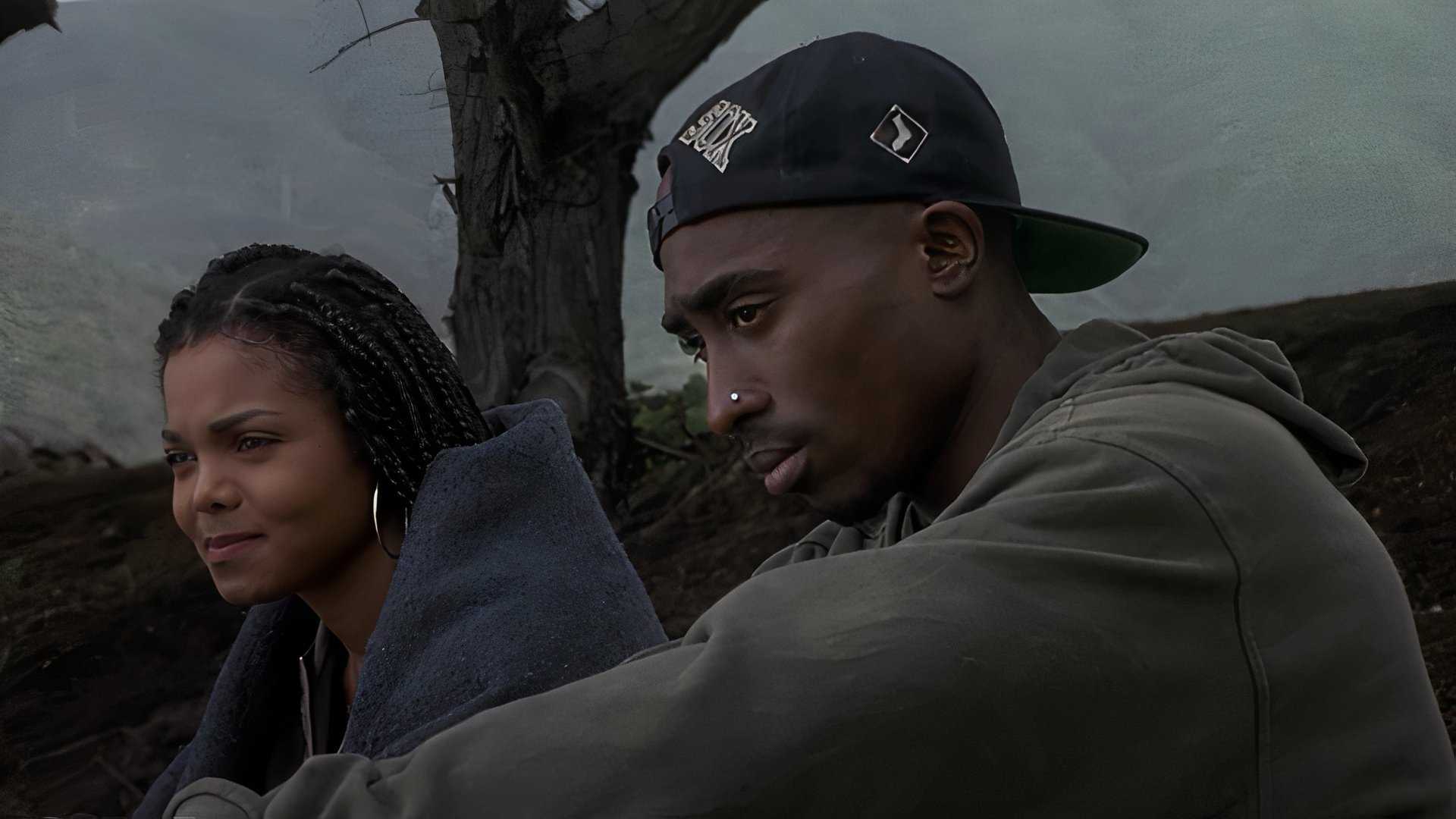
Following the aggressive energy of Juice, Tupac sought to prove his versatility. He teamed up with director John Singleton (fresh off the success of Boyz n the Hood) to star in Poetic Justice alongside Janet Jackson.
A Different Side of Tupac
In Poetic Justice, Tupac played Lucky, a postal worker and aspiring musician who is also a devoted father. This role was a sharp departure from Bishop. Lucky is patient, romantic, and emotionally intelligent, providing a counterbalance to Janet Jackson’s grieving character, Justice.
The film is a "road movie" that allows for long stretches of dialogue, giving Tupac the space to demonstrate his nuanced acting. His chemistry with Jackson was widely noted, and the film successfully rebranded him as a romantic lead, expanding his fan base significantly beyond the hip-hop community.
The Antagonist: Above the Rim (1994)
In Above the Rim, directed by Jeff Pollack, Tupac returned to a more menacing role, playing the neighborhood kingpin Birdie. The film centers on a high school basketball star caught between the influence of his coach and the lure of the streets.
Birdie as a Symbol
While Birdie is the villain of the story, Tupac infused the character with a level of sophistication and style that made him magnetic. He portrayed Birdie not just as a criminal, but as a manipulative mentor figure. The film’s soundtrack, executive produced by Death Row Records, became a massive success, further intertwining Tupac’s musical and cinematic identities.
Above the Rim is essential viewing for those interested in how sports and street culture were represented in mid-90s media. It remains a staple of sports-drama discussions even decades later.
The Posthumous Releases: A Tragic Trilogy
The tragic death of Tupac Shakur in September 1996 left several film projects in various stages of completion. These three films were released posthumously, providing fans with a bittersweet look at where his acting career might have headed.
1. Bullet (1996)
Released shortly after his death, Bullet features Tupac as Tank, a rival to the film’s protagonist played by Mickey Rourke. While the film was not a major critical success and went straight to video in many markets, it is notable for the interaction between Tupac and Rourke. It is a gritty, drug-fueled crime drama that leans heavily into the "tough guy" tropes of the era.
2. Gridlock'd (1997)
Many film historians argue that Gridlock'd contains Tupac’s best acting performance. Directed by Vondie Curtis-Hall, the film is a dark comedy/buddy drama starring Tupac as Spoon and Tim Roth as Stretch. The duo plays two heroin addicts attempting to enter a rehab program after their friend overdoses.
- Social Commentary: The film is a biting critique of the American healthcare bureaucracy.
- Chemistry: The rapport between Tupac and Tim Roth is exceptional, showing Tupac’s aptitude for comedic timing and vulnerability.
- Legacy: Gridlock'd proved that Tupac could lead a film that was not centered on "the hood," showcasing his potential as a mainstream dramatic actor.
3. Gang Related (1997)
Tupac’s final film role was in Gang Related, where he played Detective Rodriguez opposite James Belushi. The plot follows two corrupt police officers who accidentally kill an undercover DEA agent and attempt to frame a homeless man for the crime.
As Rodriguez, Tupac plays a man consumed by guilt and fear. It is a complex role that required him to portray a character who is morally compromised but fundamentally human. The film serves as a somber bookend to his career, highlighting his ability to hold his own alongside seasoned veteran actors.
Complete Filmography Overview
The following table summarizes the primary theatrical releases featuring Tupac Shakur as a lead or significant supporting character.
| Year | Movie Title | Role | Director | Primary Genre |
|---|---|---|---|---|
| 1991 | Nothing but Trouble | Himself (Digital Underground) | Dan Aykroyd | Comedy |
| 1992 | Juice | Roland Bishop | Ernest Dickerson | Crime Drama |
| 1993 | Poetic Justice | Lucky | John Singleton | Romance/Drama |
| 1994 | Above the Rim | Birdie | Jeff Pollack | Sports/Drama |
| 1996 | Bullet | Tank | Julien Temple | Crime |
| 1997 | Gridlock'd | Ezekiel "Spoon" Whitmore | Vondie Curtis-Hall | Dark Comedy |
| 1997 | Gang Related | Detective Rodriguez | Jim Kouf | Crime Thriller |
Documentaries and Legacy Media
While the films listed above represent his scripted work, Tupac’s presence in cinema has been sustained through a series of high-profile documentaries. These films provide context to his life, his death, and his ongoing influence on global culture.
- Tupac: Resurrection (2003): This Academy Award-nominated documentary is unique because it is narrated by Tupac himself, using archived interviews. It provides the most intimate look at his philosophy and motivations.
- Biggie & Tupac (2002): Directed by Nick Broomfield, this investigative film explores the theories surrounding the murders of the two hip-hop icons.
- Dear Mama (2023): Though technically a docuseries, this FX production directed by Allen Hughes (who famously had a physical altercation with Tupac in the 90s) is considered the definitive modern exploration of the relationship between Tupac and his mother, Afeni Shakur.
Where to Watch These Movies in 2026
As of 2026, the availability of Tupac’s films has stabilized across major digital platforms. Due to their status as "cult classics," many have received high-definition restorations.
- Subscription Streaming: Most of his library, specifically Juice, Poetic Justice, and Above the Rim, are frequently cycled through platforms like Max (formerly HBO Max), Netflix, and Paramount+.
- Digital Purchase: All six of his major films are available for purchase in 4K UHD on platforms like Apple TV, Amazon Prime Video, and the Google Play Store.
- Physical Media: For collectors, Juice and Poetic Justice have seen "Boutique" Blu-ray releases (such as through the Criterion Collection or specialized 4K remasters), which include behind-the-scenes footage and interviews with directors.
Technical Analysis of Tupac’s Acting Style
Tupac’s acting was characterized by physicality and eye contact. In Juice, he used his eyes to convey a simmering rage that rarely required dialogue. In Gridlock'd, his body language shifted to reflect the frantic, desperate energy of an addict in withdrawal.
He was often described by co-stars as "always on." He did not just memorize lines; he internalized the motivations of his characters. This is most evident in the deleted scenes and rehearsal tapes available in various home media releases, showing him experimenting with different emotional tones for the same scene.
Frequently Asked Questions
What was Tupac's first movie?
Tupac’s first appearance on the big screen was a cameo in the 1991 comedy Nothing but Trouble, starring Dan Aykroyd and Chevy Chase. He appeared as part of the rap group Digital Underground during a musical sequence. His first major starring role was Juice in 1992.
Did Tupac Shakur win any awards for acting?
While he did not win an Academy Award, Tupac received significant critical acclaim. He was nominated for an MTV Movie Award for Best Villain for his role in Juice (1993). He also received posthumous nominations and honors at various film festivals and hip-hop awards for his contributions to Black cinema.
Was Tupac supposed to be in Star Wars or Men in Black?
There are long-standing reports and interviews from associates suggesting Tupac had auditioned for or was being considered for several major blockbusters before his death. This includes the role of Mace Windu in Star Wars: Episode I – The Phantom Menace (later played by Samuel L. Jackson) and potential roles in Men in Black. While these remain mostly speculative or based on early-stage discussions, they highlight the high demand for his talent in Hollywood.
Which of his movies is considered the best?
Critically, Gridlock'd and Juice are generally tied for his best work. Juice is lauded for its cultural impact and "villain" performance, while Gridlock'd is praised for its technical acting and showing Tupac's range in a non-traditional role.
Practical Recommendation for Viewers
If you are new to Tupac’s filmography, the best starting point is Juice (1992). It provides the most direct look at his raw talent and the cultural zeitgeist of the early 90s. Follow this with Gridlock'd (1997) to see the full spectrum of his ability.
To stay updated on potential new documentary releases or 4K remasters, it is recommended to follow official estate announcements via 2Pac.com, which manages his legacy and licensing. For scholarly research on his impact on film, the Academy of Motion Picture Arts and Sciences archives contain various critiques and historical records regarding the 1990s "urban" film movement he helped define.
Image Gallery
Select an image to open it in a new tab.



Mateo Castillo
Decentralized Finance and E-Payments Strategist
