The Ultimate Motorcycle Touring Checklist: Preparing for Long-Distance Rides
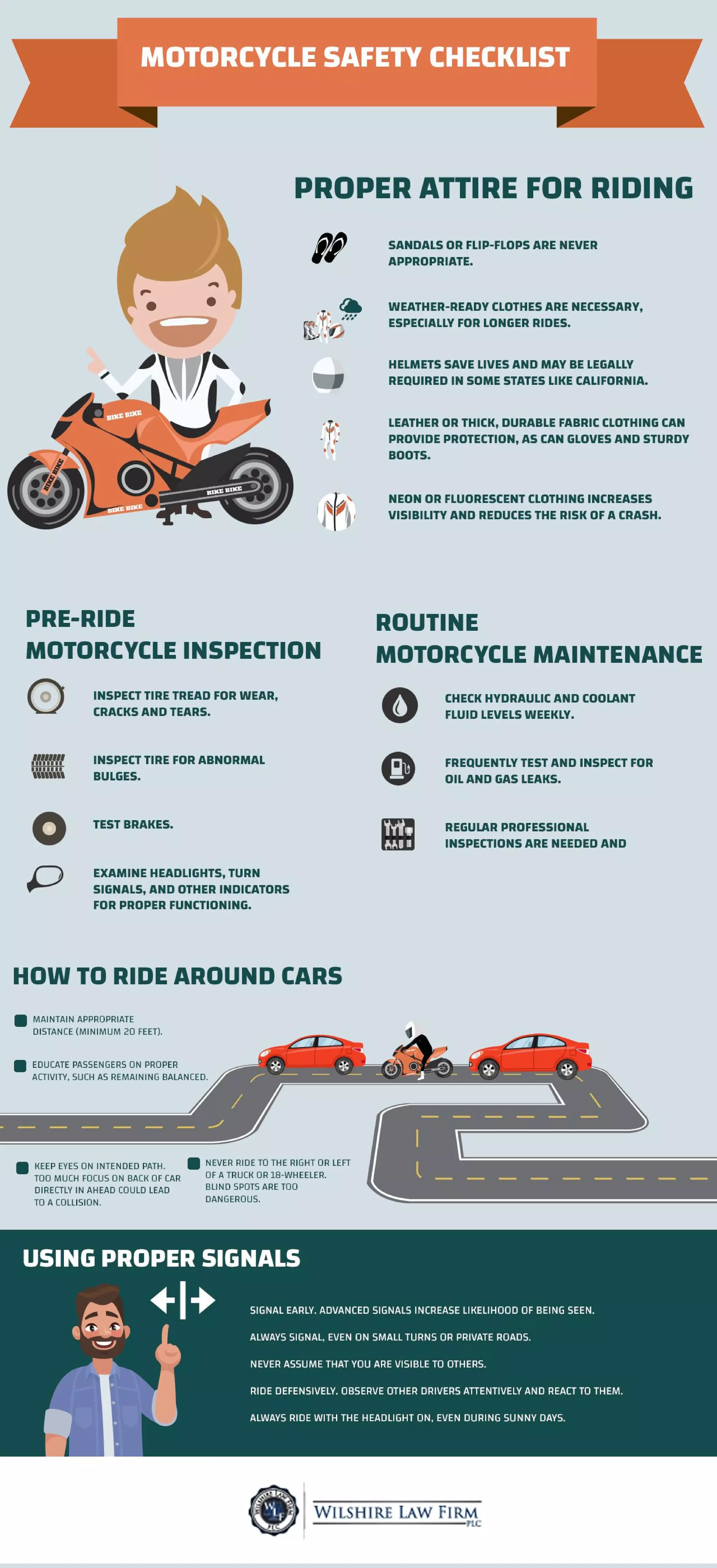
Embarking on a long-distance motorcycle tour requires meticulous planning, precise organization, and a comprehensive motorcycle touring checklist that accounts for mechanical reliability, personal safety, unpredictable weather, and roadside emergencies.
Long-distance motorcycle touring is an exhilarating pursuit that combines the freedom of the open road with the practical challenges of self-sufficiency. Unlike a casual weekend ride, an extended tour means you are miles away from your home garage, local mechanic, or familiar comforts. Whether you are carving through coastal highways, crossing state lines, or tackling multi-week cross-country expeditions, the difference between an unforgettable adventure and a stressful ordeal often comes down to preparation.
Preparing for a long-distance journey involves more than simply tossing a few changes of clothes into a saddlebag. It requires a systematic approach to machine inspection, gear selection, packing weight distribution, and navigation planning. This comprehensive guide and checklist will help you systematically prepare your motorcycle, your gear, and yourself for the journey ahead.
1. Motorcycle Pre-Trip Inspection and Maintenance
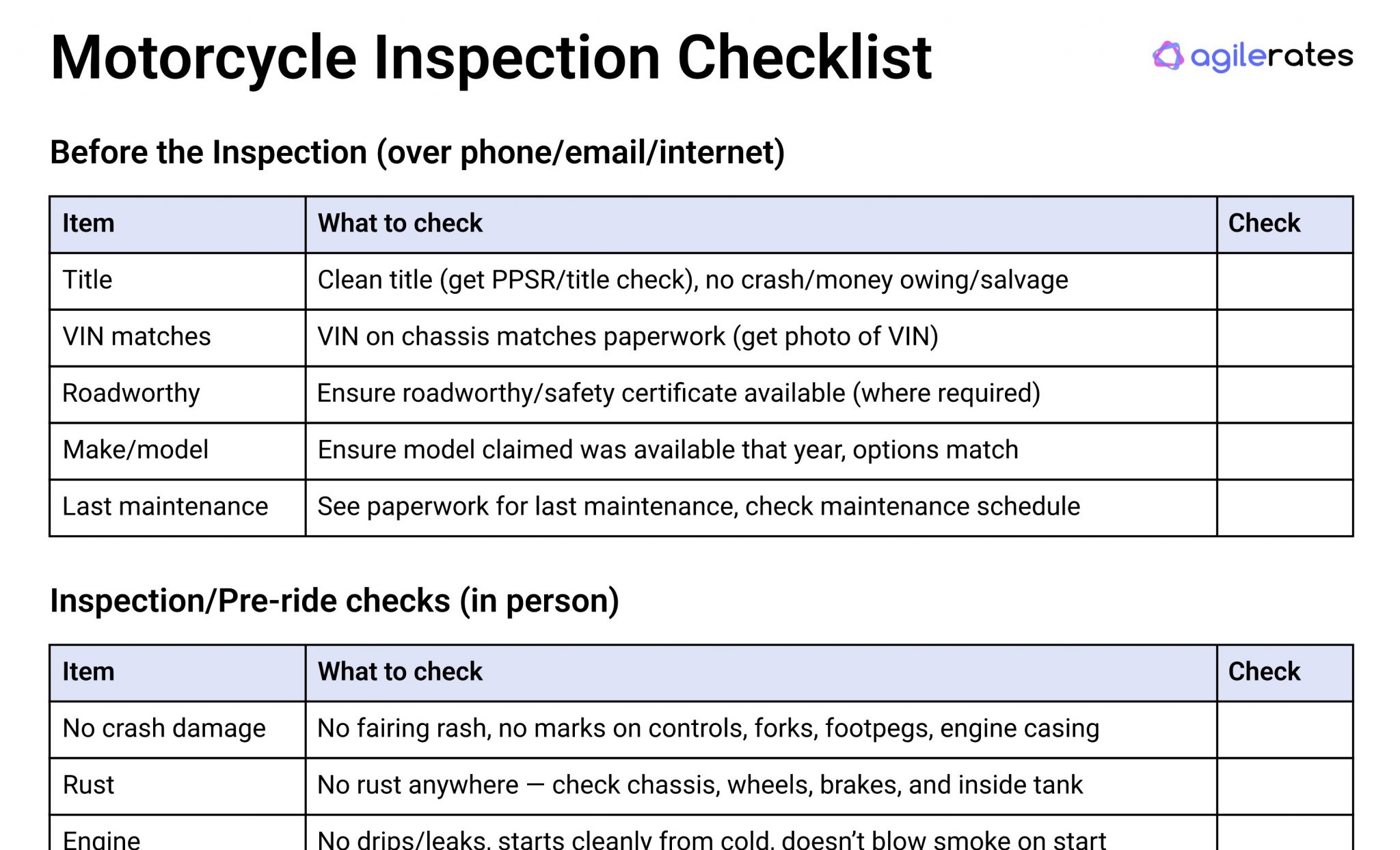
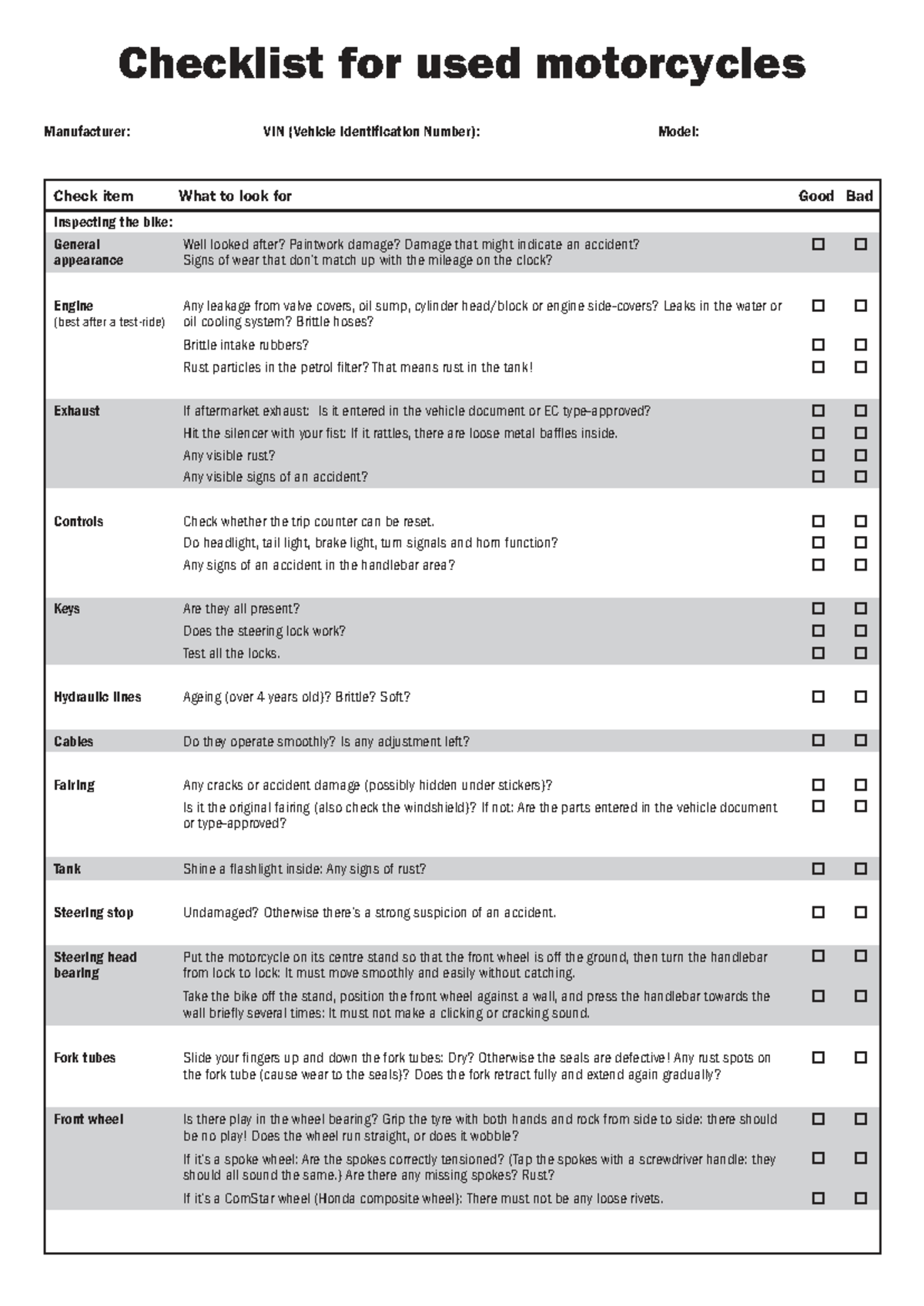
Before you load a single piece of luggage onto your bike, the machine itself must be mechanically sound. A breakdown in a remote area can be costly, dangerous, and time-consuming. Performing a thorough pre-trip inspection ensures your motorcycle can handle the physical demands of thousands of miles of varied terrain.
The T-CLOCS Inspection Method
The Motorcycle Safety Foundation recommends the T-CLOCS inspection routine, which serves as a reliable framework for pre-ride and pre-tour checks:
- T – Tires and Wheels: Inspect tread depth, tire pressure (adjusted for a heavily loaded bike), and check for embedded objects, cracks, or rim damage. Spoke wheels should be checked for loose or damaged spokes.
- C – Controls: Test the operation, free play, and smooth movement of the clutch lever, throttle, front and rear brake levers, and the gear shift pedal. Lubricate cables if necessary.
- L – Lights and Electronics: Verify the operation of the headlight (high and low beams), tail light, brake light, turn signals, hazard lights, and horn. Ensure auxiliary charging ports or GPS units are functioning properly.
- O – Oils and Fluids: Check engine oil, coolant levels, brake fluid reservoirs, and hydraulic clutch fluid. Look for any active leaks around the engine block, fork seals, or final drive.
- C – Chassis: Examine the frame for cracks or stress signs. Check the front forks and rear shock absorbers for leaks or excessive bouncing. Inspect the final drive (chain and sprockets, belt, or shaft drive) for wear, tension, and lubrication.
- S – Stands: Ensure the side stand and center stand (if equipped) retract smoothly, have secure springs, and feature a stable footpad to prevent sinking into hot asphalt or soft dirt.
Service Intervals and Wear Items
If your motorcycle is approaching a scheduled maintenance milestone—such as an oil change, valve clearance check, or air filter replacement—perform the service before you leave. Replacing a worn chain, a thinning rear tire, or brake pads with plenty of life left in your garage is far easier than trying to source specialized parts in an unfamiliar town.
2. Personal Riding Gear and Apparel
Your riding gear is your primary barrier against the elements, road debris, and impact forces. Touring exposes you to rapidly changing weather conditions, ranging from blistering desert heat to freezing mountain passes and torrential downpours.
Layering and Weather Protection
The golden rule of touring apparel is modularity. Rather than relying on a single heavy jacket, use a technical layering system:
- Base Layer: Moisture-wicking synthetic or merino wool garments that pull sweat away from your skin, keeping you dry and preventing chafing.
- Mid-Layer: Insulating fleeces, down jackets, or windproof liners that trap body heat in cold weather.
- Outer Layer: A high-quality, abrasion-resistant textile or leather jacket and pants ensemble equipped with CE-certified armor at the shoulders, elbows, hips, and knees. Ensure your outer shell features waterproof membranes or reliable zip-out rain liners.
Helmets, Boots, and Gloves
- Helmet: A well-fitting full-face or modular helmet with an undamaged shell, clean visor, and functional ventilation. Bring a pinlock anti-fog insert and spare tinted or clear shields depending on your route.
- Boots: Sturdy, over-the-ankle touring boots with oil-resistant soles, ankle protection, and waterproof construction. Walking comfort is also important for off-bike exploration.
- Gloves: Pack at least two pairs of gloves: a ventilated pair for hot weather and a waterproof, insulated pair for cold or wet conditions. Heated grips or heated gloves are exceptionally valuable for extended cold-weather riding.

3. Packing, Luggage, and Weight Distribution
How you pack your motorcycle directly affects its handling, stability, and fuel economy. Poor weight distribution can induce high-speed wobbles, reduce steering traction, and make the bike difficult to manage at low speeds.
Principles of Motorcycle Loading
- Keep it Low and Centered: Place heavy items—such as tools, heavy spares, and heavy gear—at the bottom of your saddlebags or inside a tank bag. This keeps the center of gravity low.
- Distribute Weight Evenly: Balance the weight evenly between the left and right saddlebags to prevent steering pull and asymmetrical tire wear.
- Secure Top-Heavy Loads: If using a top box or dry duffel strapped to the passenger seat, avoid packing heavy items high up. Lightweight, bulky items like sleeping bags and tents belong in top-mounted luggage.
- Use Compression and Dry Bags: Protect your belongings from rain and dust by packing items inside dedicated dry bags or heavy-duty trash liners before placing them into soft or hard luggage.
| Luggage Type | Primary Use Case | Advantages | Potential Drawbacks |
|---|---|---|---|
| Hard Panniers | General touring, camping, commuting | Highly secure, lockable, fully waterproof | Adds width to the bike, rigid impact profile |
| Soft Panniers | Off-road, adventure, dual-sport | Flexible, durable in drops, won't trap legs | Less secure against theft, requires rack systems |
| Tank Bag | Quick-access items (phone, wallet, maps) | Keeps essentials visible and at hand | Can scratch paint if dirty, restricts rider movement |
| Tail Bag / Duffel | Sleeping gear, bulky clothing, tents | Large capacity, versatile strapping options | Can affect passenger space and center of gravity |
4. Tools, Emergency Repairs, and Recovery Gear
Even the most reliable motorcycles can experience a flat tire, a loose bolt, or electrical gremlins. Carrying a curated toolkit and recovery items allows you to handle minor roadside repairs independently.
Essential On-Board Toolkit
- Multi-Tool or Pocket Knife: For general utility tasks, cutting tape, and minor adjustments.
- Wrenches and Sockets: Specific sizes required for your bike’s axle nuts, handlebar clamps, battery terminals, and body panels (often metric sizes like 8mm, 10mm, 12mm, 14mm, and 17mm).
- Hex (Allen) and Torx Keys: Matching the fasteners used across your motorcycle.
- Pliers and Needle-Nose Pliers: For gripping, pulling cotter pins, or electrical work.
- Zip Ties and Duct Tape: Indispensable temporary fixes for loose wires, flapping plastics, or torn luggage.
- Tire Repair Kit: Tubeless plug kit or heavy-duty tire irons and patches for tube-type tires, paired with a compact 12V mini air compressor or $\text{CO}_2$ cartridges.
- Jumper Cables or Lithium Micro-Jump Starter: Essential for reviving a dead battery.
5. Documentation, Navigation, and Financial Preparedness
Administrative and navigational readiness is just as critical as mechanical preparation. Being caught without proper documentation or payment methods in a remote area can halt your journey instantly.
Document Checklist
- Driver’s License: Valid motorcycle endorsement matching the class of bike you are riding. Verify whether an International Driving Permit (IDP) is required for international travel.
- Vehicle Registration and Insurance: Physical copies of your motorcycle registration and proof of insurance. Check your policy for roadside assistance coverage and cross-border validity.
- Emergency Medical Information: A card detailing your blood type, known allergies, emergency contacts, and medical conditions.
- Passports and Visas: Required for international border crossings. Ensure they are valid for at least six months past your scheduled return date.
Navigation Strategy
Relying solely on a smartphone mounted to your handlebars can lead to overheating, vibration damage to camera image stabilizers, or complete loss of service in remote areas. Combine digital tools with analog backups:
- Primary Navigation: Dedicated waterproof GPS unit or a ruggedized smartphone running offline mapping applications (e.g., Gaia GPS, OsmAnd, or Google Maps offline regions).
- Backup Navigation: A physical paper road atlas or regional folding map, which does not require battery power or cellular reception.
Frequently Asked Questions
How much weight can I safely pack on my motorcycle?
Check your motorcycle’s owner's manual for the specific Gross Vehicle Weight Rating (GVWR). Subtract the weight of the motorcycle (wet weight) and the weight of the rider and passenger from the GVWR to determine your maximum allowable luggage and cargo capacity. Exceeding this limit strains the suspension, tires, and frame.
Should I use hard cases or soft luggage for touring?
Hard cases offer excellent weather protection, security, and lockability, making them ideal for street touring and paved road travel. Soft luggage is generally preferred for adventure and off-road riding because it is more flexible, less likely to trap and injure a rider's leg in a tip-over, and less prone to cracking upon impact.
How do I prevent fatigue on long riding days?
Manage physical fatigue by taking regular breaks every 60 to 90 minutes to stretch, hydrate, and walk around. Invest in ergonomic upgrades if necessary, such as highway pegs, custom seat cushions, bar risers, or cruise control systems. Staying well-hydrated and avoiding heavy, greasy meals during riding hours also maintains alertness.
What should I do if my motorcycle breaks down in a remote area?
Move the motorcycle as far off the active roadway as possible and activate your hazard lights. Assess the issue if it is safe to do so. If the repair is beyond your capability, contact your roadside assistance provider or emergency services. If you lack cellular signal, deploy emergency reflective triangles and wait in a safe location off the road until help or another motorist arrives.
Next Actions
Begin your preparation at least two weeks before your departure date. Start by running through the T-CLOCS inspection to identify any necessary mechanical maintenance or tire replacements. Lay out your riding gear, test your camping equipment or lodging reservations, and pack your luggage according to the weight distribution guidelines outlined above. By systematically verifying each item on your motorcycle touring checklist, you set the stage for a safe, smooth, and memorable journey.
Image Gallery
Select an image to open it in a new tab.



Zara El-Hashem
Sociocultural Dynamics and Academics Writer
