The Marilyn Monroe Singing to the Troops Myth: Fact vs. Fiction in the 1954 Korea Tour

Marilyn Monroe’s 1954 visit to Korea to perform for UN troops was a historical reality, not a myth, yet it is frequently surrounded by misconceptions regarding her motivations, the physical toll of the trip, and the fallout within her marriage to Joe DiMaggio. While she did perform live for over 100,000 soldiers, the "myth" often confuses the timeline of the Korean War and the true extent of her illness following the tour.
The Origin of the "Anything Goes" Tour
In February 1954, the world’s biggest movie star was on her honeymoon in Japan with baseball legend Joe DiMaggio. While DiMaggio was there for baseball-related business, Monroe was approached by Major General John E. Hull, commander-in-chief of the Far East Command. He asked if she would be willing to travel to Korea to entertain the troops stationed there following the 1953 armistice.
Contrary to the myth that this was a staged studio publicity stunt, Monroe’s decision was largely impulsive and personal. She saw it as an opportunity to step out of the shadow of her new husband and to prove her worth as a live performer. DiMaggio, famously private and protective, was reportedly against the idea, preferring a quiet honeymoon. Monroe’s choice to go marked one of the first major instances of her asserting professional independence during their short-lived marriage.
The tour was titled "Anything Goes," named after the band that accompanied her. For four days, Monroe endured sub-zero temperatures and primitive living conditions to reach soldiers in remote outposts. This period is often romanticized, but the logistical reality was a grueling military operation involving helicopters, Jeeps, and a rigorous schedule that would eventually compromise her health.
Debunking the Myth of the "Active War" Performance
One of the most persistent myths is that Marilyn Monroe performed for troops during active combat in the Korean War. Chronologically, this is impossible. The Korean Armistice Agreement was signed on July 27, 1953, effectively ending major hostilities months before Monroe arrived in February 1954.
However, the "myth" of her bravery persists because Korea remained a high-tension zone. The troops she visited were not in active battle, but they were living in a state of "frozen conflict," suffering from low morale, extreme cold, and the isolation of post-war occupation. Monroe’s arrival was significant because she was the first A-list star to visit the peninsula following the ceasefire. Her presence served as a massive morale booster for men who felt forgotten by the public back home.
To understand the scale of the event, one must look at the numbers. Monroe performed ten shows in four days. The sheer logistics of moving a Hollywood star through mountainous, snow-covered terrain in 1954 were staggering. She wasn't just "singing to the troops" in a comfortable theater; she was standing on makeshift wooden stages in the middle of frozen fields.

Analyzing the Performance: Did She Actually Sing?
A common subset of the "Marilyn Monroe singing to the troops myth" is the claim that she lip-synced her performances or that she was merely a visual distraction. Historical records and eyewitness accounts from the members of her backing band, "Anything Goes," firmly debunk this.
Monroe was backed by a group of talented military musicians. The band leader, Bill Niehaye, and other members have frequently testified in historical archives that Marilyn sang every note live. She performed a setlist that included hits like "Diamonds Are a Girl's Best Friend," "Bye Bye Baby," and "Do It Again."
The Setlist and Musicality
Monroe’s voice, often characterized as breathy and light in her films, had to be projected across vast outdoor audiences. While she was not a powerhouse vocalist in the vein of contemporary Broadway stars, her ability to command a crowd of 10,000 to 15,000 shouting men was a testament to her legitimate stage presence.
The myth that she was "untalented" or a "studio creation" was largely dispelled by these performances. Soldiers who were present often recalled that despite the lack of high-fidelity sound systems, her charisma and effort were unmistakable. She didn't just stand there; she engaged with the audience, often wearing a thin, purple sequined cocktail dress despite temperatures hovering near zero degrees Fahrenheit.
The Physical Toll: Pneumonia and the Aftermath
Another layer of the myth involves the aftermath of the trip. Some biographers have downplayed the physical impact, while others have exaggerated it. The verified historical fact is that Monroe contracted a severe case of pneumonia as a direct result of the tour.
Performing in a low-cut, sleeveless dress in the Korean winter was a choice she made for the sake of the "image" she knew the soldiers wanted. However, the military transport—open-air Jeeps and unheated helicopters—exposed her to the elements for hours on end. By the time she returned to Japan to reunite with DiMaggio, she was visibly ill.
This illness wasn't just a minor cold; it required significant medical attention and contributed to her exhaustion during the subsequent filming of The Seven Year Itch. The myth often forgets that Monroe’s dedication to the USO tour came at a high personal cost to her physical health and her professional reliability back in Hollywood.
The Impact on the Monroe-DiMaggio Marriage
The Korea trip is often cited as the "beginning of the end" for Marilyn Monroe and Joe DiMaggio. The myth suggests that DiMaggio was jealous of the soldiers, but the reality was more complex. DiMaggio represented a traditional, patriarchal view of marriage; he wanted a wife who stayed at home or at least remained by his side during his own business trips.
When Monroe returned from Korea, she famously remarked to DiMaggio, "Joe, you never heard such cheering." He reportedly responded, "Yes, I have," referring to his own legendary baseball career. This exchange highlights the fundamental friction between them: two icons competing for the spotlight, with one resenting the other's public adoration.
The 100,000 troops who cheered for Monroe in Korea validated her as an independent entity, separate from her identity as "Mrs. DiMaggio." This realization gave her the confidence to fight for better contracts and more serious roles later in the decade, but it simultaneously fractured her marriage beyond repair. They divorced less than a year after the wedding.
Detailed Logistical Overview of the 1954 Korea Tour
The following table outlines the documented trajectory of Marilyn Monroe’s visit to the Korean peninsula.
| Date (1954) | Location/Unit Visited | Estimated Attendance | Notable Incident |
|---|---|---|---|
| February 16 | 1st Marine Division | 15,000+ | First performance; Monroe arrived by helicopter. |
| February 17 | 3rd Infantry Division | 10,000 | Performed in a thin purple sequined dress in sub-zero weather. |
| February 18 | 7th Infantry Division | 12,000 | Monroe began showing signs of a persistent cough. |
| February 19 | 45th Infantry Division | 15,000 | Final performances before returning to Tokyo. |
| February 20 | Seoul Medical Visit | N/A | Treated for exhaustion and early symptoms of pneumonia. |
Why the "Myth" Persists in 2026
As of 2026, Marilyn Monroe remains a subject of intense academic and pop-culture scrutiny. The "myth" persists because it serves as a perfect microcosm of her life: the intersection of extreme glamour and extreme hardship.
People often want to believe the Korea trip was either a pure act of altruism or a cold, calculated PR move. The truth lies in the middle. It was a moment where Monroe realized her power. For the first time in her life, she felt the direct, unmediated love of a massive audience, free from the editing of a film studio or the control of a husband.
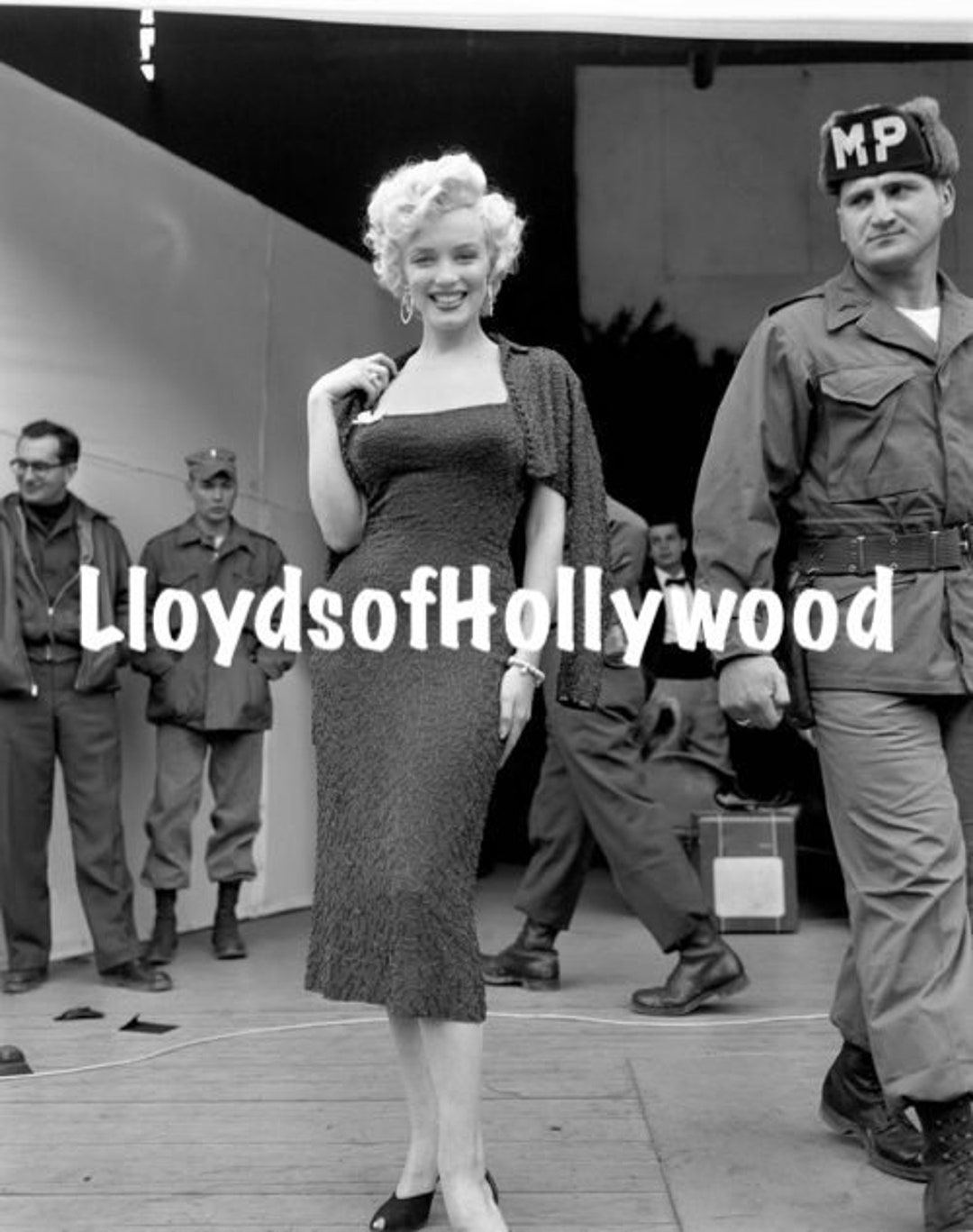
The iconography of the trip—the purple dress, the combat boots, the smiling face against a backdrop of olive-drab tents—has become a staple of American history. It bridges the gap between the "Bombshell" persona of the early 50s and the "Cultural Icon" she became.
Common Misconceptions and FAQ
Was Marilyn Monroe the only star to go to Korea?
No. While her visit is the most famous, many other stars traveled to Korea during and after the war as part of the USO (United Service Organizations). This included Bob Hope, Mickey Rooney, and Terry Moore. However, Monroe’s visit is considered the most impactful due to the sheer scale of the crowds and the height of her fame at the time.
Did she wear a military uniform?
Yes and no. For travel between sites, Monroe often wore a standard military B-15C flight jacket and combat trousers to stay warm. However, for the actual performances, she famously changed into the purple sequined dress. This juxtaposition of military gear and high-fashion glamour is one of the most enduring images of the 1954 tour.
How did the military handle her security?
The security was handled by the Military Police (MP) and specialized units. While the crowds were enthusiastic and occasionally surged toward the stage, the events were generally well-controlled. There were no reported incidents of violence or major security breaches, though the MP had their hands full managing the thousands of soldiers vying for a better view.
Did she ever return to Korea?
No, Monroe never returned to Korea. The 1954 trip was her only visit to the peninsula. Following the tour, her career skyrocketed with films like Bus Stop and The Some Like It Hot, and her personal life became increasingly tumultuous, leaving little room for overseas USO tours.
What happened to the purple dress?
The purple dress became a piece of historical memorabilia. Various versions and "tribute" dresses exist, but the original worn in Korea is often featured in museum exhibitions dedicated to Monroe’s life or military history. It remains a symbol of her dedication to the troops.
Verifying the Facts: Recommended Reading and Resources
To further explore the reality behind the myth, researchers should look to official military archives and recognized biographies:
- "Marilyn Monroe" by Donald Spoto: Often cited as the most meticulously researched biography of the star, providing detailed accounts of her time in Korea.
- The Stars and Stripes Archives: The military newspaper Stars and Stripes provided extensive coverage of her visit as it happened, including photographs and interviews with soldiers.
- USO Historical Records: The USO official website contains archives detailing the history of celebrity visits to combat zones.
- The National Archives (USA): Contains declassified documents regarding the logistics and safety protocols of celebrity visits during the post-Korean War period.
Final Recommendation
When studying the "Marilyn Monroe singing to the troops myth," it is essential to distinguish between the legend of the "invincible star" and the reality of a woman who risked her health and her marriage to connect with a lonely audience. If you are looking for the most accurate portrayal of these events, prioritize primary sources—such as photographs by Herb Scharfman or the memoirs of the "Anything Goes" band members—over sensationalized modern documentaries. The truth of the 1954 Korea tour is far more impressive than the myths that have replaced it, revealing a performer of immense grit and genuine compassion.
Image Gallery
Select an image to open it in a new tab.


Simon Caldwell
Enterprise Technology and Systems Editor
