How to Know If Your Septic Tank Is Full: Signs, Testing Methods, and Maintenance Guide

To determine if your septic tank is full, look for slow-draining sinks, gurgling sounds in your plumbing, persistent foul odors near the drainfield, or unusually lush, green patches of grass over the tank area. Most tanks require professional pumping every three to five years depending on household size and water usage habits.
Septic systems are the silent workhorses of rural and suburban infrastructure. Unlike municipal sewer systems, which whisk waste away to a distant treatment plant, a septic system processes and disposes of waste right on your property. In 2026, with many homeowners prioritizing self-sufficiency and sustainable property management, understanding the health of your septic system is more critical than ever. A "full" septic tank doesn't just mean it has reached its liquid capacity—it means the accumulation of solid waste has reached a point where the system can no longer function safely or effectively.
Understanding the Difference Between "Full" and "Overloaded"
It is a common misconception among homeowners that a septic tank should be empty. In reality, a functional septic tank is designed to be full of liquid at all times. When you use water in your home, an equal amount of liquid (effluent) is pushed out of the tank and into the drainfield.
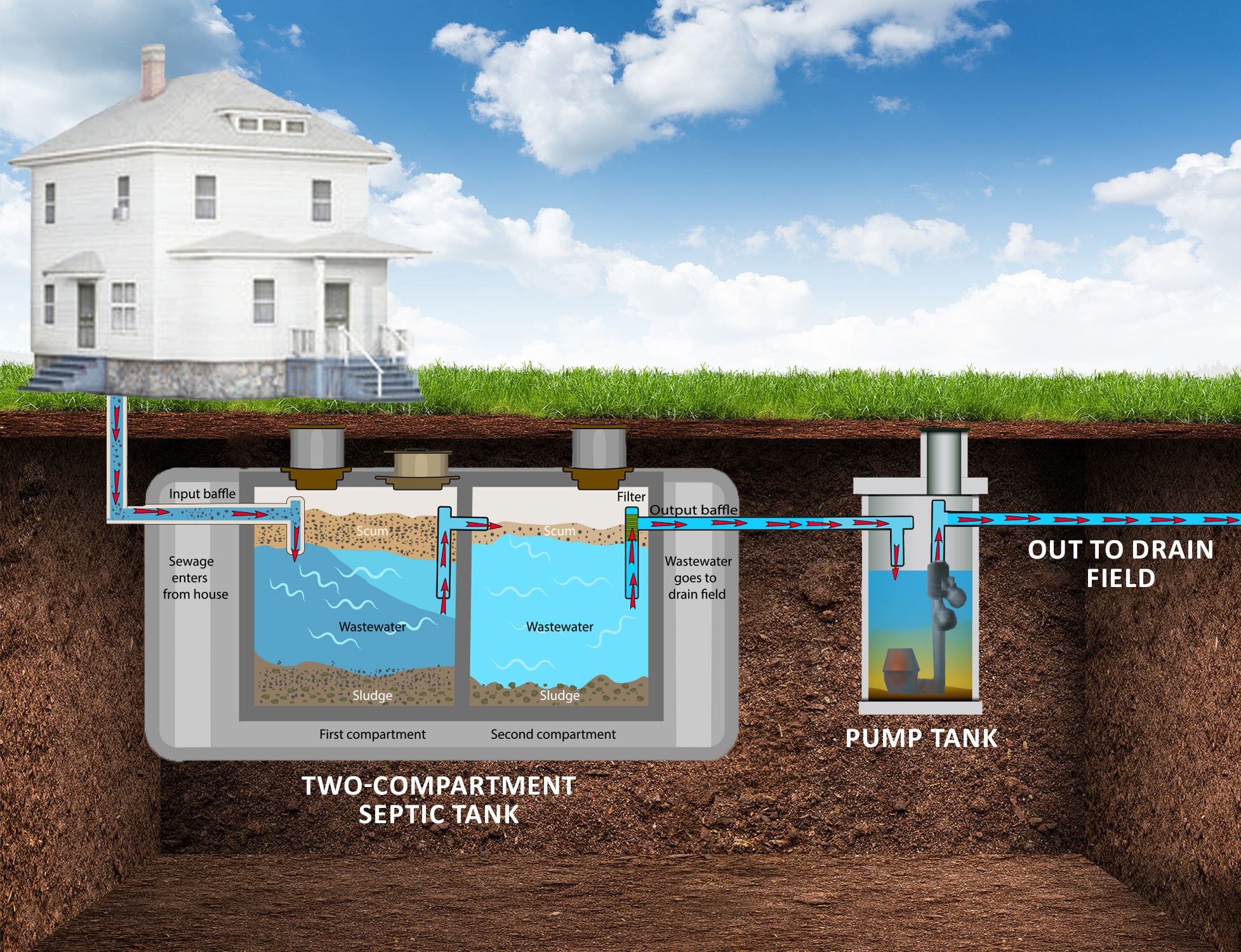
The term "full" in a maintenance context refers to the accumulation of sludge and scum. Inside the tank, waste separates into three layers:
- The Scum Layer: The top layer consisting of fats, oils, and grease (FOG) that float on the surface.
- The Effluent Layer: The middle layer of relatively clear water that exits to the drainfield.
- The Sludge Layer: The bottom layer composed of heavy solids and byproduct from bacterial breakdown.
When the sludge and scum layers occupy too much volume, the "retention time"—the period the effluent stays in the tank to allow solids to settle—is reduced. This causes solid waste to flow out into the drainfield, which can lead to catastrophic system failure.
1. Physical Signs Your Septic Tank Needs Immediate Attention
Before you ever open the tank lid, your home’s plumbing will often provide warning signs that the system is reaching its capacity for solids.
Slow Drains and Persistent Clogs
If multiple drains in your home are sluggish, it is rarely a simple localized clog. When the septic tank is over-capacity or the outlet pipe is obstructed by scum, the displaced air and water have nowhere to go. This creates resistance in the pipes. If you find yourself reaching for a plunger or chemical drain cleaner for the kitchen sink, shower, and toilet simultaneously, the issue is likely subterranean.
Gurgling Sounds
A "gurgling" or bubbling sound coming from the pipes after you flush a toilet or run the washing machine is a classic indicator of a full tank. This sound is caused by air bubbles being forced back up through the trap because the tank's primary inlet is partially submerged or restricted by the rising sludge level.
Sewage Backups
This is the most severe and undeniable sign. If raw sewage or dark, foul-smelling water begins to back up into your lowest-level drains (usually a basement floor drain or a first-floor shower), the tank is either completely full of solids or the drainfield has failed. At this stage, professional intervention is mandatory to prevent biohazardous contamination of your home.
2. Environmental Indicators Near the Drainfield
Your yard can act as a diagnostic tool for your septic system. By observing the area where your tank and leach field are buried, you can identify issues before they manifest inside your home.
Lush, Green Grass (The "Green Spot" Phenomenon)
While a beautiful lawn is usually a goal, a patch of grass over your septic tank or drainfield that is significantly greener and faster-growing than the rest of the yard is a red flag. This occurs when the effluent levels in the tank rise too high, or the drainfield is saturated, essentially "over-fertilizing" the grass with nutrient-rich wastewater that should be deeper underground.
Standing Water and Soggy Soil
In a healthy system, wastewater is absorbed by the soil and filtered naturally. If you notice "spongy" ground or standing puddles of water near the tank or drainfield—especially when it hasn't rained recently—the system is likely over-capacity. This indicates that the soil can no longer take on more liquid, often because the tank has allowed too many solids to escape, clogging the soil pores (a condition known as biomat buildup).
Foul Odors Outdoors
A well-maintained septic system should be airtight and odorless. If you catch whiffs of "rotten eggs" (hydrogen sulfide gas) while walking through your yard, the tank may be overfilled, or the vent pipes may be malfunctioning. Odors are often strongest in the evening or during periods of high humidity.
3. How to Manually Check Sludge Levels (The "Sludge Judge")
If you are comfortable with basic property maintenance, you can verify the levels yourself. However, extreme caution is required. Septic tanks produce lethal gases, including methane and hydrogen sulfide. Never enter a septic tank under any circumstances.
To check the levels, you will need to locate and open the septic tank cover (or the riser).
- The Scum Test: Use a long pole with a hinged flap or a specialized "scum stick." Push it through the scum layer until you feel the resistance end (the liquid layer). Mark the depth.
- The Sludge Test: Use a "Sludge Judge"—a clear plastic pipe with a check valve at the bottom. Lower it slowly to the bottom of the tank and pull it back up. The tube will show a cross-section of the layers.
As a general rule, if the sludge layer is within 12 inches of the outlet pipe, or if the scum layer is within 6 inches of the outlet, the tank must be pumped immediately.
| Feature | Healthy System | Full/Overloaded System | System Failure |
|---|---|---|---|
| Drain Speed | Fast and consistent | Slower than usual; gurgling | Total backup; no drainage |
| Yard Appearance | Uniform grass color | Vivid green patches; spongy soil | Standing water; sewage on surface |
| Odor | None | Intermittent "swampy" smell | Strong rotten egg/sulfur odor |
| Tank Levels | Sludge < 1/3 of tank volume | Sludge/Scum > 33% of volume | Solids reaching outlet baffle |
| Nitrate Levels | Normal (if testing well) | Slightly elevated | High (risk of well contamination) |
4. Factors That Cause a Septic Tank to Fill Faster
Not every household follows the standard three-year pumping cycle. Several variables in 2026 influence how quickly your tank reaches its limit:
- Household Size: A tank designed for a family of three will be overwhelmed if six people are living in the home. More occupants mean more flushing, more showering, and more solids.
- Garbage Disposal Usage: Modern septic experts generally advise against using garbage disposals. They introduce heavy organic solids and fats that do not break down easily, increasing the sludge layer by up to 50% faster than standard usage.
- Water Volume (Hydraulic Loading): Excessive water use—such as running multiple loads of laundry in a single day—can "flush" solids out of the tank before they have time to settle. This doesn't fill the tank with solids, but it ruins the drainfield.
- Chemical Interference: Excessive use of bleach, antibacterial soaps, and heavy drain cleaners kills the beneficial bacteria that digest the waste. Without these bacteria, the sludge layer grows much more rapidly.
5. Professional Inspections and Maintenance Costs in 2026
If you are unsure of your tank's status, hiring a certified septic inspector is the safest route. In 2026, a standard septic inspection typically costs between $250 and $500. This inspection often includes checking the baffles (the structures that prevent solids from leaving the tank), testing the alarm system (if applicable), and measuring sludge levels.
Pumping costs have remained relatively stable but vary by tank size. For a standard 1,000-gallon to 1,500-gallon tank, homeowners can expect to pay between $350 and $750. While this might seem like a significant expense, it is negligible compared to the $10,000 to $30,000 cost of replacing a failed drainfield.
Common Mistakes to Avoid
- Adding "Miracle" Additives: Many products claim to eliminate the need for pumping by using enzymes. The Environmental Protection Agency (EPA) and most state health departments note that these are generally unnecessary and can sometimes harm the system by suspending solids that should stay at the bottom.
- Flushing "Flushable" Wipes: Despite the labeling, these wipes do not disintegrate like toilet paper. They remain intact and quickly fill the scum layer or clog the inlet baffle.
- Ignoring the Riser: If your tank is buried deep, consider installing a riser—a pipe that brings the lid to ground level. This makes checking and pumping much easier and cheaper, as the technician won't have to charge for "digging time."
FAQs
How often should I pump my septic tank if I use a garbage disposal?
If you use a garbage disposal regularly, you should plan to pump your tank every 1 to 2 years. The disposal adds a significant amount of "undigested" organic matter that bacterial action cannot keep up with, leading to rapid sludge accumulation.
Can a septic tank be full but not backed up?
Yes. A tank can be "full" of solids (sludge) to the point where it is no longer treating waste correctly, yet the water still flows out. This is actually more dangerous because you may not realize there is a problem until the solids have already moved into and destroyed your drainfield.
Does heavy rain affect whether my septic tank is full?
Heavy rain does not fill your tank with sewage, but it can saturate the drainfield. If the ground is waterlogged, the effluent from your tank has nowhere to go, which can cause "backup" symptoms even if the tank was recently pumped.
Why does my septic tank smell after it was recently pumped?
A slight odor immediately after pumping is normal as the system's "biotype" resets. However, if the smell persists, it could indicate a blocked vent pipe or a leak in the manhole cover seal.
Can I use a camera to see if my septic tank is full?
Sewer cameras are excellent for checking the integrity of the pipes leading to the tank, but they are less effective inside the tank itself because the liquid is usually too opaque to see the sludge depth. Manual measurement remains the gold standard.
Practical Recommendation
The most effective way to manage a septic system is through proactive documentation. Find the "as-built" drawing of your property to locate your tank exactly. Mark the date of your last pump-out on a sticker inside your breaker box or under the kitchen sink. If you cannot remember the last time your tank was pumped, or if you have recently moved into a new property, schedule a professional pumping and inspection immediately. This establishes a "baseline" for your system's health and prevents the high costs associated with emergency repairs and soil remediation.
Image Gallery
Select an image to open it in a new tab.

Vivian Cho
Executive IT and Emerging Technologies Reporter
