Technical Execution and Logistics for the Installation of Offshore Wind Turbines

The installation of offshore wind turbines is a complex marine engineering process involving the transport, assembly, and foundation securing of massive wind energy structures in aquatic environments. It requires specialized vessels, precise geotechnical site preparation, and rigorous logistical coordination to transition components from onshore staging ports to deep-water or shallow-shelf deployment zones while adhering to strict environmental and safety regulations.
Engineering Prerequisites and Site Preparation
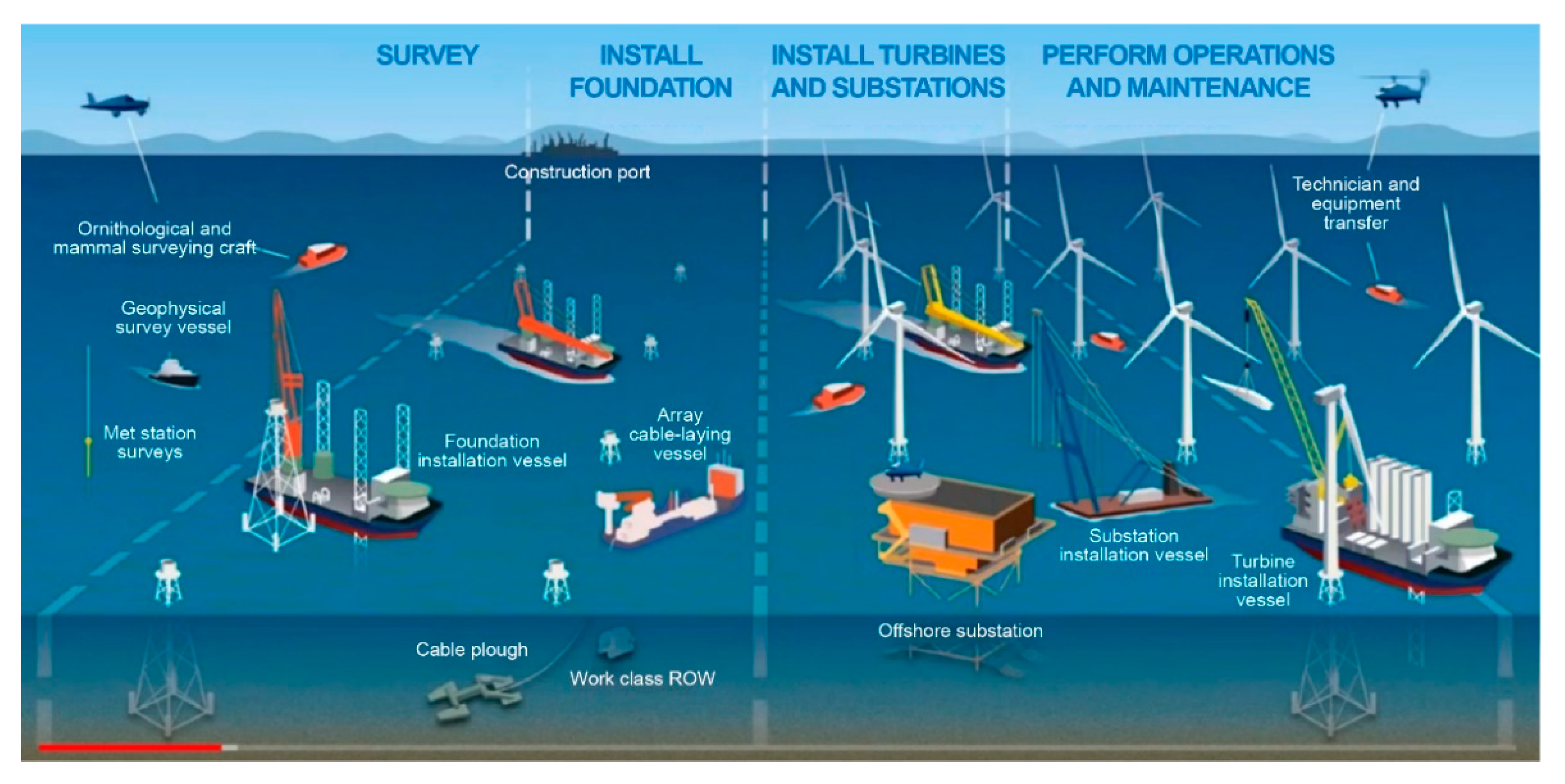
Before any turbine components reach the sea, the installation process begins with extensive geotechnical and geophysical site surveys. Engineers must characterize the seabed to determine the appropriate foundation type, whether it is a monopile, a jacket structure, a gravity-based foundation, or, in deeper waters, a floating platform. The soil composition—be it dense sand, soft clay, or solid rock—dictates the equipment required for seabed preparation.
Scour protection is a critical prerequisite. This involves placing layers of graded rocks or mattresses around the base of the foundation to prevent the ocean currents from eroding the sediment around the structure. Without effective scour protection, the structural integrity of the turbine foundation could be compromised shortly after installation. Once the seabed is prepared, the vessel fleet—typically comprising Heavy Lift Vessels (HLVs) or specialized Wind Turbine Installation Vessels (WTIVs)—is mobilized to the site. These vessels are equipped with jack-up legs that allow them to elevate their hulls above the sea surface, creating a stable, platform-like environment that remains unaffected by wave action during the lifting and assembly operations.
The Sequence of Installation: From Port to Foundation
The lifecycle of an offshore installation project follows a rigorous, sequential workflow designed to minimize the time spent at sea, where weather windows are unpredictable and operational costs are exceptionally high.
- Staging and Logistics: Components such as towers, nacelles, and blades are delivered to a specialized offshore wind port. This facility must have high load-bearing capacity and significant quayside space to act as a staging ground.
- Foundation Placement: The foundation (e.g., a monopile) is driven into the seabed using a hydraulic hammer or, in the case of gravity-based foundations, lowered onto a leveled surface. This stage requires high-precision GPS positioning and real-time monitoring of pile inclination.
- Transition Piece (TP) Installation: The TP connects the foundation to the turbine tower, providing a leveling interface and housing secondary structures like ladders, boat landings, and cable entry ports.
- Tower Assembly: Tower segments are lifted onto the TP and bolted into place. The bolts must be tensioned to specific torque requirements to ensure they can withstand the immense fatigue loads generated by turbine operation and marine environment stresses.
- Nacelle Installation: The nacelle, which houses the generator, gearbox, and drivetrain, is hoisted to the top of the tower. This represents one of the heaviest and most critical lifts in the sequence.
- Rotor and Blade Assembly: Depending on the project strategy, blades are either attached to the nacelle individually or lifted as a pre-assembled star (the "hub and blades" method). The latter reduces the number of lifts required but necessitates larger crane capacity.
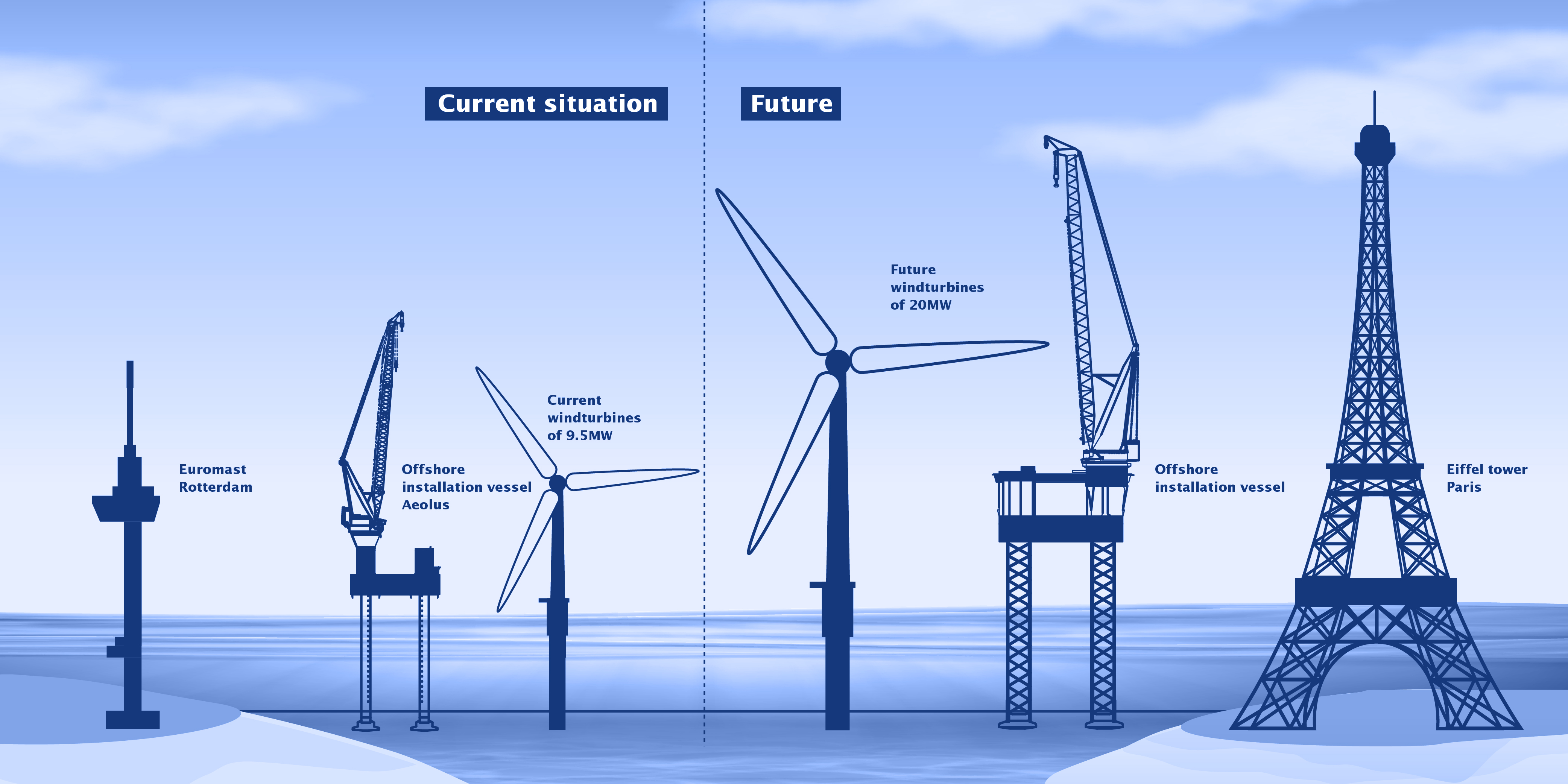
Comparison of Installation Vessel Capabilities
The choice of vessel is the most significant determinant of project cost and feasibility. As turbine sizes have increased, the demand for vessels with higher jacking capabilities and larger crane capacities has grown.
| Vessel Type | Primary Use Case | Key Advantage | Typical Limitation |
|---|---|---|---|
| Jack-up WTIV | Foundation & Turbine erection | High stability in shallow/mid depths | Restricted to shelf depths |
| Floating Crane Vessel | Heavy foundations/Jacket structures | Massive lift capacity | Weather sensitivity (high roll) |
| Anchor Handling Tug | Foundation towing/Positioning | Versatile utility support | Minimal autonomous lifting |
| Feeder Vessels | Logistics transport to WTIV | Allows for continuous WTIV work | Requires precise transfer logic |
Managing Weather Windows and Marine Risks
Offshore wind installation is inherently restricted by "weather windows"—periods where wind speeds, wave heights, and current velocities remain within the operational safety limits of the installation vessels. In 2026, the reliance on high-fidelity meteorological modeling has become the industry standard for risk mitigation. Project managers utilize real-time satellite data and local buoy measurements to determine when to suspend operations.
A primary risk during the installation process is "vessel motion." Even with jack-up technology, the process of transferring a blade from a transport barge to a WTIV can be dangerous in high swells. If a blade hits the side of a vessel or the tower structure during installation, it can cause catastrophic damage to the composite material, leading to massive financial losses and project delays. Consequently, the industry is increasingly adopting motion-compensated cranes and hydraulic blade-handling tools that hold the components steady relative to the installation structure, regardless of the vessel’s minor movements.
Electrical Connection and Commissioning
Once the physical structure is secured, the installation is not complete until the turbine is integrated into the electrical grid. This involves the installation of inter-array cables. These are medium-voltage power cables that link each turbine to an offshore substation.
Cable installation is a high-risk task involving specialized cable-lay vessels. The cables must be buried or protected by rock dumping to prevent damage from anchors or fishing trawls. Once the electrical link is confirmed, the process of commissioning begins. This involves a comprehensive verification of the electrical control systems, testing the pitch and yaw mechanisms of the turbine, and synchronizing the generator with the offshore substation. Only after these internal tests are verified does the project transition from "construction" to "operational generation."
Regulatory Compliance and Environmental Considerations
In 2026, installation projects must navigate an increasingly complex regulatory landscape. Environmental Impact Assessments (EIAs) are mandatory, focusing on the protection of marine mammals from underwater noise generated by pile driving. "Bubble curtains"—hoses that release a curtain of air bubbles around the pile-driving area—are now a standard requirement to dampen acoustic vibrations and protect marine life.
Furthermore, offshore wind developers must comply with maritime law, which dictates navigation safety in crowded sea lanes. Coordination with coast guards and maritime authorities is essential, as the installation site effectively becomes a restricted zone for other vessels. Developers must submit Notice to Mariners (NtMs) to ensure that local fishing fleets and commercial shipping traffic remain aware of the exclusion zones around the active installation site.
Frequently Asked Questions (FAQ)
What is the primary factor limiting the speed of offshore wind turbine installation? The primary limitation is weather window availability. Installation vessels are highly sensitive to wave height and wind speed. Even if a vessel is technically capable of lifting the loads, the safety protocols of the offshore wind industry dictate that installation must halt if conditions exceed predetermined "safe operating limits," often forcing the fleet to wait in harbor or on site for days at a time.
How are offshore wind turbines fixed to the seabed in deep water? In shallower waters, monopiles (large steel tubes) or jacket structures (lattice frames) are used. However, for deep-water locations, the industry is increasingly deploying floating wind turbines. These are anchored to the seabed using mooring lines and drag anchors, allowing them to remain stable while floating in water depths where fixed-bottom foundations are economically or technically unfeasible.
What is the "feeder" concept in offshore installation? As turbines grow larger, the WTIVs have difficulty carrying full sets of turbine components due to weight and deck space limits. The feeder concept uses smaller barges to bring components from the port to the WTIV at the offshore site. The WTIV stays at the location for the duration of the project, while the feeders cycle back and forth, maximizing the productivity of the expensive installation vessel.
Why is scour protection essential for the longevity of a turbine? Ocean currents moving around the base of a foundation create "scour," which is the removal of granular material from the seabed. If left unchecked, this erosion can undermine the foundation's stability, potentially leading to structural tilting. Scour protection systems, such as gravel dumping, dissipate the energy of the current to ensure the soil around the base remains stable for the 25-to-30-year design life of the turbine.
What happens if an installation component is damaged during transit? If a component like a blade or nacelle is damaged, the installation sequence is usually paused to allow for structural assessment. Minor damage may be repaired on-site by specialized composite technicians, but major damage often necessitates the return of the component to the port for replacement, which can lead to significant schedule delays and the mobilization of secondary lifting equipment.
Practical Next Steps for Project Stakeholders
For those involved in the planning or execution phases of offshore wind projects, success rests on the early integration of vessel logistics and site data. Prioritize the procurement of specialized vessels well in advance, as the global fleet of heavy-lift and turbine-installation ships is often oversubscribed. Ensure that the geotechnical data is verified by independent third-party surveyors to avoid expensive foundation redesigns during the installation phase. Finally, maintain open, transparent communication with maritime authorities to minimize the risk of legal or regulatory obstruction during the construction phase. By focusing on weather-resilient scheduling and precise logistical coordination, operators can significantly reduce the "balance of plant" costs that currently drive the majority of offshore wind expenditure.
Image Gallery
Select an image to open it in a new tab.

Akira Tanaka
International Academic Trends Correspondent
