
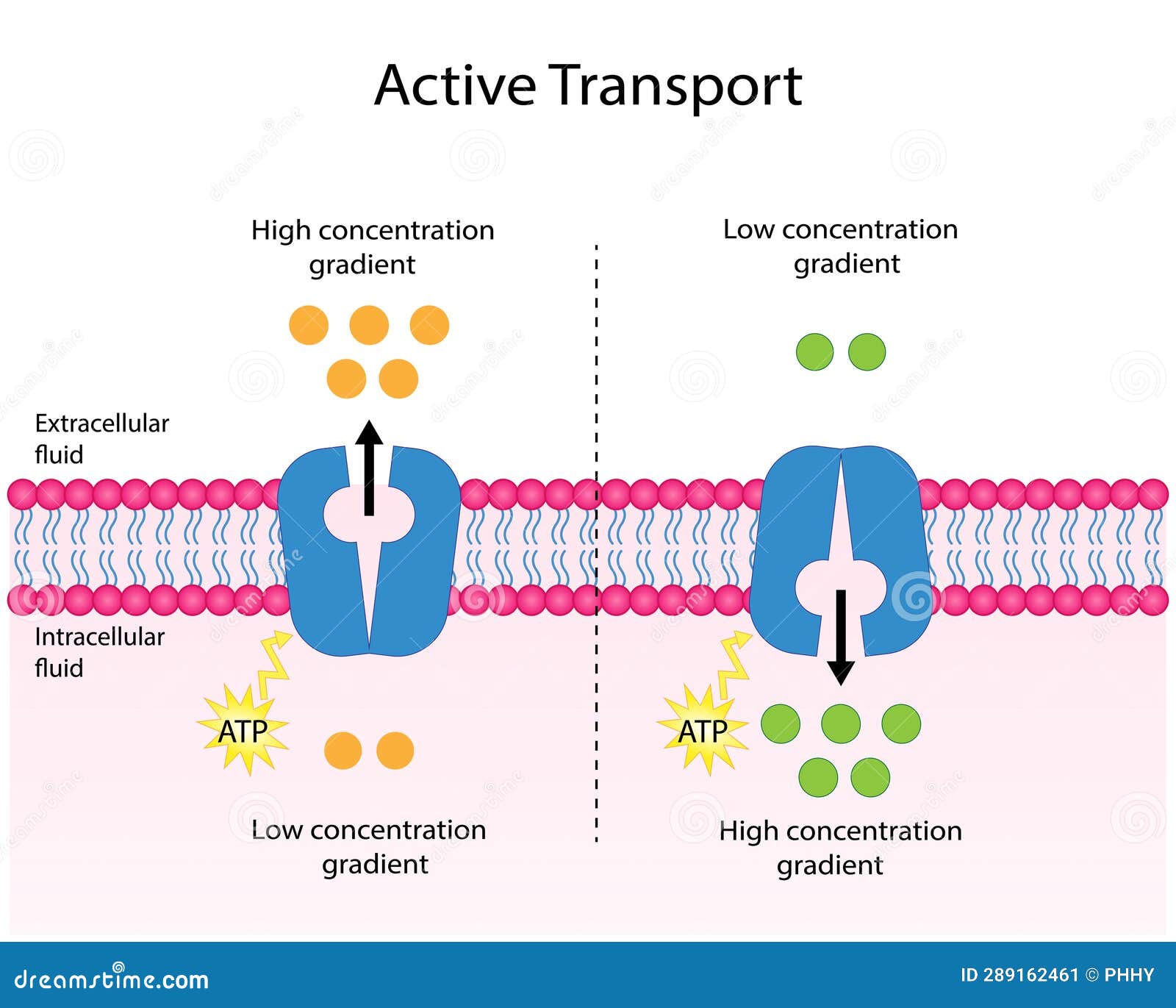
Active transport in the human body is the process of moving molecules or ions across a cell membrane from a region of lower concentration to a region of higher concentration. This movement occurs against the natural concentration gradient and requires cellular energy, typically in the form of adenosine triphosphate (ATP), to power specialized carrier proteins.
While passive transport (like osmosis or simple diffusion) allows substances to flow naturally across membranes without energy expenditure, active transport is the "workhorse" of cellular physiology. It allows cells to accumulate high concentrations of essential nutrients, maintain electrical gradients for nerve signaling, and expel waste products even when the external environment is already crowded with those substances. Without these active mechanisms, the biological "order" required for life would quickly succumb to entropy, leading to cellular death.
Fundamental Principles of Active Transport
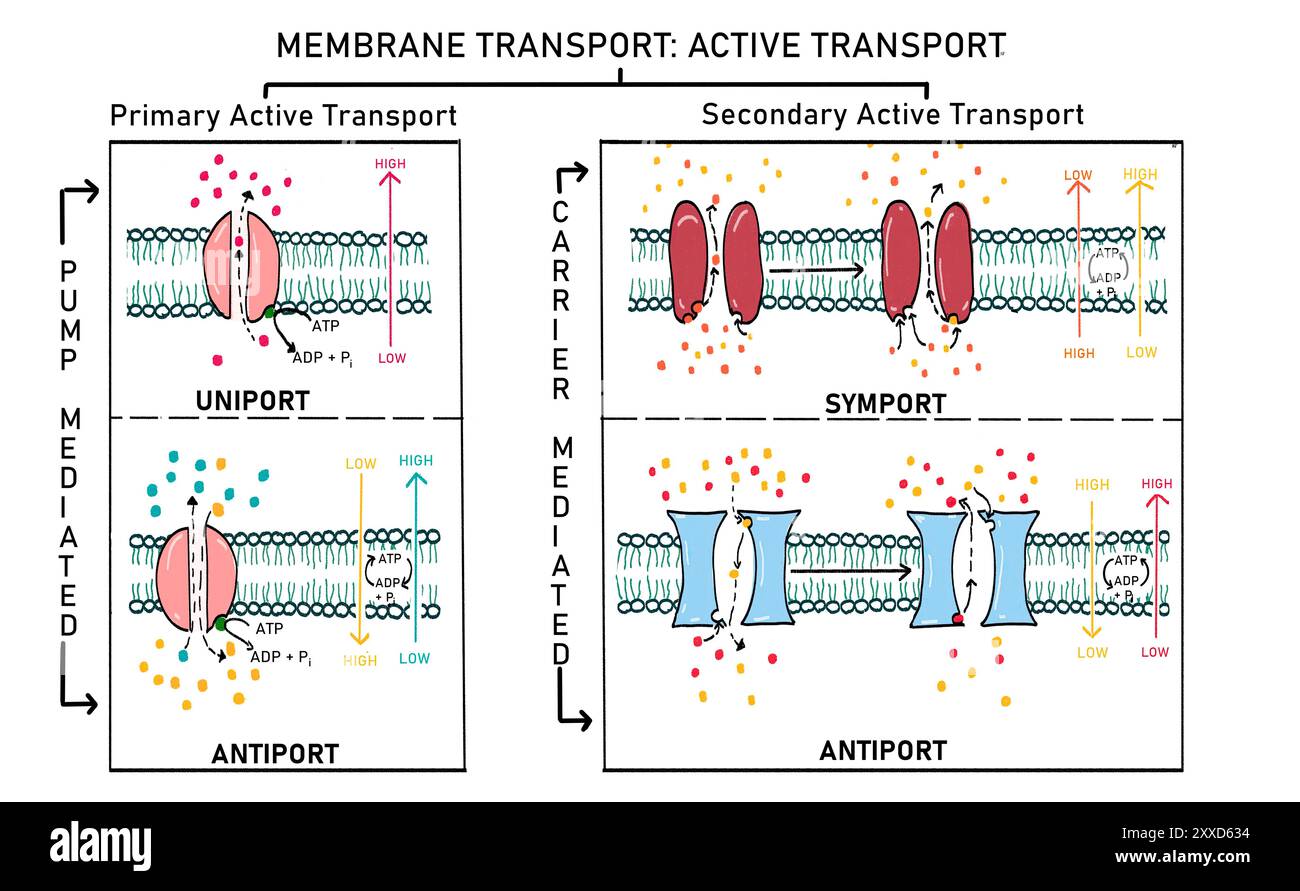
To understand specific examples, we must first categorize the two main types of active transport occurring in the human body as of 2026: primary and secondary.
Primary Active Transport
In primary active transport, the energy is derived directly from the breakdown of ATP. The transport protein itself is often an enzyme (an ATPase) that hydrolyzes ATP to obtain the necessary power to change its shape and "pump" the target molecule across the membrane. This mechanism is responsible for maintaining the fundamental ion gradients that define animal life.
Secondary Active Transport
Secondary active transport, also known as cotransport, does not use ATP directly. Instead, it hitches a ride on an electrochemical gradient already established by primary active transport. For instance, if a primary pump creates a high concentration of sodium ions outside the cell, those ions "want" to flow back in. A secondary transporter allows sodium to enter but forces another molecule (like glucose) to come along with it against its own gradient.
The Sodium-Potassium Pump ($Na^+/K^+$-ATPase)
The most prominent example of active transport in the body is the sodium-potassium pump. This vital protein is found in the plasma membrane of virtually every human cell. Its primary function is to maintain the internal environment of the cell by pumping sodium ions out and potassium ions in.
Mechanism of Action
For every cycle of the pump, three sodium ions ($Na^+$) are exported from the cell, while two potassium ions ($K^+$) are imported. Because both ions carry a positive charge, this unequal exchange results in a net loss of positive charge from the inside of the cell, contributing to the resting membrane potential.
- Binding: Three $Na^+$ ions bind to high-affinity sites on the pump inside the cell.
- Phosphorylation: A molecule of ATP is hydrolyzed, and a phosphate group is attached to the pump.
- Conformational Change: The energy from the phosphate group causes the pump to change shape, opening to the exterior of the cell and releasing the $Na^+$ ions.
- Potassium Binding: Two $K^+$ ions from outside the cell bind to the pump.
- Dephosphorylation: The phosphate group is released, causing the pump to return to its original shape and releasing the $K^+$ ions into the cytoplasm.
Physiological Importance
As of 2026, research continues to emphasize the massive energy expenditure associated with this single pump. In the human brain, the $Na^+/K^+$-ATPase consumes approximately 50% to 75% of the total energy used by neurons. This gradient is essential for:
- Action Potentials: The rapid influx of sodium is what allows nerves to fire and muscles to contract.
- Osmotic Balance: By regulating ion concentrations, the pump prevents the cell from swelling and bursting due to water rushing in via osmosis.
- Secondary Transport: The sodium gradient created here provides the "fuel" for most secondary active transport processes in the body.
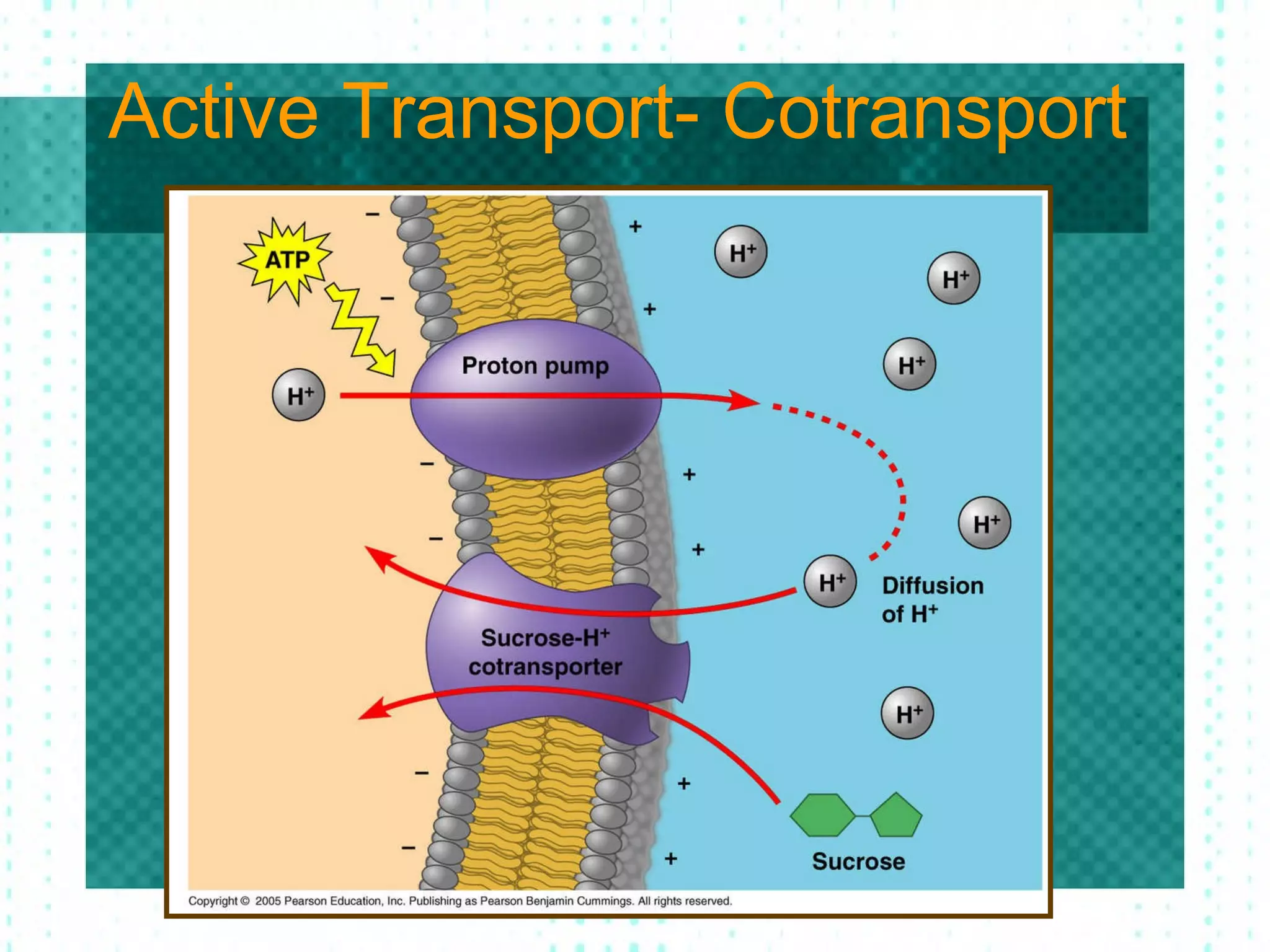
Proton Pumps and Gastric Acid Secretion
Another critical example of primary active transport is the proton pump ($H^+/K^+$-ATPase) located in the parietal cells of the stomach lining. This pump is responsible for making the stomach environment highly acidic, which is necessary for protein digestion and the destruction of ingested pathogens.
The proton pump moves hydrogen ions (protons) out of the parietal cells and into the stomach lumen. This occurs against a staggering concentration gradient—the concentration of $H^+$ in the stomach can be three to four million times higher than that inside the cell. This process requires significant ATP expenditure.
Clinical Context: Proton Pump Inhibitors (PPIs)
In modern medicine, medications like omeprazole or pantoprazole are used to treat conditions like Gastroesophageal Reflux Disease (GERD). These drugs work by directly binding to and inhibiting these active transport proteins, thereby reducing the amount of acid pumped into the stomach.
Calcium Ion Regulation in Muscle Cells
Calcium ($Ca^{2+}$) acts as a powerful signaling molecule in the body. For a muscle to relax after a contraction, calcium must be rapidly removed from the cytoplasm. This is achieved through the Calcium Pump (specifically the Sarcoplasmic/Endoplasmic Reticulum Calcium ATPase, or SERCA).
The calcium pump uses ATP to move $Ca^{2+}$ ions from the low-concentration environment of the cytoplasm into the high-concentration environment of the sarcoplasmic reticulum (a specialized storage organelle). By sequestering calcium, the cell ensures that the muscle fibers stop sliding, allowing the muscle to reset for the next contraction. Failure of this active transport mechanism can lead to muscle cramping or severe cardiac arrhythmias.
Secondary Active Transport: The Sodium-Glucose Symporter
In the small intestine and the kidneys, the body must ensure that 100% of available glucose is absorbed, even when the concentration inside the cells is already high. This is achieved via the Sodium-Glucose Linked Transporter (SGLT).
This is a classic example of symport (moving two substances in the same direction). The transporter allows sodium to flow down its gradient (established by the $Na^+/K^+$ pump) into the cell. As sodium moves, it "drags" a glucose molecule along with it.
Renal Reabsorption
In the kidneys, active transport ensures that glucose does not end up in the urine. As the blood is filtered, SGLT proteins in the proximal tubule work tirelessly to reclaim glucose back into the bloodstream. In 2026, SGLT2 inhibitors remain a primary pharmacological intervention for Type 2 Diabetes, as they block this active transport, allowing excess glucose to be excreted in the urine rather than remaining in the blood.
Bulk Transport: Endocytosis and Exocytosis
When the substances being moved are too large for individual carrier proteins—such as large proteins, bacterial cells, or neurotransmitters—the cell utilizes bulk transport. This is considered a form of active transport because the movement of the cell membrane and the cytoskeleton requires significant ATP.
Exocytosis in the Pancreas
The release of insulin from the beta cells of the pancreas is a prime example of exocytosis. Insulin is packaged into membrane-bound vesicles. When blood glucose rises, these vesicles are actively moved to the cell membrane, where they fuse and dump their contents into the extracellular fluid. This "export" process is energy-intensive and highly regulated.
Endocytosis: Phagocytosis in the Immune System
White blood cells, such as macrophages, use a form of endocytosis called phagocytosis ("cell eating") to engulf pathogens. The cell membrane actively extends "arms" called pseudopodia to surround a bacterium, pulling it into the cell to be destroyed by enzymes.
Summary of Transport Mechanisms
The following table compares the different modes of transport to highlight the unique requirements of active transport.
| Transport Type | Energy Required? | Protein Involved? | Direction of Movement | Key Example |
|---|---|---|---|---|
| Simple Diffusion | No (Passive) | No | With gradient (High to Low) | Oxygen entering blood |
| Facilitated Diffusion | No (Passive) | Yes (Channel/Carrier) | With gradient (High to Low) | Glucose entry via GLUT4 |
| Primary Active Transport | Yes (ATP) | Yes (Pump/ATPase) | Against gradient (Low to High) | $Na^+/K^+$ Pump |
| Secondary Active Transport | Yes (Gradient) | Yes (Cotransporter) | Against gradient (Low to High) | Sodium-Glucose Symport |
| Bulk Transport | Yes (ATP) | Yes (Vesicles) | N/A (Mass movement) | Insulin secretion |
Prerequisites for Effective Active Transport
For active transport to function correctly in the human body, several physiological conditions must be met:
- Mitochondrial Health: Since primary active transport relies on ATP, the mitochondria must be functioning efficiently. Conditions that impair cellular respiration (like hypoxia or cyanide poisoning) immediately halt active transport, leading to rapid cellular swelling and death.
- Membrane Integrity: The lipid bilayer must remain intact. If the membrane becomes "leaky," ions will flow back down their gradients, neutralizing the work done by the pumps.
- Protein Synthesis: The body must constantly produce and replace the specialized pump proteins. Genetic mutations in the instructions for these proteins can lead to diseases such as cystic fibrosis, which is caused by a defect in the CFTR protein (an ATP-binding cassette transporter).
- Temperature: Like all enzymatic processes, the rate of active transport is temperature-dependent. Hypothermia slows down these pumps, which is why cellular metabolism drops significantly in cold environments.
Common Mistakes and Misconceptions
A frequent error in studying this subject is confusing facilitated diffusion with active transport. Both use membrane proteins, but the distinction lies in the energy requirement and direction. If a molecule is moving from high to low concentration via a protein "doorway," it is facilitated diffusion (passive). If it is being "pushed" from low to high, it is active transport.
Another misconception is that active transport only moves things out of a cell. As seen with the potassium portion of the $Na^+/K^+$ pump and the SGLT in the gut, active transport is just as critical for bringing substances into the cell against their will.
Related Research and Future Directions
As of 2026, research into active transport is focusing heavily on targeted drug delivery. By understanding the specific "tags" or ligands that active transporters recognize, scientists are designing medications that can be actively pumped into cancer cells while ignoring healthy ones. Furthermore, the study of the Blood-Brain Barrier (BBB) relies heavily on understanding active transport; the BBB uses specialized efflux pumps (like P-glycoprotein) to actively kick drugs and toxins out of the brain, which is a major hurdle in treating neurological diseases.
For further reading on the molecular structure of these pumps, the National Center for Biotechnology Information (NCBI) provides extensive peer-reviewed data on the $Na^+/K^+$-ATPase and other human ion pumps. Detailed kinetic models of secondary transport can also be explored through the Journal of General Physiology.
Frequently Asked Questions
What is the main difference between primary and secondary active transport?
The primary difference lies in the energy source. Primary active transport uses ATP directly to power the transport protein. Secondary active transport uses the energy from an existing electrochemical gradient (usually created by a primary pump) to move a different substance against its concentration gradient.
Why does the body spend so much energy on the sodium-potassium pump?
The $Na^+/K^+$ pump is essential for maintaining the cell's osmotic pressure and the electrochemical gradient necessary for nerve impulses and muscle contractions. Without it, our cells would take in too much water and burst, and our nervous system would be unable to transmit signals.
Can active transport occur without a membrane protein?
No. Because active transport involves moving substances against the laws of physics (moving from low to high concentration), a specialized biological machine—a transmembrane protein—is required to facilitate the movement and utilize the energy. The only exception is bulk transport (endocytosis/exocytosis), which uses the membrane itself and the cytoskeleton.
Is the movement of oxygen into cells an example of active transport?
No. Oxygen is a small, nonpolar molecule that moves across cell membranes via simple diffusion. It always moves from an area of higher concentration (the blood) to an area of lower concentration (the cell), requiring no energy.
What happens if active transport stops in the kidneys?
If the active transport of ions and nutrients (like glucose and amino acids) stopped in the kidneys, the body would lose these essential substances through urine. This would lead to severe dehydration, electrolyte imbalances, and malnutrition, as the kidneys would fail to reabsorb the filtered components of the blood.
Practical Recommendation
If you are a student or health professional looking to master this topic, focus on the Sodium-Potassium Pump as your foundation. Understanding how this single pump creates a "battery-like" charge across the cell membrane is the key to understanding how most other transport systems, including those for nutrients and neurotransmitters, function. For those interested in clinical applications, researching SGLT2 inhibitors or Proton Pump Inhibitors provides an excellent real-world look at how manipulating active transport can treat chronic diseases.
Image Gallery
Select an image to open it in a new tab.



Simon Caldwell
Enterprise Technology and Systems Editor
