
Spring in Las Vegas feels like a fleeting, high-energy transition between the sharp chill of the high-desert winter and the oppressive, stationary heat of summer. It is characterized by crisp mornings, pleasantly warm afternoons with low humidity, vibrant floral displays at major resorts, and a significant increase in wind speeds as pressure systems shift across the Mojave.
The Climatic Shift: Temperature and Atmosphere
To understand what spring in Las Vegas feels like, one must first understand the concept of the "desert diurnal swing." In the spring months of March, April, and May, the temperature can fluctuate by as much as 30 degrees Fahrenheit within a single twelve-hour period. This creates a sensory experience defined by layers; you start the day in a light jacket and end it in swimwear, only to retreat back into sleeves once the sun dips behind the Spring Mountains.
In 2026, the climate patterns continue to follow the traditional Mojave transition. March typically introduces the first consistent 70-degree days, though it remains "unsettled." One day may feel like a preview of summer, while the next brings a sharp, cold front that reminds residents the winter hasn't entirely surrendered. By April, the city hits its meteorological "sweet spot," where afternoon highs hover around 78°F to 82°F. May marks the definitive arrival of heat, with the first 90-degree days appearing as a harbinger of the triple-digit temperatures expected in June.
The Low Humidity Factor
The physical sensation of Las Vegas heat is distinct because of the extremely low relative humidity, often dipping below 10% in the spring. Unlike the "heavy" air of the American South or the Midwest, Las Vegas air feels thin and "sharp." You do not sweat in the traditional sense; moisture evaporates from the skin instantly. This can be deceptive, as the cooling effect of evaporation prevents you from realizing how quickly the sun is dehydrating your body. Spring feels "clean" and dry, which many find invigorating compared to the muggy transitions seen in other climates.
The Infamous Spring Winds
If spring had a specific sound in Las Vegas, it would be the howling of the wind through the desert canyons and between the glass towers of the Strip. March and April are statistically the windiest months in Southern Nevada. This occurs because the Great Basin to the north begins to warm up, creating significant pressure gradients against the cooler air pockets in the mountain ranges.
The "feel" of this wind is not always a gentle breeze. It often manifests as sustained gusts of 20 to 30 mph, with occasional bursts exceeding 50 mph. For a visitor, this means the outdoor experience can shift from serene to chaotic in minutes. Dust from the surrounding dry lake beds can be kicked up, creating a hazy "desert sky" that obscures the view of the mountains. On the Strip, the wind tunnels created by massive resorts like the Wynn or Caesars Palace can make walking a physical challenge. It is a dry, scouring wind that necessitates heavy use of moisturizer and lip balm.

The Visual and Olfactory Experience: The Desert in Bloom
While many associate Las Vegas with neon and concrete, the "feel" of spring is deeply tied to the natural world. This is the only time of year when the Mojave Desert loses its monochromatic tan and olive appearance.
The Bellagio Conservatory and Botanical Gardens
For those staying on the Strip, spring is defined by the massive floral installation at the Bellagio. In 2026, the spring display remains a cornerstone of the season’s identity. The air inside the conservatory smells intensely of lilies, hyacinths, and damp earth—a stark, refreshing contrast to the recycled air and faint scent of tobacco found in many casino floors. The visual "feel" here is one of maximalism, with tens of thousands of blooming plants curated to celebrate the renewal of the season.
The Natural Desert Bloom
Outside the city limits, in areas like Red Rock Canyon or the Valley of Fire, spring feels like a rare window of life. If the winter brought sufficient rainfall, the desert floor erupts in "superblooms" of desert marigolds, globe mallows, and brittlebush. The Joshua Trees, unique to this region, produce heavy, cream-colored blossoms. There is a specific scent to the desert after a rare spring rain—a musky, herbal aroma caused by the oils of the creosote bush. This scent, known locally as the "smell of rain," is the quintessential olfactory marker of a Las Vegas spring.
The Cultural and Social "Vibe"
The atmosphere of the city undergoes a psychological shift in the spring. There is a palpable sense of urgency to be outside before the summer heat makes outdoor activity a survival exercise rather than a leisure pursuit.
The Opening of the Pools
Spring marks the official "Dayclub" season. While some pools remain open year-round with heated water, the full Las Vegas pool culture—complete with DJs, cabana service, and massive crowds—reactivates in March. The "feel" of the Strip changes from the more subdued, indoor-focused winter crowd to a high-energy, sun-seeking demographic. Even if the air is 75°F, the intense high-altitude sun makes it feel like 85°F, and the poolside areas become the primary social hubs of the city.
Outdoor Recreation Peak
For residents and savvy travelers, spring is the season for movement. The hiking trails at Red Rock Canyon reach their peak capacity. The "feel" of the canyon in April is perfect—cool enough to hike the strenuous Turtlehead Peak without overheating, yet warm enough that the sandstone rocks feel pleasant to the touch. Golf courses are at their most vibrant green, and the outdoor dining patios at Downtown Summerlin or the District at Green Valley Ranch are consistently at capacity.
Technical Data: Spring Weather Averages (2026 Projections)
The following table outlines the expected environmental conditions for the spring season in Las Vegas, based on historical climate data and current meteorological trends for 2026.
| Month | Avg High (°F) | Avg Low (°F) | Avg Wind Speed (mph) | Relative Humidity (%) |
|---|---|---|---|---|
| March | 71°F | 49°F | 10.2 | 22% |
| April | 79°F | 56°F | 10.8 | 16% |
| May | 90°F | 66°F | 10.1 | 12% |
Data sourced and adapted from the National Weather Service climate archives.
Challenges: Allergies and the UV Index
While spring is often considered the best time to visit, it is not without physical discomforts. The "feel" of spring in Las Vegas can be quite irritating for those sensitive to allergens or the sun.
The Allergy "Wall"
Las Vegas is frequently ranked as a challenging city for allergy sufferers in the spring. Despite being a desert, the heavy landscaping in residential areas and resorts features non-native species. Mulberry and olive trees, though regulated, still contribute massive amounts of pollen to the air. Because the air is so dry, pollen stays suspended longer. The "feel" of spring for many is one of itchy eyes, sinus pressure, and a persistent dry cough.
The Deceptive Sun
In 2026, the UV index in Las Vegas during April and May frequently hits "Very High" (8-10) levels. Because the air temperature is comfortable (70s and 80s), people often fail to realize they are burning. The sun in the high desert feels more "piercing" than it does at sea level. Without the humidity to scatter the light, the radiation is direct and intense. A spring afternoon in Las Vegas feels bright—extraordinarily bright—necessitating high-quality polarized sunglasses to prevent eye strain.
Logistics: Pricing and Planning for 2026
The physical "feel" of the city is also impacted by its density. Spring is a peak convention season. In April 2026, major events like the NAB (National Association of Broadcasters) show bring tens of thousands of professionals to the city.
- Crowd Density: The Strip feels "full" but not as claustrophobic as it does during the mid-summer weekends or New Year's Eve. Pedestrian bridges are crowded, and reservations for popular restaurants like those in the Fountain Tree district are essential weeks in advance.
- Pricing: Expect "peak season" pricing for hotel rooms. In 2026, mid-week rates at four-star properties like the Aria or Caesars Palace typically range from $180 to $350, with weekend spikes significantly higher.
- Attire: The logistical "feel" of packing for Las Vegas in the spring is one of variety. You must prepare for the "three-climate day": the air-conditioned 68°F casino, the 80°F sun-drenched pool deck, and the 55°F windy evening stroll.
Comparison: Spring vs. Other Seasons
To truly grasp the spring experience, it helps to compare it to the seasons it sits between.
- Spring vs. Winter: Winter in Vegas feels "sharp" and surprisingly cold, especially when the wind whips off the snow-capped Mount Charleston. Spring loses that "bite" and replaces it with a gentle warmth.
- Spring vs. Summer: Summer in Vegas is a test of endurance. It feels like standing in front of an open oven. Spring, by contrast, feels like a luxury. You can actually exist outdoors for more than ten minutes without seeking shade or hydration.
- Spring vs. Fall: Fall is the closest relative to spring, but they feel different. Fall feels like the city is "cooling down" and exhaling after a long heatwave. Spring feels like the city is "revving up," filled with the anticipation of the busy season ahead.
Frequently Asked Questions
Is it warm enough to swim in Las Vegas in March?
While the air temperature in March 2026 averages 71°F, it can feel warmer in the direct sun. However, the water temperature in unheated pools will be quite cold. Most major resorts heat their primary pools to roughly 78-80°F, making swimming comfortable, but the "feel" of exiting the water into the desert wind can be very chilling. It is best to have a robe or large towel immediately available.
What should I pack for a spring trip to Las Vegas?
The most important items are layers. You should include lightweight cotton or linen clothing for the daytime and a medium-weight jacket or denim jacket for the evenings. Because the spring wind is so drying, high-quality moisturizer, saline nasal spray, and lip balm are considered "technical essentials" for the climate.
Does it rain much during spring in Las Vegas?
Rain is infrequent but impactful. Most spring precipitation comes in the form of short, intense bursts rather than all-day drizzles. These storms often bring dramatic lightning over the mountains and a significant drop in temperature. In 2026, the average rainfall for the spring season remains under 1.5 inches total.
Why is the wind so bad in the spring?
The wind is a result of the thermal transition. As the desert floor heats up, the hot air rises, and cooler air from the mountains or the Pacific coast rushes in to fill the vacuum. This creates the "wind tunnel" effect common in the Mojave during March and April.
Are the fountains at Bellagio affected by the spring wind?
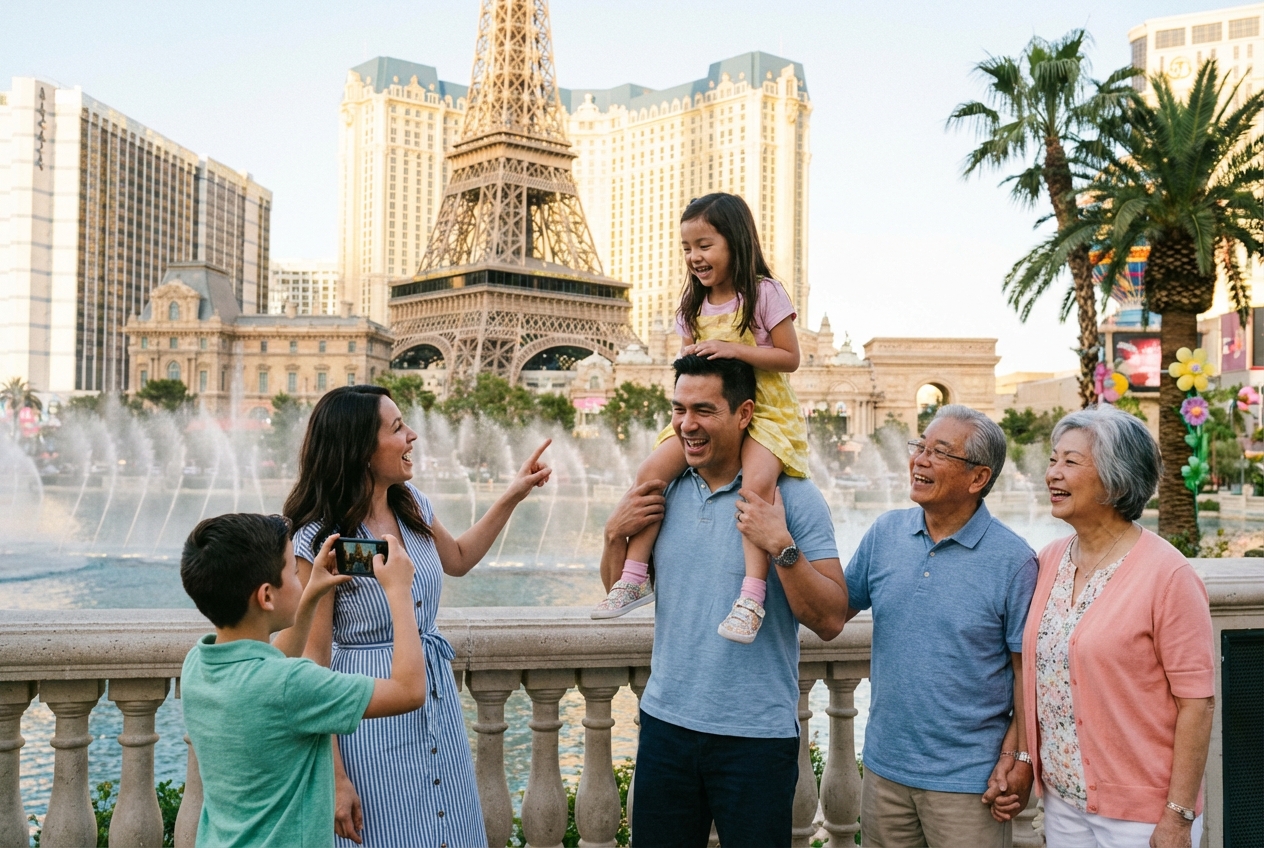
Yes. One of the unique "feels" of spring is the intermittent closure of the Fountains of Bellagio. If wind gusts exceed a certain safety threshold (typically around 20-25 mph), the show is either cancelled or the shooters are limited to lower heights to prevent water from spraying onto the Las Vegas Boulevard traffic.
Final Recommendation
To experience the best "feel" of a Las Vegas spring, aim for the mid-April window. This period offers the most reliable balance of warm (but not hot) temperatures, the peak of the desert and conservatory blooms, and a lower likelihood of the extreme cold snaps that can haunt early March. Be prepared for the wind, stay hydrated despite the lack of visible sweat, and take advantage of the outdoor recreation that becomes nearly impossible once the July heat arrives. Spring in Las Vegas is the city at its most physically comfortable and energetically vibrant.
Image Gallery
Select an image to open it in a new tab.

Declan O'Connor
Higher Education and Campus Culture Reporter
