Understanding the 2014 Honda Accord Warning Lights: A Comprehensive Dashboard Guide

Navigating the 2014 Honda Accord dashboard requires understanding its warning lights, which use color-coded icons—red for urgent safety threats, amber for system maintenance needs, and green or blue for active status indicators—to communicate critical vehicle diagnostics and ensure reliable, safe operation.
Introduction to the 2014 Honda Accord Dashboard System
The 2014 Honda Accord utilizes a sophisticated network of electronic control units (ECUs) and sensors to monitor engine performance, emissions, safety equipment, and chassis dynamics. When a sensor detects an irregular reading or a component fails, the instrument cluster illuminates a specific warning or indicator light. For vehicle owners and technicians alike, deciphering these alerts is the first step toward preventing catastrophic mechanical failures and expensive repairs.
Modern instrument clusters categorize information using a standardized color hierarchy. Red lights demand immediate action, often requiring the driver to pull over safely and shut off the engine. Amber or yellow lights serve as cautionary alerts, indicating that a system requires inspection or service at the earliest convenience. Green and blue icons simply denote that a comfort or convenience feature—such as cruise control or high beams—is currently engaged. This guide breaks down the most critical warning lights on the 2014 Honda Accord, detailing what they mean, why they trigger, and how to respond safely.
Critical Red Warning Lights (Immediate Action Required)
Red warning lights on the 2014 Honda Accord represent urgent conditions that threaten vehicle safety, mechanical integrity, or the well-being of the occupants. When a red light illuminates while driving, the vehicle generally requires immediate attention.
Low Oil Pressure Warning Light
Resembling an old-fashioned oil can, this red indicator illuminates when the engine oil pressure drops below safe operating levels. Low oil pressure can stem from low oil levels, a failing oil pump, or internal engine wear. Ignoring this light can cause catastrophic engine seizure within minutes. If this light illuminates while driving, pull over immediately, turn off the engine, and check the oil dipstick. If the oil level is critically low, top it up before restarting, but if the light remains on, the vehicle must be towed.
Charging System (Battery) Warning Light
Depicting a battery box with positive and negative terminals, this light indicates that the vehicle's electrical system is not charging properly. This usually points to a failing alternator, a snapped serpentine belt, or a loose battery cable. When this light is active, the vehicle is running entirely on residual battery power; once the battery drains, the engine will stall, and electrical systems will fail.
Brake System Warning Light
Displaying the word "BRAKE" or an exclamation point inside a circle, this light serves a dual purpose. It illuminates when the parking brake is engaged, but it also warns of low brake fluid or a malfunction within the hydraulic braking system. Verify that the parking brake is fully released. If the light persists, the vehicle's braking capability may be severely compromised, and driving should be avoided until inspected by a professional mechanic.
Supplemental Restraint System (SRS) Warning Light
Showing a seated passenger with an airbag deployed in front of them, the SRS light indicates a fault within the airbag or seatbelt tensioner system. In the event of a collision, an illuminated SRS light suggests that the airbags may not deploy correctly. While the car remains mechanically drivable, safety systems are compromised, and diagnostic trouble codes (DTCs) must be read using an OBD-II scanner capable of reading SRS modules.
Amber Cautionary Lights (Service and Maintenance)
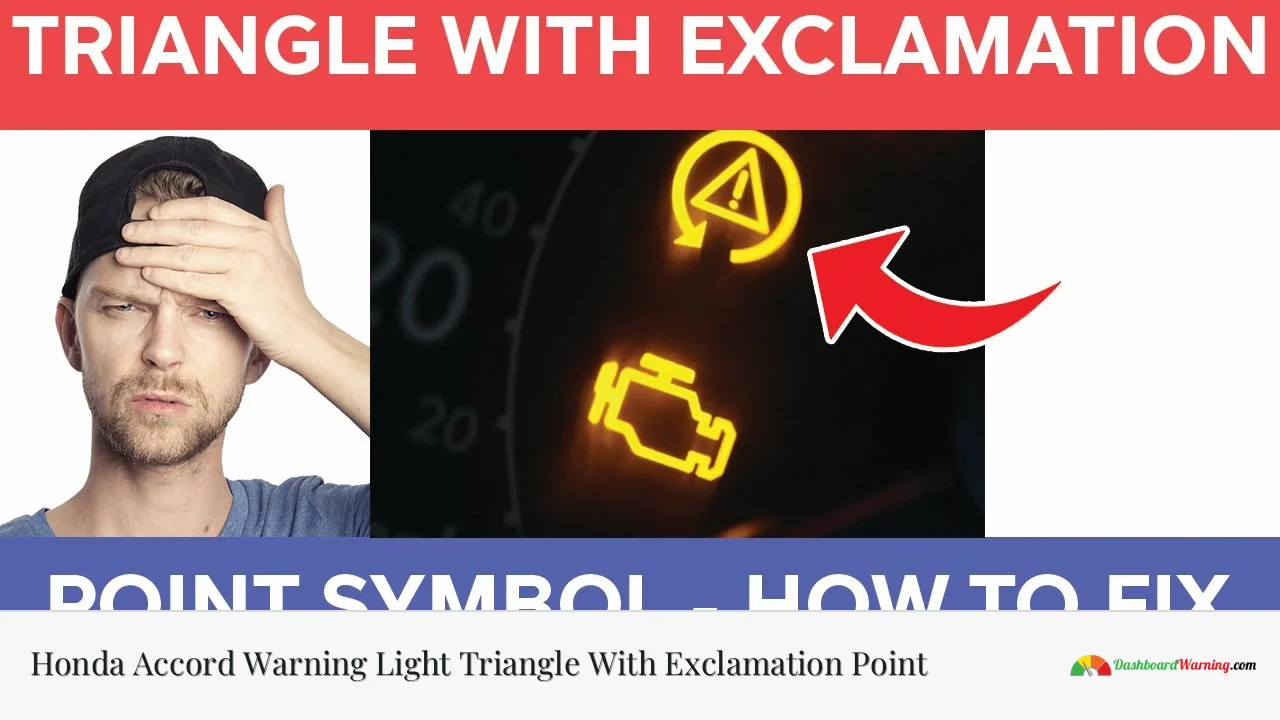
Amber or yellow lights indicate that a non-critical system has developed a fault or that a component requires routine service. These alerts do not usually require roadside intervention, but they should not be ignored indefinitely.
| Warning Light Name | Icon Description | Primary Cause | Recommended Action |
|---|---|---|---|
| Malfunction Indicator (Check Engine) | Engine outline | Emissions, ignition, or fuel system fault | Scan for OBD-II codes; inspect gas cap |
| Anti-Lock Braking System (ABS) | Letters "ABS" in a circle | Wheel speed sensor failure, hydraulic modulator issue | Drive cautiously; service braking system soon |
| Tire Pressure Monitoring System (TPMS) | Exclamation point inside horseshoe | Low tire pressure or failing wheel sensor | Check and adjust tire pressures to door placard specs |
| Vehicle Stability Assist (VSA) | Slipping car icon | Loss of traction or electronic steering/stability fault | Reduce speed; service if the light stays illuminated |
| Electric Power Steering (EPS) | Steering wheel next to exclamation point | Steering motor fault or electrical glitch | Restart engine; if steering feels heavy, seek service |
Malfunction Indicator Lamp (Check Engine Light)
The Check Engine Light is perhaps the most widely misunderstood indicator on the 2014 Honda Accord dashboard. It can signal anything from a loose gas cap to a failing catalytic converter or misfiring fuel injector. When this light turns on solidly, the ECU has stored a diagnostic trouble code (DTC). Mechanics use an OBD-II scan tool to retrieve these codes. If the light is blinking, however, it indicates an active engine misfire that can damage the catalytic converter, requiring immediate reduction in engine load and prompt repair.
Tire Pressure Monitoring System (TPMS)
The 2014 Accord uses an indirect or direct TPMS depending on the trim level (with upper trims utilizing direct pressure sensors inside each wheel). When the horseshoe-shaped icon with an exclamation point illuminates, one or more tires are significantly underinflated. After adjusting the tire pressures to the manufacturer-specified cold PSI listed on the driver's door jamb placard, the TPMS system must often be calibrated through the vehicle's i-MID (intelligent Multi-Information Display) or center console settings.
Vehicle Stability Assist (VSA) and Traction Control
The VSA icon, which depicts a skidding vehicle, flashes when the system is actively working to maintain traction on slippery surfaces. If the light remains permanently illuminated, it indicates a fault within the VSA system, hill start assist, or stability sensors. While normal braking and steering remain functional, electronic stability control is disabled.
Understanding Maintenance Minder Codes
In addition to traditional warning lights, the 2014 Honda Accord features a Maintenance Minder system integrated into the instrument cluster display. This system calculates oil life based on engine operating conditions and displays specific alphanumeric codes when service is due.
- Service A: Replace engine oil.
- Service B: Replace engine oil and oil filter, inspect front and rear brakes, check parking brake adjustment, check tie rod ends, steering gear box, boots, suspension components, drive shafts, brake hoses and lines, fluid levels, and exhaust system.
- Sub-code 1: Rotate tires.
- Sub-code 2: Replace air cleaner element, dust and pollen filter, and inspect drive belt.
- Sub-code 3: Replace transmission fluid.
- Sub-code 4: Replace spark plugs and inspect valve clearance.
- Sub-code 5: Replace engine coolant.
Ignoring Maintenance Minder alerts can lead to premature component wear and void warranty coverage on newer vehicles, though a 2014 model operates outside original factory warranty windows unless covered by an aftermarket policy.
Troubleshooting and Resetting Procedures
When dealing with warning lights on a 2014 Honda Accord, a systematic approach saves time and money. Many intermittent electrical issues or sensor glitches can be diagnosed at home before visiting a professional repair facility.
Step-by-Step Diagnostic Approach
- Observe and Record: Note whether the light is solid or flashing, its color, and any accompanying text messages on the instrument cluster or i-MID screen.
- Check Fluid Levels and Caps: Ensure the gas cap is tightened securely (a loose cap frequently triggers the Check Engine light) and verify engine oil, brake fluid, and coolant levels.
- Perform an OBD-II Scan: Connect an OBD-II code reader to the port located beneath the driver's side dashboard to retrieve stored fault codes.
- Inspect Fuses and Wiring: Check relevant fuses in the under-hood or interior fuse boxes if an electrical accessory or sensor light remains stubbornly illuminated.
How to Reset Maintenance Minder Indicators
Once service has been performed, the Maintenance Minder life must be manually reset to 100%.
- Turn the ignition switch to the ON (II) position or press the ENGINE START/STOP button twice without depressing the brake pedal.
- Press the Trip/Reset stem on the instrument cluster or use the steering wheel controls to cycle through the display until the engine oil life percentage is visible.
- Press and hold the Trip/Reset stem (or enter button on the steering wheel) for approximately 10 seconds until the oil life display begins to blink.
- Release the button, then press and hold it again for another 5 seconds until the display resets to 100% and the service code disappears.
Frequently Asked Questions
Why is my 2014 Honda Accord Check Engine light flashing instead of staying solid?
A flashing Check Engine light indicates an active engine misfire, which allows unburned fuel to enter the exhaust system and overheat the catalytic converter. You should reduce speed immediately, avoid heavy acceleration, and have the vehicle inspected and repaired as soon as possible to prevent costly damage.
Can low outside temperature cause the TPMS light to turn on?
Yes. Ambient temperature drops affect tire pressure significantly—typically losing about 1 PSI for every 10°F drop in temperature. Cold winter mornings frequently trigger the TPMS warning light on a 2014 Accord even if there is no puncture, requiring you to check and adjust pressures once tires are cold.
How do I clear warning lights after repairing my 2014 Honda Accord?
Some warning lights, such as Maintenance Minder alerts, clear through manual button sequences. However, powertrain and safety lights (like Check Engine, ABS, or SRS codes) require clearing stored diagnostic trouble codes from the computer memory using an OBD-II scan tool or driving through specific drive cycles once the underlying mechanical issue is resolved.
Is it safe to drive with the amber VSA light on?
The vehicle remains mechanically drivable, but electronic stability control and traction assist are disabled. Exercise extreme caution if driving on wet, icy, or loose surfaces, and schedule a diagnostic check to determine why the system faulted.
What does a green or blue indicator light mean on my dashboard?
Green and blue lights—such as the cruise control icon, high beam headlight indicator, or the Econ mode leaf icon—are informational status indicators. They do not signal a problem or require action; they simply let you know that a vehicle feature is currently turned on and working.
Final Recommendation
Properly interpreting the warning lights on a 2014 Honda Accord ensures vehicle longevity and occupant safety. Always prioritize red lights by stopping the vehicle safely, address amber maintenance alerts promptly with proper diagnostic scanning, and consult a qualified automotive technician when mechanical repairs exceed basic DIY maintenance.
Image Gallery
Select an image to open it in a new tab.

Simon Caldwell
Enterprise Technology and Systems Editor
