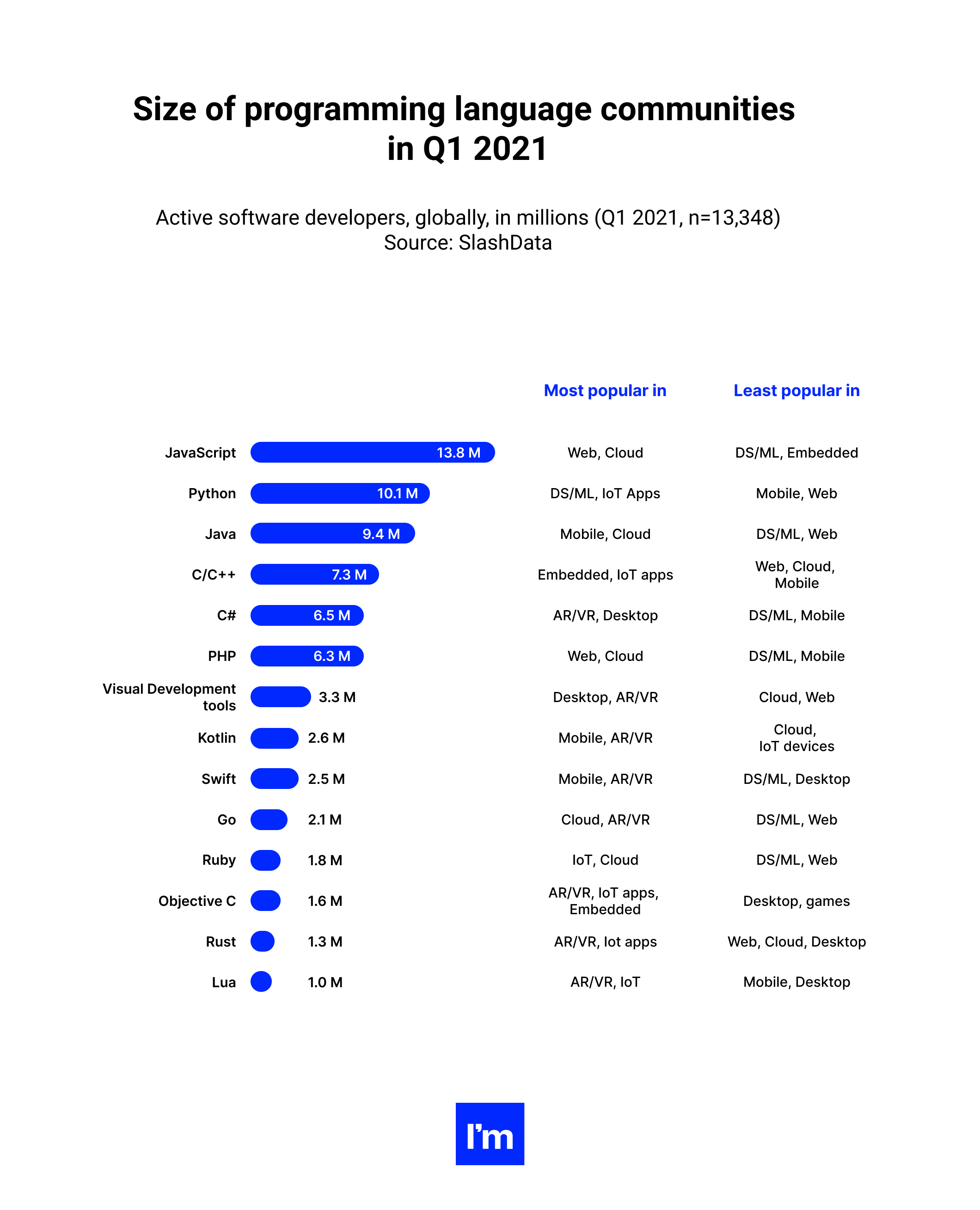
As of 2026, C remains a cornerstone of software engineering, functioning as the primary language for systems programming, embedded firmware, and the high-performance kernels that power modern computing. Despite the emergence of memory-safe alternatives, C continues to dominate due to its unparalleled portability, minimal runtime overhead, and the sheer volume of legacy infrastructure that requires active maintenance and evolution.
The Resilience of C in a Modern Ecosystem
The relevance of the C programming language in 2026 is often misunderstood through the lens of pure popularity indices. While newer languages attract attention for high-level application development, C remains the undisputed "lingua franca" of the hardware-software interface. Its endurance is not merely a result of inertia; it is a technical necessity.
Operating systems, including the Linux kernel, BSD variants, and real-time operating systems (RTOS) used in critical infrastructure, are fundamentally rooted in C. Developers continue to choose C because it provides a predictable mapping to machine instructions, allowing for the fine-grained memory management and performance tuning required for device drivers, microcontrollers, and low-latency financial systems. The "state" of C is characterized by a mature ecosystem where the language is no longer evolving through radical feature additions, but through increased focus on static analysis, security auditing, and improved tooling.
Standardization and Tooling Evolution
The C language specification is maintained through the ISO/IEC 9899 standard. By 2026, the focus of the standards committee has shifted away from large-scale syntax changes toward refinement and clarification. This stability is a significant advantage for industries—such as aerospace, medical devices, and automotive systems—where certification and predictability are paramount.
Modern Tooling Infrastructure
The contemporary C developer relies heavily on advanced toolchains that mitigate the language’s inherent risks regarding memory safety. The following components represent the current baseline for professional C development:
- Static Analysis Tools: Modern compilers like GCC and Clang now integrate sophisticated static analysis that detects buffer overflows, use-after-free errors, and uninitialized memory usage at compile time.
- Sanitizers: AddressSanitizer (ASan) and UndefinedBehaviorSanitizer (UBSan) have become standard equipment in the debugging lifecycle, allowing developers to catch runtime errors that were historically difficult to isolate.
- Build Systems: The consolidation of build tooling around CMake, Ninja, and Meson has standardized the management of complex dependency graphs, making cross-platform compilation more reliable than in previous decades.
- Package Management: While traditionally fragmented, package managers like Conan and vcpkg have matured, bringing a level of dependency management to C that aligns closer to modern development expectations.
Comparing C to Modern Systems Alternatives
As interest in memory-safe languages grows, it is essential to distinguish between the roles C occupies and where it is being challenged.
| Feature | C | Memory-Safe Alternatives (e.g., Rust) |
|---|---|---|
| Memory Management | Manual (Developer controlled) | Automatic (Ownership/Borrowing) |
| Runtime Overhead | Minimal to zero | Low (Abstraction costs exist) |
| Learning Curve | Moderate (syntax) to steep (safety) | High (due to ownership model) |
| Legacy Integration | Native/Seamless | Requires FFI (Foreign Function Interface) |
| Tooling Maturity | Highly Mature | Evolving/Rapidly Maturing |
While memory-safe languages are gaining traction in new project starts, they are often introduced into existing C-heavy environments via Foreign Function Interfaces (FFI). This allows teams to write new, safe modules in a modern language while maintaining the performance and stability of their existing C codebase.
Challenges in Contemporary C Development
Despite its longevity, C development faces significant challenges in 2026. The primary concern remains security. Because C provides direct access to memory, it remains vulnerable to exploits that memory-safe languages prevent by design. The industry response has been an intensified focus on defensive programming practices.
The Shift Toward Security-First Coding
Professional C development today mandates adherence to coding standards that minimize the risk of vulnerabilities:
- MISRA C / AUTOSAR: Widely used in automotive and safety-critical industries, these standards enforce a strict subset of the language, banning constructs that are known to be error-prone.
- Bounded Functions: Replacing legacy functions like
strcpyorgetswith their safer, bounds-checked counterparts (e.g.,strncpy,strlcpy) is now a standard requirement in secure coding guidelines. - Hardening Flags: Production builds routinely utilize full hardening, including Stack Canaries, Position Independent Executables (PIE), and Control Flow Integrity (CFI).
Establishing a Sustainable C Development Workflow
For organizations and individual developers working with C in 2026, success depends on moving away from "write-and-pray" methods toward a rigorous, automated pipeline.
- Requirement Analysis: Determine if C is the correct tool. If the project involves high-level business logic, consider C only if integration with existing C libraries is a strict requirement.
- Environment Setup: Standardize on a containerized environment (e.g., Docker) to ensure that the compiler version, library headers, and build tools are identical across all developer workstations and CI/CD runners.
- Continuous Integration (CI): Automate the testing process. Every pull request should pass through a gauntlet of static analysis, compiler sanitizers, and unit tests using tools like CTest.
- Documentation and Auditing: Treat documentation of memory ownership models as a first-class citizen. Even in C, documentation explaining which module "owns" a specific pointer is vital for long-term maintenance.
Frequently Asked Questions
Is C still worth learning in 2026?
Yes. Learning C provides a deep understanding of how hardware operates, how memory is allocated, and how high-level code translates to CPU instructions. These fundamentals are invaluable, even if your daily work involves higher-level languages.
Is C being replaced by newer languages?
C is being supplemented, not replaced. In areas like systems programming, the transition to memory-safe languages is slow because the cost of rewriting decades-old, battle-tested code is prohibitively expensive and carries high operational risk.
What is the biggest hurdle for C developers today?
The biggest hurdle is the transition to secure, modern coding practices. Many developers still rely on habits from the 1990s; modern C development requires a rigorous mindset that treats security vulnerabilities as severe bugs to be caught through automation, not manual code review.
How do I handle dependencies in C?
Do not manage them manually by downloading tarballs. Use industry-standard package managers like vcpkg or Conan. These tools handle versioning, library linking, and cross-compilation configurations, significantly reducing the complexity of build processes.
Should I use C or C++ for new projects?
This depends on the requirement for Object-Oriented Programming (OOP) and standard library support. If you require absolute, bare-metal control and minimal binary size, C is usually preferred. If you need complex data structures and abstraction, modern C++ offers more features, provided your team can manage the increased complexity of the language.
Recommendation for Next Actions
If you are starting a new project in 2026, define your safety requirements early. If you must use C, configure your compiler with strict warnings (-Wall -Wextra -Wpedantic) and treat all warnings as errors. Integrate Clang-Tidy into your build pipeline immediately to enforce modern best practices. By combining the raw power of C with the strict discipline of modern tooling, you can maintain high performance without compromising on the stability of your systems.
Image Gallery
Select an image to open it in a new tab.
Omar Farooq
EdTech Innovation and Virtual Pedagogy Journalist
