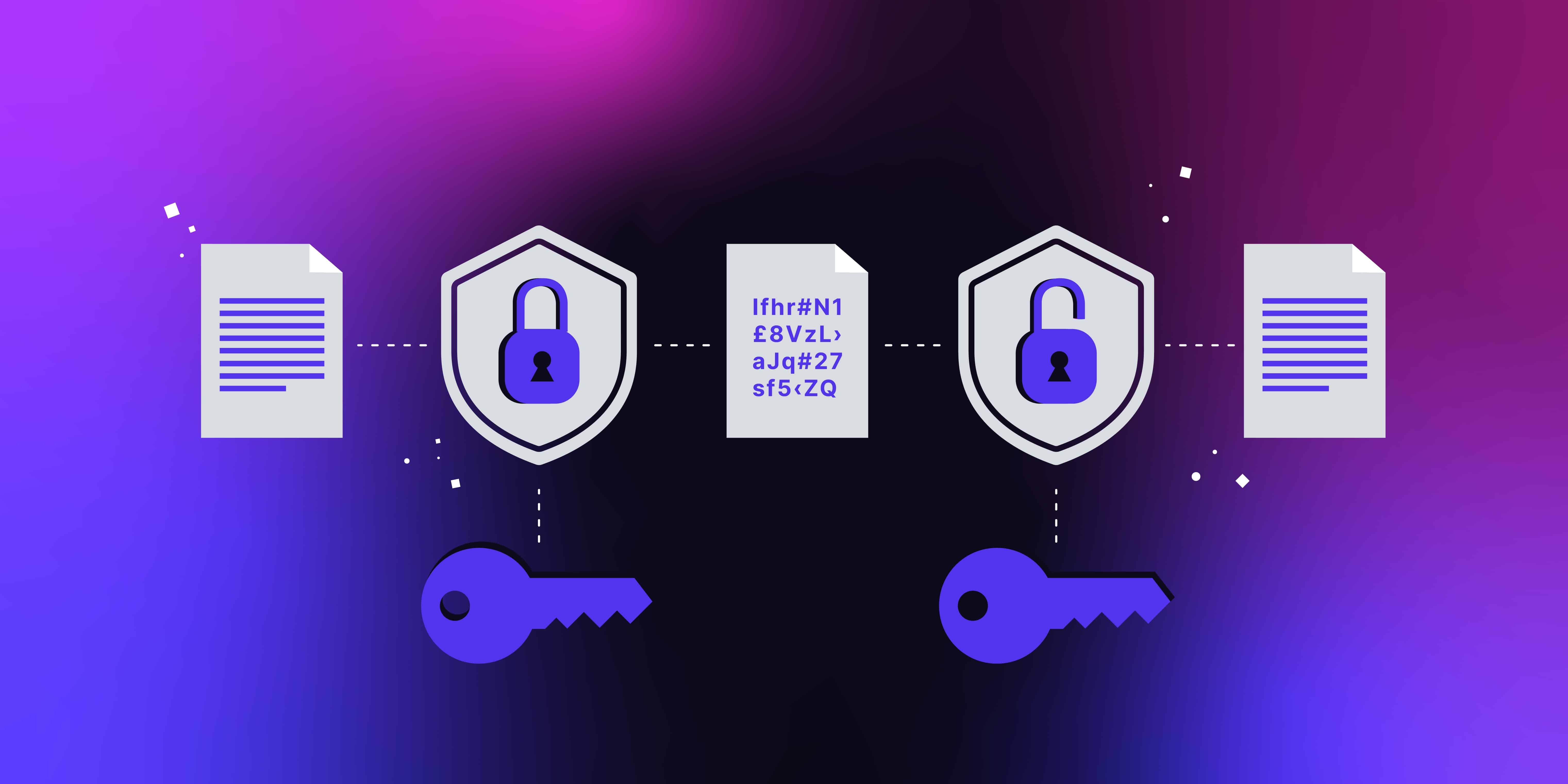
To encrypt PostgreSQL data at rest, you must implement encryption at the storage, operating system, or database level. Common methods include using Linux Unified Key Setup (LUKS) for full-disk encryption, cloud-provider managed encryption for RDS or Cloud SQL instances, or the pgcrypto extension for column-level security, as the core PostgreSQL engine does not currently offer native Transparent Data Encryption.
Data security has evolved from a luxury to a baseline requirement for any production environment. In 2026, the landscape of database security is defined not just by protecting data as it moves across networks, but by ensuring that the physical and virtual bits sitting on a disk—data at rest—are unreadable to unauthorized parties. Whether you are aiming for compliance with GDPR, HIPAA, or SOC2, or simply following industry best practices, understanding the layers of PostgreSQL encryption is essential for any database administrator or security engineer.
Understanding Data at Rest in the PostgreSQL Context
Before implementing a solution, it is vital to define what "at rest" means. This refers to all data stored on persistent storage media, including the primary database files (the heap), the Write-Ahead Logs (WAL), temporary files used for sorting and joins, and database backups stored in cold storage.
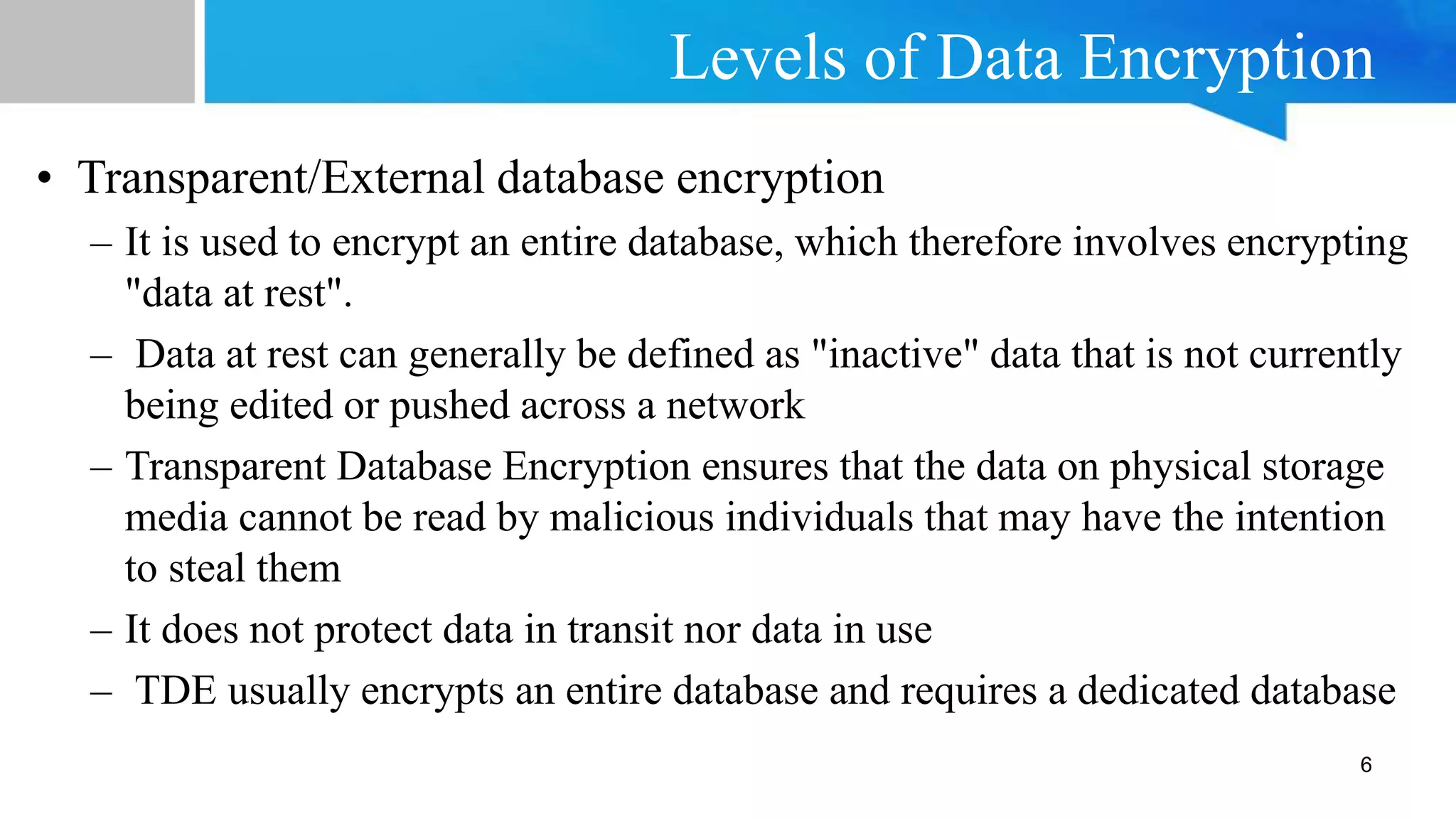
Unlike some proprietary database systems, the open-source community version of PostgreSQL has historically avoided "Transparent Data Encryption" (TDE) within the core engine. The rationale is often centered on the principle of separation of concerns: the database manages data, while the operating system or hardware handles storage security. Consequently, users must choose between various architectural layers to achieve their encryption goals.
Level 1: Operating System and Block-Level Encryption
The most common and robust way to protect PostgreSQL data is at the block level, beneath the database and the filesystem. This approach ensures that everything—data files, WALs, and configuration—is encrypted before it is written to the physical platter or flash cells.
Linux Unified Key Setup (LUKS) and dm-crypt
For on-premises or self-managed virtual machines, LUKS is the industry standard for Linux-based systems. It uses the dm-crypt kernel module to provide transparent encryption. When PostgreSQL requests a data write, the kernel encrypts the block using a symmetric key (typically AES-256) before passing it to the disk controller.
One of the primary advantages of LUKS is its transparency to the application. PostgreSQL does not need to be "aware" that the underlying disk is encrypted. This eliminates the need for complex schema changes or specialized queries. However, it requires a robust key management strategy. If the system reboots, an administrator or an automated key-fetching service must provide the passphrase or key to "open" the encrypted volume before the PostgreSQL service can start.
Performance Considerations for Block-Level Encryption
Modern processors featuring the AES-NI instruction set have significantly reduced the overhead associated with block-level encryption. In most production environments, the performance hit is negligible, often under 3%. The bottleneck is rarely the encryption process itself but rather the underlying I/O throughput of the storage media.

Level 2: Filesystem-Level Encryption
Filesystem-level encryption provides a middle ground between full-disk encryption and application-level security. This method allows you to encrypt specific directories (such as the PostgreSQL data directory, usually referred to as PGDATA) rather than the entire partition.
ZFS and fscrypt
Systems using the ZFS filesystem can take advantage of native encryption features. ZFS allows for per-dataset encryption, which is highly efficient for database workloads. Because ZFS manages both the volume and the filesystem, it can optimize how encrypted blocks are cached in the Adaptive Replacement Cache (ARC).
Alternatively, on filesystems like ext4 or F2FS, the fscrypt tool can be used. This allows for directory-level encryption where the filenames and data are encrypted. This is particularly useful in multi-tenant environments where you might want to encrypt one database instance’s data differently from another on the same physical host.
The primary risk with filesystem encryption is metadata leakage. While the contents of the files are secure, certain attributes like file sizes and access patterns might still be visible to an attacker with root access to the host.
Level 3: Cloud-Managed Encryption (RDS, GCP, Azure)
As of 2026, the majority of PostgreSQL deployments reside in managed cloud environments. Providers like Amazon Web Services (AWS), Google Cloud Platform (GCP), and Microsoft Azure have made encryption at rest a "one-click" configuration.
How Managed Encryption Works
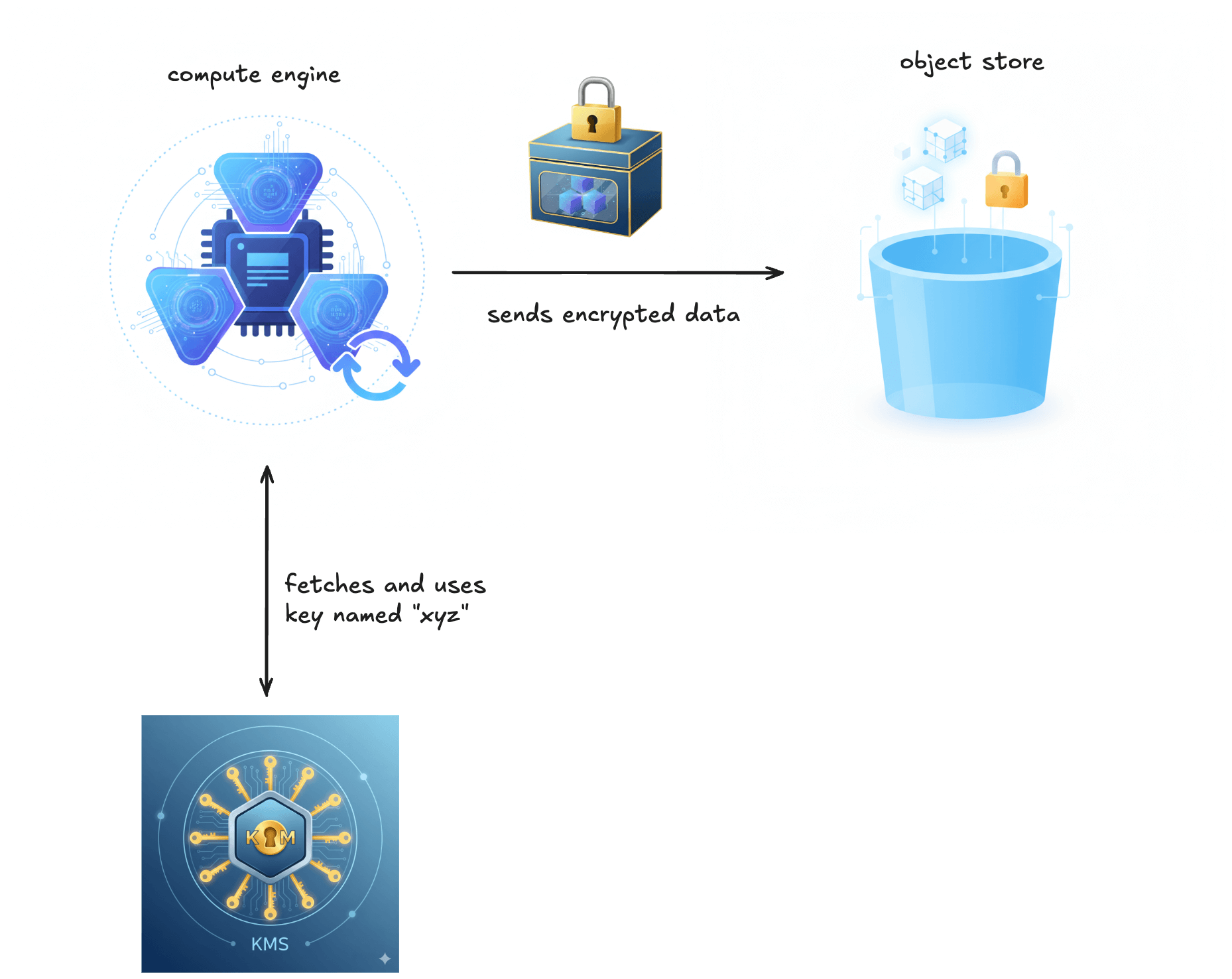
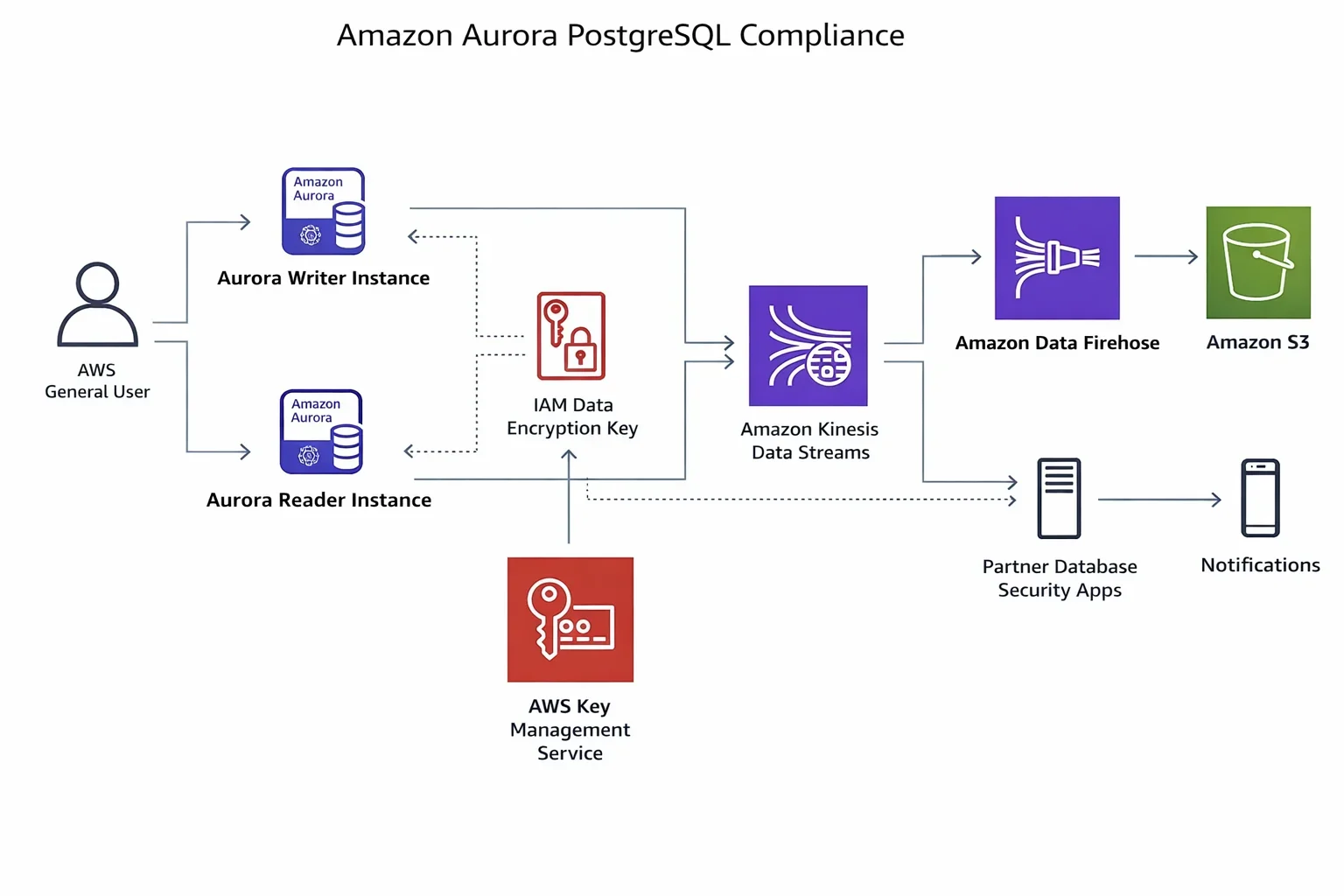
In an environment like AWS RDS for PostgreSQL, encryption is handled at the storage layer using the Advanced Encryption Standard (AES-256). The keys are typically managed by a Key Management Service (KMS).
When you enable encryption for an RDS instance, the following components are secured:
- The primary storage volume.
- Automated backups and manual snapshots.
- Read replicas.
- Data in the WAL logs.
The significant benefit of cloud-managed encryption is the integration with Identity and Access Management (IAM). You can define granular policies determining who can "use" the encryption key to boot the database, providing an extra layer of security that is difficult to replicate in a DIY on-premises setup.
Level 4: Application-Level and Column-Level Encryption
Sometimes, encrypting the entire disk is not enough. If an attacker gains access to a privileged database user account, they can still query the data because the disk-level encryption has already "unlocked" the data for the operating system. This is where the pgcrypto extension becomes necessary.
Using the pgcrypto Extension
The pgcrypto module provides cryptographic functions for PostgreSQL. It allows you to encrypt specific sensitive columns, such as Social Security numbers or credit card details, using functions like pgp_sym_encrypt and pgp_sym_decrypt.
This approach offers the highest level of security, as the data remains encrypted even within the database buffers. However, it comes with significant trade-offs:
- Indexing Challenges: You cannot easily perform range scans or lookups on encrypted data without decrypting it first, which destroys performance.
- CPU Overhead: Encrypting and decrypting at the row level for every query is much more resource-intensive than block-level encryption.
- Key Management Complexity: The application must securely pass the encryption keys to the database for every session.
Comparison of Encryption Methods at Rest
| Method | Level | Implementation Difficulty | Performance Impact | Best For |
|---|---|---|---|---|
| LUKS / dm-crypt | Block/OS | Moderate | Low (3-5%) | Self-managed servers, strict compliance. |
| ZFS Native | Filesystem | Moderate | Low | High-performance local storage. |
| Cloud Managed (RDS/GCP) | Infrastructure | Low | Negligible | Fast deployment, ease of use. |
| pgcrypto | Application | High | High | Highly sensitive specific fields (PII). |
| TDE (Third-Party Forks) | Database | Moderate | Low | Enterprise-grade requirements on-prem. |
The Native Transparent Data Encryption (TDE) Debate
In 2026, the question of why native TDE is not in the "vanilla" PostgreSQL core remains a topic of technical discussion. Native TDE would allow the database engine to encrypt data pages as they are written from the shared buffer pool to the disk.
While not in the core, several enterprise-focused forks of PostgreSQL (such as those provided by Cybertec or Fujitsu) offer native TDE. These versions modify the buffer manager to handle encryption. The benefit of this approach is that it protects against "cold" data theft (stealing the hard drive) and "warm" data theft (copying the data files while the system is running) without the performance penalties of pgcrypto.
Key Management: The Foundation of Encryption
Encryption is only as secure as the management of the keys. If you store your encryption keys on the same disk as your encrypted data, you have created a locked door with the key taped to the handle.
For a production-grade PostgreSQL setup, consider the following key management strategies:
- Hardware Security Modules (HSM): Physical devices that generate and store keys, ensuring they never leave the hardware.
- External Vaults: Tools like HashiCorp Vault allow you to store keys externally and fetch them only when the database starts.
- Cloud KMS: Services like AWS KMS or Google Cloud KMS offer managed rotation of keys, which is a requirement for many security audits.
Key rotation is a critical sub-topic. In 2026, automated key rotation is the standard. This involves generating a new master key periodically and re-encrypting the data-key (not the entire dataset) to minimize the impact of a potential key compromise.
Backup Encryption: A Common Oversight
A common mistake in securing PostgreSQL is encrypting the live database but leaving backups unprotected. If you use pg_dump, the resulting file is a plain-text SQL script unless you pipe it through an encryption tool like GPG or OpenSSL.
Physical backups (using tools like pg_basebackup or WAL-G) will be encrypted if the underlying storage is encrypted. However, when moving those backups to an offsite location or an S3 bucket, you must ensure that the destination bucket has encryption enabled. Always verify that your backup and recovery procedure includes the secure transfer and storage of the encryption keys required to restore the data.
Performance Tuning for Encrypted Databases
If you notice performance degradation after enabling encryption, check the following:
- AES-NI Support: Ensure your virtual machine or physical CPU supports AES-NI and that the operating system is utilizing it.
- Entropy Starvation: Encrypting large amounts of data requires high-quality random numbers. In some Linux environments, the entropy pool can run low. Installing haveged or similar tools can help maintain performance.
- Work Mem Settings: Since application-level encryption (pgcrypto) increases the size of data in memory, you may need to increase the work_mem setting in your postgresql.conf to prevent unnecessary disk swapping during sorts.
Frequently Asked Questions
Does PostgreSQL have native TDE in 2026?
No, the official community version of PostgreSQL does not include native Transparent Data Encryption in the core engine. Users must rely on block-level encryption (LUKS), filesystem encryption, or third-party enterprise forks that provide this specific feature.
Does encrypting data at rest protect against SQL injection?
No. Encryption at rest only protects data from being read if the physical storage media or data files are stolen. If an attacker gains access via SQL injection, the database will "helpfully" decrypt the data for them as it fulfills their query. You still need robust application-level security and input validation.
How much storage overhead does encryption add?
Block-level encryption typically has zero to negligible storage overhead because it encrypts blocks of a fixed size. However, column-level encryption (pgcrypto) can increase the size of the data significantly because of the padding and metadata required for PGP-encrypted blocks.
Can I encrypt an existing PostgreSQL database without downtime?
In a cloud environment, you can often create an encrypted snapshot of an unencrypted instance and then restore a new instance from that snapshot. For on-premises systems, moving data to an encrypted LUKS partition generally requires a maintenance window to copy the files and point the database configuration to the new location.
Will encryption at rest satisfy GDPR requirements?
While GDPR does not mandate specific technologies, it strongly recommends "pseudonymization and encryption of personal data." Implementing encryption at rest is a foundational step in demonstrating "privacy by design" and is often a mandatory requirement for passing security audits under GDPR.
What is the difference between encryption at rest and encryption in transit?
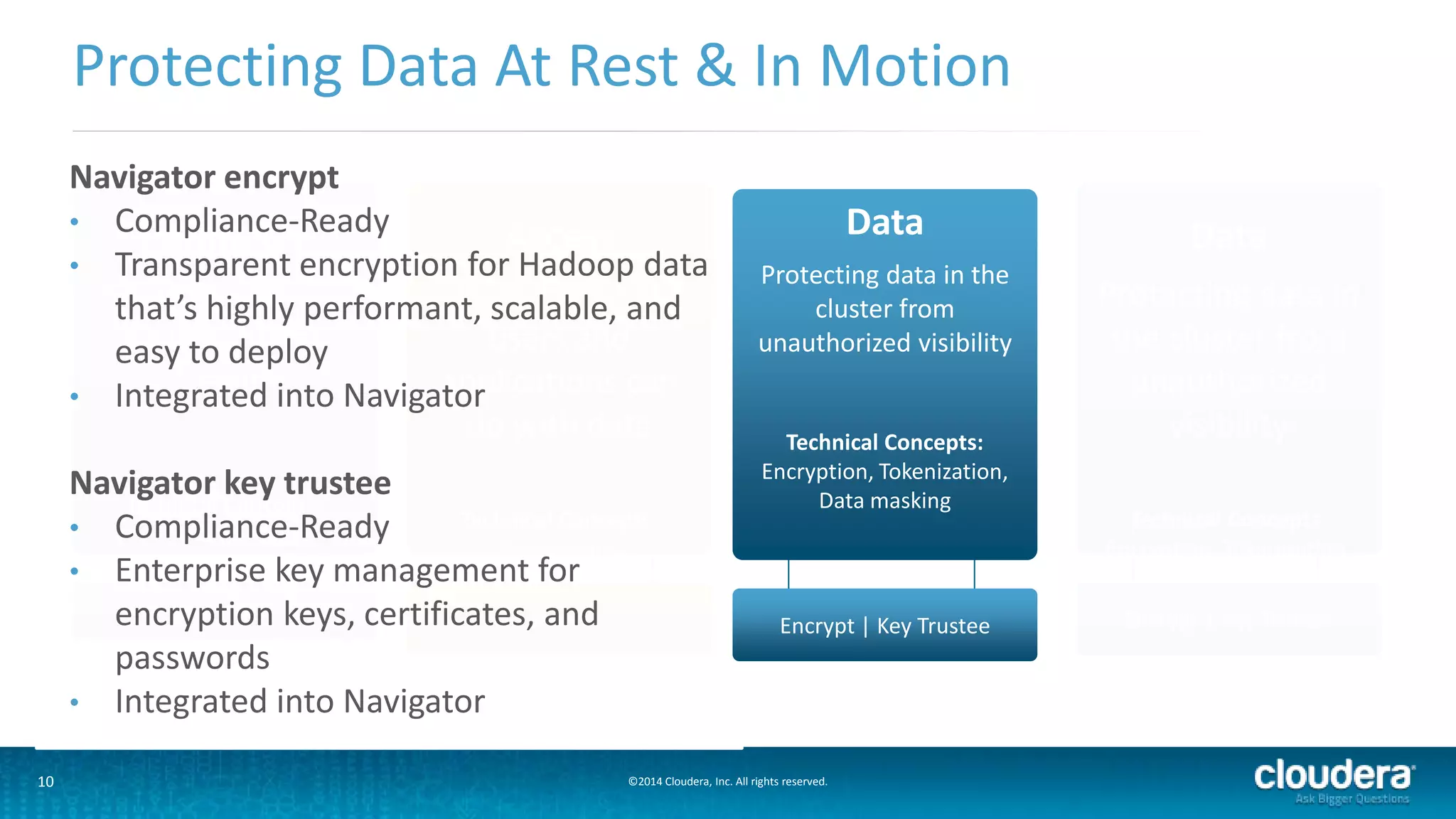
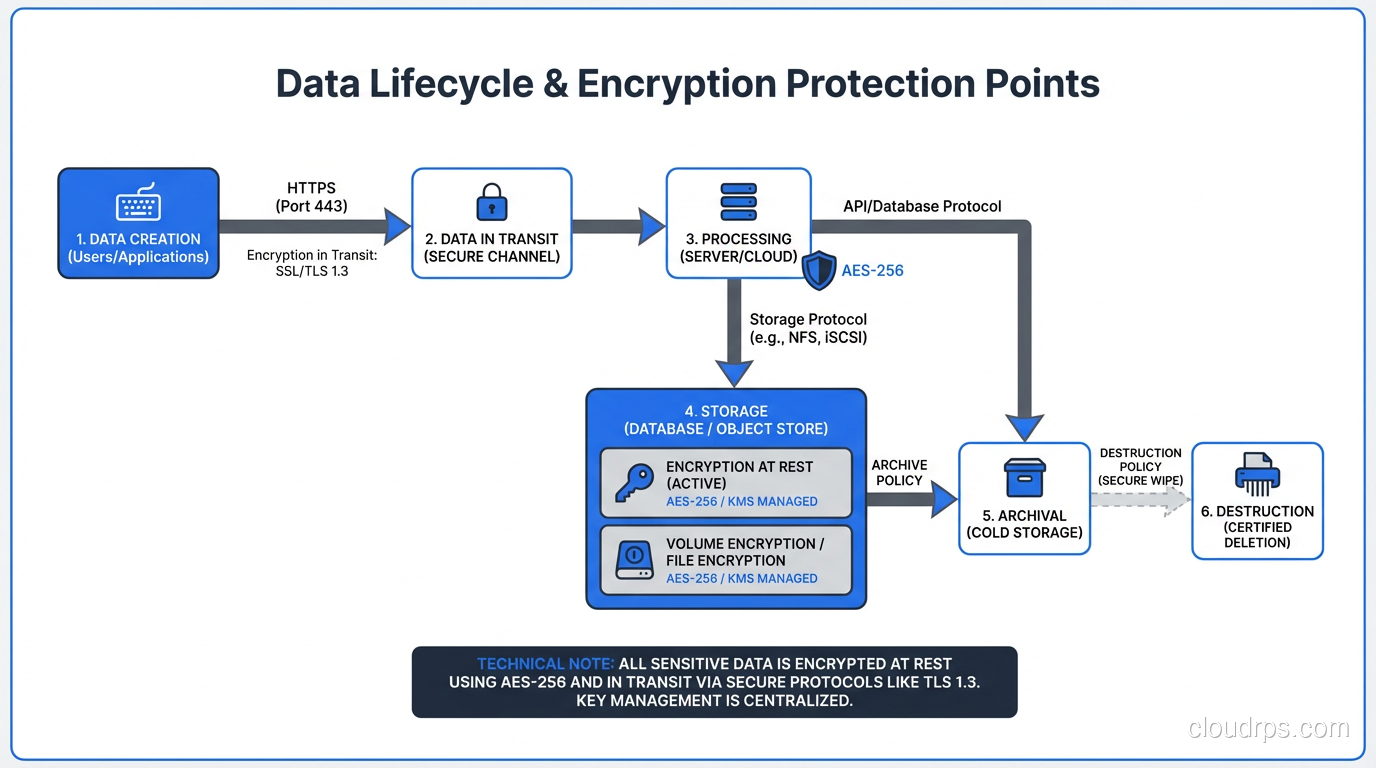
Encryption at rest protects data stored on disks. Encryption in transit (typically using SSL/TLS) protects data as it travels over the network between the client and the database server. A secure PostgreSQL environment requires both.
Practical Recommendations
To effectively secure your PostgreSQL data in 2026, follow these prioritized actions:
- Prioritize Infrastructure Encryption: If you are in the cloud, enable managed encryption (AES-256) at the storage layer immediately. It offers the best balance of security and performance.
- Use LUKS for On-Premise: For self-managed Linux servers, implement LUKS. It is a proven, high-performance standard that covers all PostgreSQL files, including WAL and temp files.
- Secure Your Backups: Ensure your backup pipeline includes an encryption step. Encrypting the disk but leaving a plain-text backup in an S3 bucket is a major security gap.
- Isolate Sensitive Columns: Use pgcrypto only for the most sensitive data (like passwords or encryption keys for other systems) where you need protection even from a database administrator.
- Centralize Key Management: Move away from local passphrases. Use a dedicated service like HashiCorp Vault or a Cloud KMS to manage your keys and automate their rotation.
Image Gallery
Select an image to open it in a new tab.



Omar Farooq
EdTech Innovation and Virtual Pedagogy Journalist
