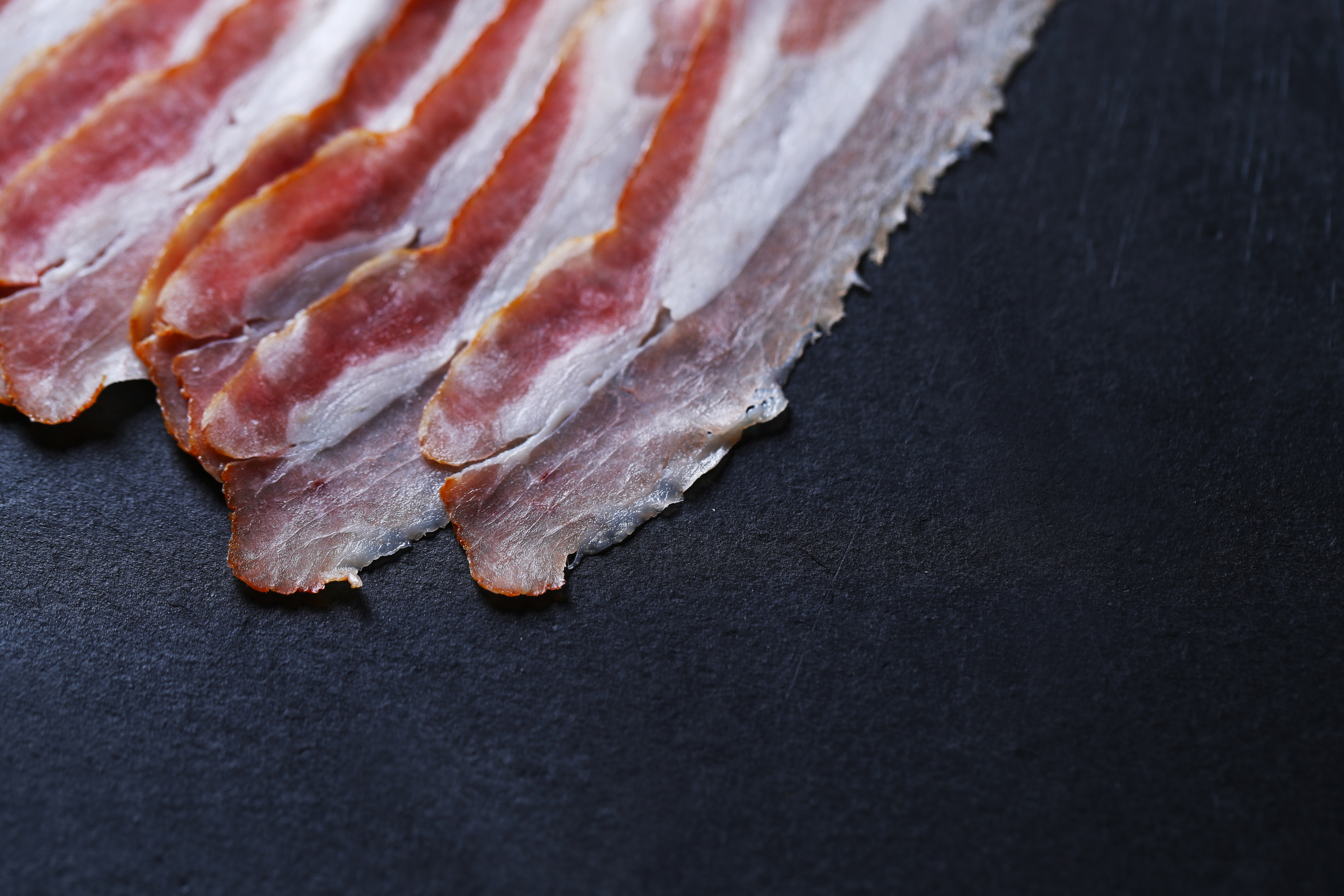
Eating undercooked bacon poses a significant risk to human health primarily due to the presence of foodborne pathogens such as Salmonella, Staphylococcus aureus, and Toxoplasma gondii. While processed bacon often undergoes curing, it is not a sterile product; scientific consensus dictates that reaching an internal temperature of 145°F (63°C) is essential to neutralize the biological hazards inherent in raw pork belly.
The question of whether consuming undercooked bacon is inherently "bad" requires an examination of microbiology, food safety protocols, and the biological risks associated with pork products. Bacon, fundamentally, is raw or cured pork belly. Unlike ready-to-eat deli meats that undergo specific high-heat processing to eliminate pathogens, standard store-bought bacon is considered a raw agricultural commodity. When handled or consumed without proper thermal processing, it serves as a vector for various microorganisms that can cause acute or chronic illness.
The Microbiological Landscape of Raw Pork
To understand the danger, one must look at the microbial load commonly found on raw pork. The animal’s digestive tract is a natural reservoir for bacteria that are potentially pathogenic to humans. During the slaughter and processing phases, cross-contamination is a primary concern. Even with modern sanitary practices, it is nearly impossible to guarantee that a slab of pork belly is entirely free of bacteria.
Salmonella is perhaps the most well-known threat. It is a genus of rod-shaped, Gram-negative bacteria that can cause salmonellosis, an infection characterized by diarrhea, fever, and abdominal cramps. Because Salmonella can colonize the lymph nodes and intestinal tracts of swine, raw bacon serves as a potential substrate for these bacteria. While the curing process—which involves salt, nitrites, and sometimes sugar—creates an environment that is less hospitable to some bacteria, it does not act as a total antimicrobial barrier. The salt content in most commercial bacon is insufficient to achieve the "water activity" levels necessary to prevent bacterial growth completely.
The Parasitic Risk: Toxoplasma gondii
Beyond bacteria, there is the risk of Toxoplasma gondii, an intracellular parasite that causes toxoplasmosis. While often asymptomatic in healthy adults, toxoplasmosis can lead to severe health complications for pregnant individuals and those with compromised immune systems. Pork is a known host for T. gondii tissue cysts. If the bacon is not cooked to an internal temperature sufficient to destroy these cysts, the parasite remains viable. Science has demonstrated that thorough cooking is the most reliable method for inactivating T. gondii in meat products. Relying on curing or freezing is an inconsistent defense, as some strains of the parasite exhibit resistance to cold temperatures.
Understanding "Cured" vs. "Cooked"
A common misconception among consumers is the belief that "cured" bacon is essentially "cooked." This is a dangerous conflation of food preservation terminology. Curing is a method of preservation used to inhibit spoilage and enhance flavor through the application of salt, sodium nitrite, or sodium nitrate. While nitrites are highly effective at inhibiting the growth of Clostridium botulinum—the bacteria responsible for botulism—they are not a replacement for thermal lethality.
Clostridium botulinum is an anaerobic bacterium that produces a potent neurotoxin. The inclusion of nitrites in the curing process of bacon is primarily a public health safeguard against botulism. However, the presence of nitrites does not mean the product is safe to eat raw. The curing process does not kill the diverse array of other surface-level bacteria or parasites that may have been introduced during the butchering and packaging process.
Scientific Standards for Safe Cooking
The United States Department of Agriculture (USDA) and equivalent food safety authorities worldwide provide specific thermal benchmarks for pork. For whole-muscle cuts of pork, the recommended internal temperature is 145°F (63°C), followed by a three-minute rest period. While bacon is a thin cut of meat, the physics of frying or baking it ensures that the product reaches temperatures well above this threshold in most cases.
When bacon is "undercooked"—meaning the fat has not rendered and the proteins have not undergone sufficient coagulation—it is highly likely that the internal temperature has remained in the "Danger Zone" (40°F to 140°F). In this range, bacteria can multiply rapidly. If you consume bacon that has been heated only slightly, you are essentially gambling with the bacterial load present on that specific slice.
| Pathogen/Risk | Typical Source | Primary Health Effect |
|---|---|---|
| Salmonella | Intestinal tract/processing | Acute gastroenteritis |
| Toxoplasma gondii | Animal tissue cysts | Toxoplasmosis (flu-like) |
| Staphylococcus aureus | Skin/handling | Food poisoning (toxins) |
| Yersinia enterocolitica | Raw pork consumption | Fever, abdominal pain |
Factors Influencing Individual Risk
The biological outcome of eating undercooked bacon is not identical for every individual. It is heavily mediated by the state of the consumer's immune system. A healthy individual with a robust gut microbiome and a functioning immune system may successfully neutralize a small exposure to Salmonella. However, this is not a guarantee.
Conversely, for "at-risk" populations—including young children, the elderly, individuals undergoing chemotherapy, or those with autoimmune disorders—the threshold for infection is significantly lower. In these groups, the ingestion of even a small number of pathogens can lead to severe systemic infection. Furthermore, some bacteria produce heat-stable toxins. Even if the bacon is later cooked properly, if it was stored or handled in a way that allowed bacteria to proliferate and produce these toxins, the toxins may remain active, leading to illness regardless of the final cooking process.
The Role of Cross-Contamination
The danger of undercooked bacon is often exacerbated by cross-contamination in the kitchen. When handling raw, undercooked, or partially cooked bacon, pathogens are transferred to surfaces, utensils, and hands. If a cook prepares a side dish—such as a salad or eggs—after touching undercooked bacon without thorough handwashing and surface sanitization, they create a secondary pathway for infection. The "scientific perspective" here is one of total environment management. Treating bacon as a high-risk raw product—much like raw chicken—is the safest protocol.
Practical Guidance for Safe Preparation
To mitigate these risks effectively, adopt these evidence-based practices:
- Temperature Verification: If you prefer "limp" or lightly cooked bacon, use a calibrated digital thermometer to ensure the internal temperature has reached at least 145°F.
- Dedicated Utensils: Use separate tongs for raw bacon and cooked bacon to prevent re-contaminating the finished product.
- Surface Sanitization: After the bacon packaging is opened, disinfect the prep area with a solution capable of neutralizing foodborne pathogens.
- Storage: Keep raw bacon at or below 40°F (4°C) at all times. If the product has been left out for more than two hours, it should be discarded, regardless of how it is eventually cooked.
- Quality Control: Inspect for signs of spoilage, such as a sticky surface or an off-odor, which indicate that bacterial colonies have already exceeded safe levels.
Frequently Asked Questions
Is it safe to eat bacon that is still soft or "floppy"? Softness is a texture preference, but it is not inherently unsafe provided the bacon has reached an internal temperature of 145°F. The risk arises when the bacon is "raw-soft" rather than "cooked-soft." Use a thermometer to confirm the internal temperature before consumption.
Does curing bacon kill all bacteria? No. Curing inhibits Clostridium botulinum and helps preserve the meat, but it does not sterilize it. Many pathogens survive the curing process, which is why cooking is still a mandatory safety step.
Can I get sick from bacon that smells and looks fine? Yes. Most pathogenic bacteria and parasites are microscopic and do not alter the appearance, smell, or taste of the meat. Relying on sensory cues to determine the safety of undercooked meat is an unreliable and dangerous practice.
What should I do if I suspect I have eaten contaminated bacon? If you experience symptoms of food poisoning, such as persistent vomiting, diarrhea, or high fever, monitor your hydration levels closely. Seek medical attention if you are in an at-risk group or if your symptoms become severe, as some bacterial infections require clinical intervention.
Does microwave cooking make bacon safer than pan-frying? Microwaving can be effective, but it often results in "cold spots" due to uneven heat distribution. If you use a microwave, ensure the bacon is cooked thoroughly on all sides and verify that no part of the strip remains raw or cold to the touch.
Final Recommendation
From a scientific perspective, there is no benefit to eating undercooked bacon, and the risks—while variable—are statistically significant. Always prioritize thermal processing. By ensuring your bacon reaches the appropriate internal temperature, you neutralize the biological hazards that are naturally present in raw pork. Do not rely on curing or the perceived "quality" of the meat to guarantee safety; rely on the heat.
Image Gallery
Select an image to open it in a new tab.

Simon Caldwell
Enterprise Technology and Systems Editor
