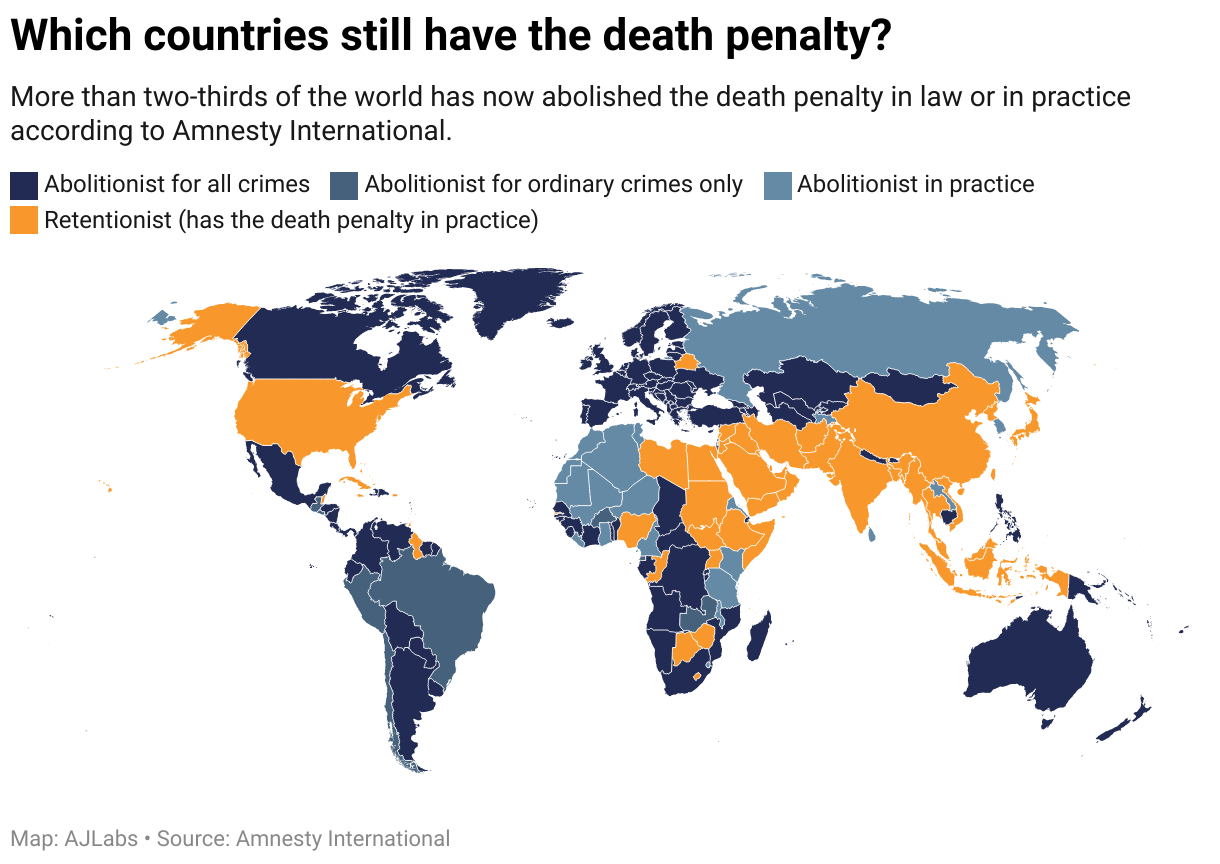
As of 2026, New York state does not have an active death penalty. While the state once maintained capital punishment statutes, the New York Court of Appeals effectively invalidated the death penalty in 2004, and subsequent legislative attempts to reinstate or amend the law to satisfy constitutional requirements have not succeeded. Consequently, the state does not perform executions, and its sentencing statutes for capital crimes have been effectively dormant for over two decades.
The Constitutional Turning Point: People v. LaValle
To understand why New York state currently lacks a functioning death penalty, one must examine the legal history of the state’s capital punishment statute, enacted in 1995. For nearly a decade, this law governed the sentencing of defendants convicted of first-degree murder. However, the legal landscape shifted dramatically in 2004 with the decision in People v. LaValle.
In this landmark case, the New York Court of Appeals addressed a specific "deadlock instruction" contained within the 1995 statute. The law required jurors to be told that if they could not reach a unanimous agreement on whether to impose a sentence of death or life imprisonment without parole, the judge would impose a sentence of life imprisonment with the possibility of parole after 20 years.
The Court of Appeals held that this instruction was unconstitutionally coercive. The reasoning was that the prospect of a defendant being released after only 20 years might pressure jurors—who might otherwise be inclined toward life without parole—to choose death instead to ensure the defendant remained behind bars. Because this specific sentencing procedure violated the New York State Constitution’s due process protections, the Court effectively struck down the penalty phase of the statute.
Legislative Inaction and the End of Capital Prosecution
Following the LaValle decision, the state legislature had the opportunity to amend the statute to remove the problematic deadlock instruction or rewrite the sentencing procedures. However, the legislature did not act to repair the law. In the years following 2004, the political consensus in Albany shifted away from capital punishment.
By 2007, the remaining death sentences in the state were commuted or vacated, and the state essentially ceased pursuing the death penalty in any new cases. Because no legislative body moved to address the flaws identified by the courts, the state’s death penalty apparatus effectively dissolved. The Department of Correctional Services eventually dismantled the death chamber that had been prepared at the Clinton Correctional Facility, and no individuals have been sentenced to death in New York for over 20 years.
Understanding the Sentencing Alternative
With the death penalty removed as a viable sentencing option, the most severe penalty available under New York law for first-degree murder is life imprisonment without the possibility of parole. This sentence ensures that the convicted individual will remain incarcerated for the duration of their natural life, with no opportunity for release or commutation.
This shift has created a uniform standard across the state for the most serious criminal offenses. The transition from capital punishment to life without parole is a critical point of distinction for legal practitioners and the general public, as it dictates the parameters of plea negotiations, trial strategies, and appellate review in homicide cases.
Comparison of Sentencing Frameworks
The following table outlines the status of capital punishment and its primary alternative within the New York legal system compared to the previous statute.
| Feature | Pre-2004 Statute | Post-2004 (Current) |
|---|---|---|
| Capital Punishment | Legally authorized | Inactive / Unconstitutional |
| Executions Performed | None (1995–2004) | None |
| Maximum Sentence | Death or Life without parole | Life without parole |
| Sentencing Trigger | Jury unanimity required | Not applicable |
| Status of Death Row | Empty (Commuted) | Non-existent |
The Impact of Federal Law
It is vital to note that the absence of the death penalty at the state level does not mean the death penalty is non-existent within the borders of New York. The United States federal government maintains its own criminal code, which includes provisions for the death penalty for certain federal crimes, such as high-level drug trafficking, espionage, or certain types of murder committed on federal property or involving federal interests.
While New York state law does not apply to federal proceedings, federal prosecutors operating within the state’s judicial districts (such as the Southern or Eastern Districts of New York) theoretically retain the authority to seek the death penalty under federal statutes. However, even in these instances, the imposition of the death penalty by a federal court in New York is extremely rare and subject to rigorous federal appellate review, which remains distinct from the defunct state-level process.
Common Questions Regarding New York Law
Is there a movement to bring the death penalty back in New York? While legislative proposals occasionally arise, there has been no sustained or successful movement in the New York State Legislature to re-enact the death penalty since it was invalidated in 2004. Political, fiscal, and moral arguments against the practice have largely prevented any resurgence of the issue in the lawmaking process.
Can a Governor of New York reinstate the death penalty? No. The Governor of New York cannot reinstate the death penalty through executive action. Capital punishment is a matter of statutory law that must be passed by the State Legislature and signed into law by the Governor. Furthermore, any new law would have to overcome the constitutional hurdles established by the state's high court in 2004.
What happens to people currently in prison for murder in New York? Those convicted of murder in New York are sentenced according to the statutes in place at the time of their conviction. For those convicted of first-degree murder today, the standard sentence is life imprisonment without the possibility of parole. There are no individuals currently residing on "death row" in the state, as those who were previously under such sentences had their punishments changed to life imprisonment.
Does "Life without Parole" mean exactly that? Yes. In New York, a sentence of life imprisonment without the possibility of parole is a definitive end to a defendant's eligibility for release from the Department of Corrections and Community Supervision. There is no system of "parole" for such sentences, meaning the individual will remain incarcerated until death.
Are there other states like New York? Yes. Several states have either abolished the death penalty legislatively or have seen their state courts rule it unconstitutional. New York is often grouped with states like New Jersey, Illinois, and Connecticut, which have also moved away from capital punishment after evaluating the cost, efficacy, and legal complications of the death penalty process.
Practical Implications for the Legal System
For attorneys and judicial stakeholders in 2026, the status of the death penalty in New York is clear: it is a non-factor in trial preparation and sentencing. Unlike jurisdictions where capital punishment remains active, New York murder trials focus exclusively on guilt, innocence, and the mitigation or aggravation of life sentences.
Defense teams no longer need to navigate the specialized requirements of a "death-qualified" jury—a process in which jurors are vetted specifically for their willingness to impose the death penalty. This has simplified the jury selection process in major felony cases, as the threshold for juror eligibility centers on impartiality regarding guilt and standard sentencing guidelines rather than the moral capacity to issue a death sentence.
Next Steps and Further Verification
If you are researching a specific case or seeking information on criminal sentencing in New York, the most reliable source for information is the New York State Penal Law, particularly the sections concerning homicide (Article 125). For official statistics on prison populations and sentencing outcomes, the New York State Department of Corrections and Community Supervision (DOCCS) provides public records that clarify the current status of the incarcerated population.
For those interested in the constitutional history, the full text of People v. LaValle is available through the New York State Law Reporting Bureau. Understanding this decision is essential for anyone studying the intersection of state constitutional law and criminal justice in New York. If you are a student or a researcher, these primary documents provide the most accurate evidence of why the death penalty remains absent from the state's penal code.

Image Gallery
Select an image to open it in a new tab.
Mateo Castillo
Decentralized Finance and E-Payments Strategist
