A net worth statement is most similar to the balance sheet because both documents provide a static snapshot of an entity’s financial position at a specific point in time. They follow the same fundamental accounting equation—Assets minus Liabilities equals Equity—to determine the residual value belonging to the owner or shareholders after all debts are settled.
The Accounting Equation as a Shared Foundation
The similarity between a net worth statement and a balance sheet is rooted in the core mathematical structure of double-entry bookkeeping. Regardless of whether you are an individual assessing personal wealth or a corporation analyzing business health, the underlying logic remains identical: the Financial Position Formula.
In corporate accounting, this is expressed as: Assets = Liabilities + Shareholders' Equity
When restructured to reflect a net worth statement, the formula becomes: Assets - Liabilities = Net Worth (or Equity)
Because both documents are governed by this identity, they essentially present the same relationship between what is owned (assets) and what is owed (liabilities). The "balance" in balance sheet refers to the equilibrium between these two sides. Similarly, a personal net worth statement seeks to quantify that same equilibrium to show the "net" value remaining.
Defining the Net Worth Statement
A net worth statement is a financial document typically used by individuals, families, or small business owners to track long-term financial health. It lists everything an individual owns (real estate, cash, brokerage accounts, vehicles) and subtracts everything an individual owes (mortgages, credit card debt, student loans, personal loans).
The primary purpose of this statement is to measure progress toward financial goals over time. By comparing a net worth statement from December 2025 to one created in December 2026, an individual can see if they are accumulating wealth or falling into further debt, independent of their monthly cash flow or income fluctuations.
Defining the Balance Sheet
A balance sheet is one of the three core financial statements used by businesses, alongside the income statement and the cash flow statement. It serves as a statement of financial position for a firm. It provides a structured view of the entity's resources (assets), claims against those resources (liabilities), and the residual interest of the owners (equity).
The balance sheet is vital for creditors, investors, and regulators. It allows them to assess liquidity—the ability to meet short-term obligations—and solvency—the ability to meet long-term obligations. Unlike an income statement, which covers a duration of time (e.g., a fiscal quarter), the balance sheet represents a single moment, functioning like a financial photograph.
Key Similarities Between the Two Documents
The resemblance between a net worth statement and a balance sheet goes beyond the basic formula. They share several structural and functional characteristics that make them functionally interchangeable in their intent to provide a comprehensive view of ownership.
1. The Static Snapshot
Both documents provide a "point-in-time" perspective. If you look at a balance sheet dated December 31, 2026, it describes the state of the company exactly at that second. If you look at a net worth statement for the same date, it describes your wealth exactly as it existed on that day. Neither document explains how you arrived at those numbers—for that, you would need an income statement or a personal cash flow statement.
2. Categorization of Assets and Liabilities
Both documents require the user to categorize items by liquidity.
- Current Assets/Liabilities: In a balance sheet, these are expected to be converted to cash or settled within a year. In a personal net worth statement, this is reflected in items like checking accounts (assets) versus upcoming credit card payments (liabilities).
- Long-term Assets/Liabilities: These include property, retirement accounts, or long-term mortgages. Both reports emphasize the distinction between what is immediately accessible and what is locked in long-term commitments.
3. Focus on Net Value
The ultimate goal of both documents is to arrive at a "net" figure. In business, this is total equity. For an individual, this is "net worth." This figure is the ultimate indicator of financial stability. A negative number on a balance sheet indicates that a company is technically insolvent, just as a negative number on a net worth statement indicates that an individual’s debts exceed the value of their assets.
Comparison Table: Net Worth Statement vs. Balance Sheet
| Feature | Net Worth Statement | Balance Sheet |
|---|---|---|
| Primary User | Individuals/Families | Corporations/Investors |
| Main Goal | Personal wealth tracking | Business solvency/Liquidity |
| Governance | No formal standard (GAAP/IFRS) | Strictly defined by GAAP/IFRS |
| Terminology | Assets, Liabilities, Net Worth | Assets, Liabilities, Equity |
| Frequency | Annually or biannually | Quarterly or annually |
Why Distinction Matters in Professional Contexts
While the logic is the same, the application differs significantly due to regulatory requirements. Businesses must adhere to Generally Accepted Accounting Principles (GAAP) or International Financial Reporting Standards (IFRS) when drafting a balance sheet. These standards ensure that assets are valued consistently (often at historical cost) and that liabilities are recognized in a specific, legally mandated way.
Conversely, a net worth statement for an individual is often based on fair market value. For example, if you own a home, you would list its current estimated market value on your net worth statement, even if you bought it years ago for much less. A corporate balance sheet, however, would typically list that property at its historical cost minus accumulated depreciation, not its current resale value. This is a critical nuance: the net worth statement aims for market reality, while the balance sheet aims for accounting consistency and historical reliability.
Essential Components of a Net Worth Statement
To draft an accurate net worth statement, you must be comprehensive. Excluding liabilities or overestimating asset values leads to a false sense of security.
- Liquid Assets: Cash, savings accounts, and money market funds.
- Investment Assets: Stocks, bonds, mutual funds, and retirement accounts (401k, IRA).
- Personal Property: Primary residence (market value), vehicles, jewelry, and art collections.
- Short-Term Liabilities: Credit card balances, medical bills, or taxes owed.
- Long-Term Liabilities: Mortgages, student loans, and business loans.
By organizing these into a table, you create a clear ledger. Subtracting the sum of 4 and 5 from the sum of 1, 2, and 3 provides your total net worth.
Common Pitfalls and Troubleshooting
When comparing your personal financial standing to a business balance sheet, avoid these common mistakes that lead to inaccuracies:
- The Depreciation Trap: Individuals often fail to account for the depreciation of assets like vehicles. A car is an asset, but its value drops over time. Listing a car at the price you paid for it five years ago will artificially inflate your net worth. Always use current market value (e.g., Kelley Blue Book values).
- Ignoring Contingent Liabilities: If you have guaranteed a loan for someone else, that is a contingent liability. If they default, you owe the money. Sophisticated net worth statements should note these potential debts, much like a business balance sheet includes "notes to financial statements" regarding contingent liabilities.
- Inconsistent Valuation Dates: Ensure all accounts are valued on the same day. If you calculate your bank balance on the 1st of the month but pull your investment account value from the 15th, you are not capturing a true snapshot of your wealth.
When to Seek Professional Advice
While calculating a net worth statement is a task most can perform with a spreadsheet, there are times when professional guidance is necessary. If you are preparing a net worth statement for a loan application, high-net-worth estate planning, or divorce proceedings, the document must be defensible.
Financial advisors and accountants can help ensure that assets like complex business interests, stock options, or trust funds are valued correctly. They can also ensure that you are not under-reporting debt, which is a common error in self-prepared statements. If you are working toward specific financial milestones in 2026, meeting with a Certified Financial Planner (CFP) to review your "balance sheet of life" can provide actionable insights into tax efficiency and asset allocation.
Frequently Asked Questions
1. Is a net worth statement the same as a personal balance sheet? Yes, they are essentially the same document. "Net worth statement" is the common term used for individuals, while "balance sheet" is the accounting term used for businesses. Both serve the purpose of showing what is owned versus what is owed at a specific point in time.
2. Why does my net worth statement value differ from my tax forms? Tax forms generally report income or historical cost basis for capital gains purposes. A net worth statement reflects the current fair market value of your assets. They serve different masters: the government wants to know what you earned or paid, while you want to know what you are currently worth.
3. How often should I update my net worth statement? For most people, once or twice a year is sufficient. More frequent updates may be necessary if you are in a period of aggressive debt repayment or significant investment changes. Updating too often, such as daily, may lead to emotional reactions to market volatility that do not reflect your long-term financial trajectory.
4. Does a negative net worth mean I am bankrupt? Not necessarily. Many young professionals have a negative net worth due to student loans while having a high potential for future earnings. A negative net worth is a signal to focus on increasing assets and decreasing high-interest debt, but it is not a legal declaration of bankruptcy.
5. How do I handle assets like a pension plan? Pensions can be difficult to value because they are future income streams rather than immediate assets. If you can take a lump-sum payout, use that value. If it is a monthly payment that starts later, you may choose to exclude it from your liquid net worth to stay conservative or calculate its present value if you require a precise actuarial assessment.
Conclusion and Next Actions
Understanding that your net worth statement is a personal balance sheet is the first step toward effective financial management. By adopting the discipline of a business accountant, you move away from emotional spending and toward a data-driven strategy for wealth accumulation.
To begin, dedicate time this month to compile a list of all your accounts and debts. Use a simple spreadsheet to categorize them into assets and liabilities. Once you have your total, compare it to your previous year’s numbers. If your net worth is not growing as expected, investigate your liabilities—are you carrying high-interest debt that is eroding your gains? Conversely, look at your assets—are they working for you through interest or capital appreciation? Use this 2026 assessment to set a specific, measurable goal for the next 12 months, ensuring that your financial "balance sheet" remains in the positive.
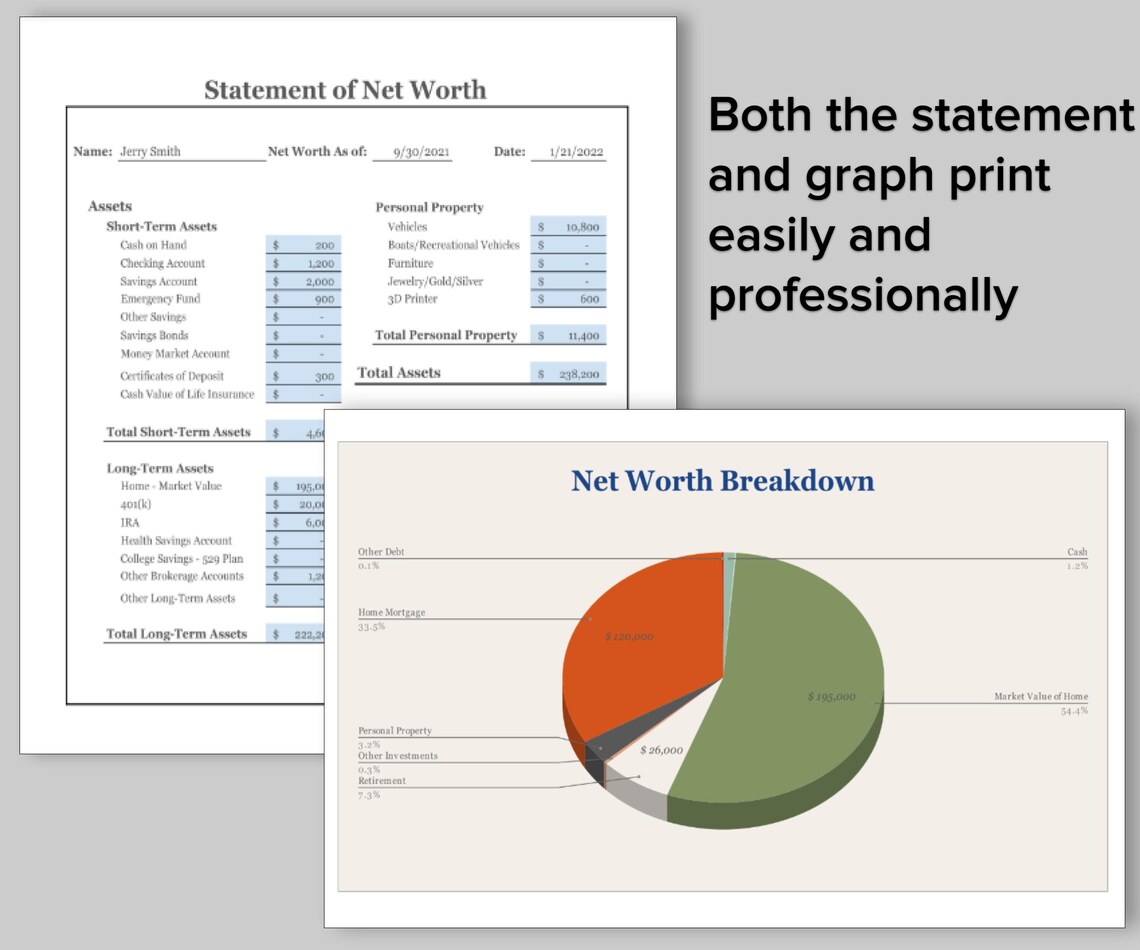
Image Gallery
Select an image to open it in a new tab.
Vivian Cho
Executive IT and Emerging Technologies Reporter
