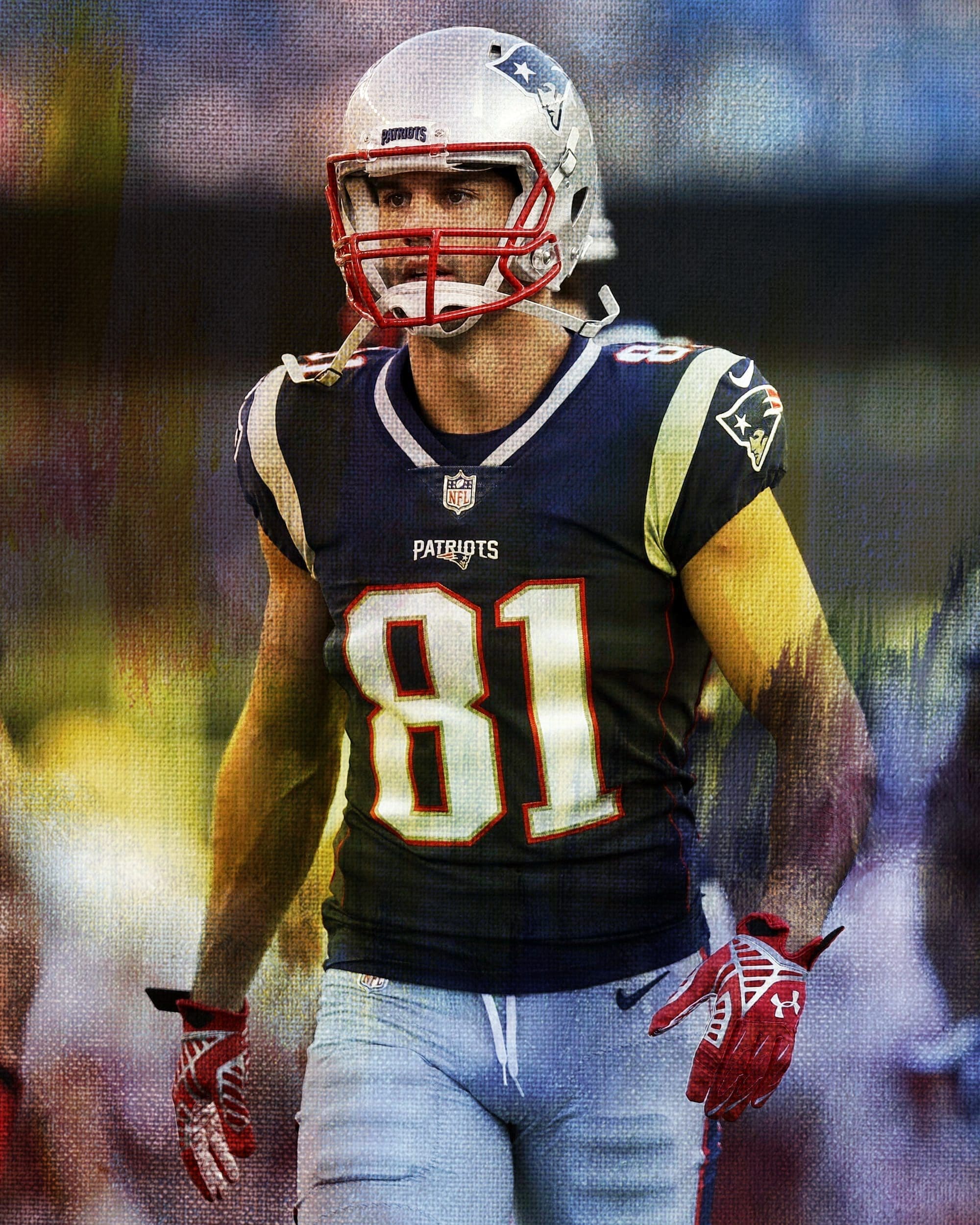
Eric Decker finished his professional football career with 439 receptions for 5,816 receiving yards and 53 touchdowns over eight active seasons. Known for his precise route running and exceptional red-zone efficiency, Decker became a cornerstone for the Denver Broncos and New York Jets during the 2010s.
The Foundation of a Professional Career (2010–2011)
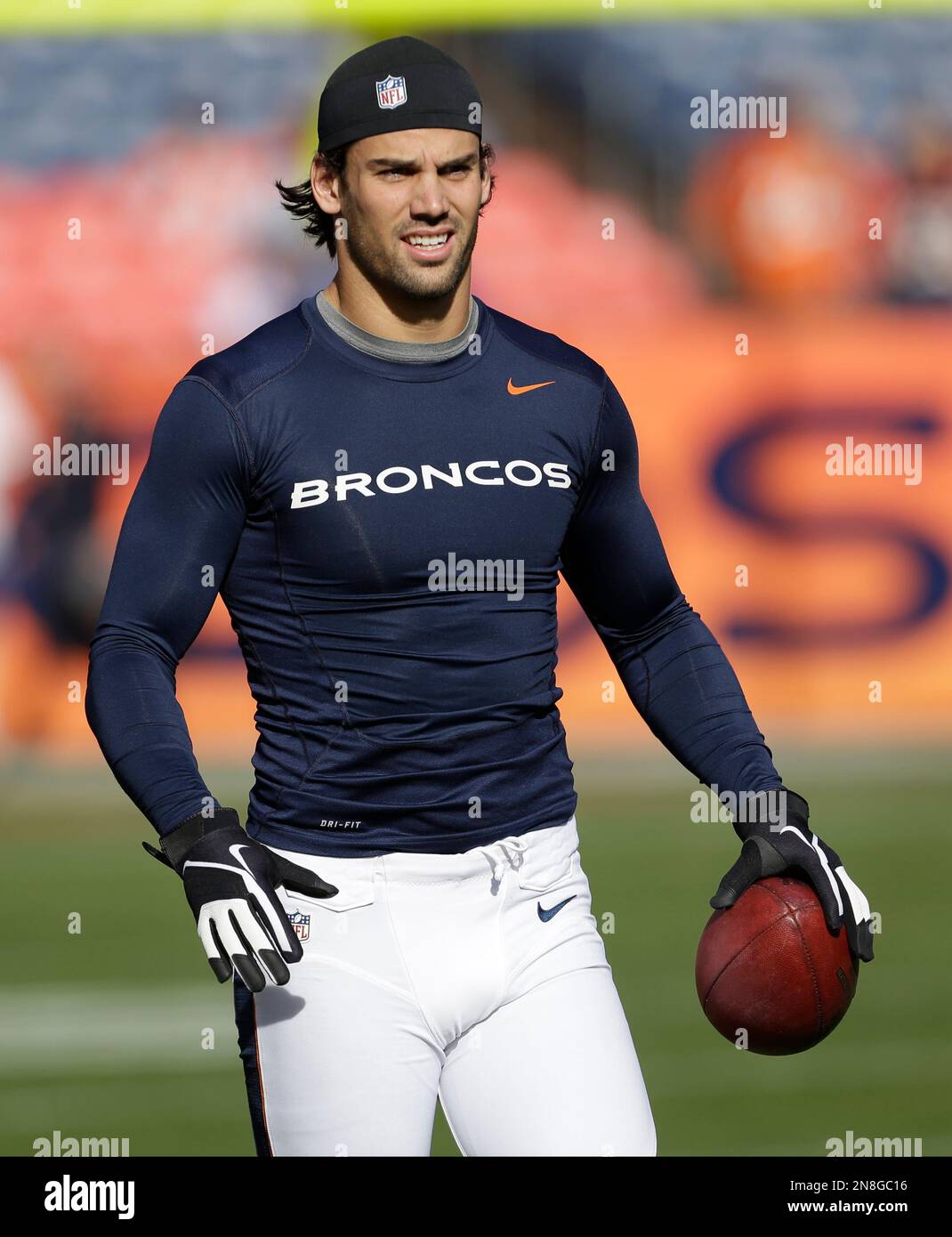
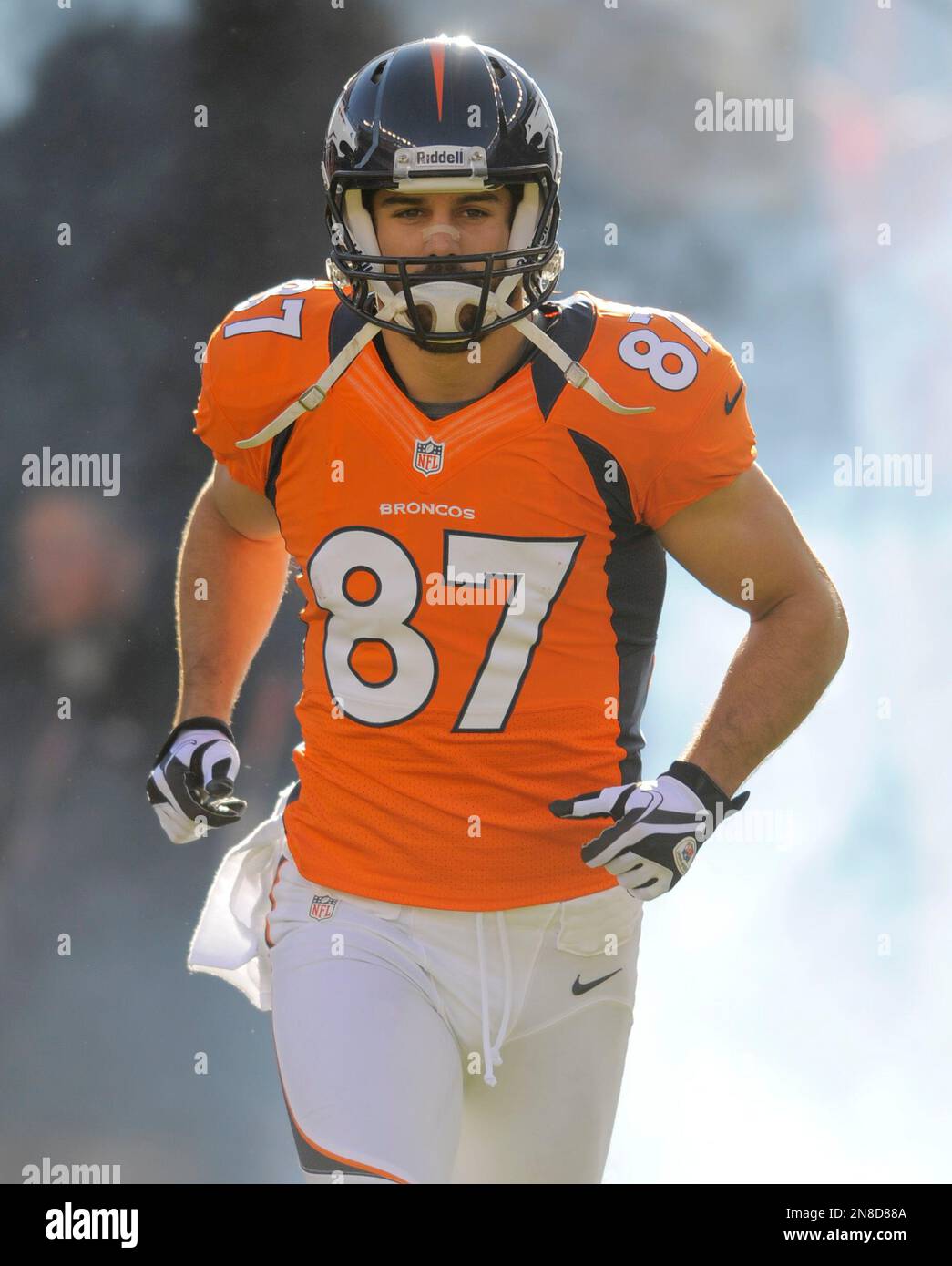
Eric Decker entered the NFL as a third-round pick (87th overall) in the 2010 NFL Draft out of the University of Minnesota. His arrival in Denver coincided with a period of significant transition for the Broncos organization. During his rookie season in 2010, Decker’s impact was primarily felt on special teams as he worked to overcome a foot injury sustained in college. He recorded only 6 receptions for 106 yards and one touchdown that year, but his 21.1-yard average per catch hinted at the vertical threat he would eventually become.
The 2011 season served as Decker’s true breakout. This was the year of "Tebowmania," where the Broncos shifted to an option-heavy offense led by quarterback Tim Tebow. Despite the low-volume passing attack, Decker emerged as the primary target, hauling in 44 passes for 612 yards. Most impressively, he caught 8 touchdowns, demonstrating a natural ability to find openings in the end zone. This season proved that Decker could produce even in an unconventional offensive system, setting the stage for his elite statistical output in the years that followed.
The Peyton Manning Era and Statistical Peak (2012–2013)
The trajectory of Eric Decker's career changed permanently in 2012 when the Denver Broncos signed Hall of Fame quarterback Peyton Manning. The transition from an option-based offense to a sophisticated, high-volume passing attack allowed Decker’s technical skills to shine.
In 2012, Decker posted his first 1,000-yard season, recording 85 receptions for 1,064 yards. However, the most notable statistic was his 13 receiving touchdowns, which ranked among the best in the league. His chemistry with Manning was immediate; Decker’s ability to read defenses and adjust his routes in real-time made him a reliable "move the chains" receiver and a lethal threat inside the 20-yard line.
The 2013 season remains the pinnacle of Decker’s statistical legacy. He was a vital component of the most prolific offense in NFL history, as the Broncos set the record for most points scored in a single season. Decker caught 87 passes for a career-high 1,288 yards and 11 touchdowns. While teammate Demaryius Thomas often garnered the headlines, Decker’s efficiency was staggering. He averaged 14.8 yards per reception and recorded a career-high 65 first downs. This two-year stretch solidified Decker as one of the premier wide receivers in the AFC, providing him with significant leverage entering free agency.

Transition to the New York Jets (2014–2016)
In March 2014, Eric Decker signed a five-year, $36.25 million contract with the New York Jets. Critics at the time questioned whether Decker was a "product of Peyton Manning" or a true number-one receiver capable of carrying a less explosive offense. His tenure in New York largely silenced those doubters.
His 2014 season was hampered by inconsistent quarterback play and minor injuries, yet he still managed 74 receptions for 962 yards and 5 touchdowns. It was 2015, however, that proved Decker was an elite talent regardless of the jersey he wore. Paired with veteran quarterback Ryan Fitzpatrick and fellow receiver Brandon Marshall, Decker caught 80 passes for 1,027 yards and 12 touchdowns.
The 2015 Jets season was statistically significant because Decker and Marshall became one of the few receiving duos in NFL history to both surpass 1,000 yards and 10 touchdowns in the same season. Decker’s ability to operate out of the slot or on the perimeter made him a tactical nightmare for defensive coordinators. Unfortunately, his 2016 season was cut short after just three games due to a significant shoulder injury and subsequent hip surgery, marking the beginning of the end of his prime physical years.
Final Seasons: Tennessee Titans and Retirement (2017–2018)
After being released by the Jets in a salary-cap move, Decker signed a one-year deal with the Tennessee Titans for the 2017 season. Joining a young team led by Marcus Mariota, Decker was brought in to provide veteran leadership and a reliable target on third downs. While his explosive speed had diminished following his surgeries, his hands remained elite. He played in all 16 games, recording 54 receptions for 563 yards and one touchdown. He also contributed a crucial game-winning touchdown catch in the Titans' Wild Card playoff victory over the Kansas City Chiefs, proving his value in high-pressure moments.
In the summer of 2018, Decker signed with the New England Patriots. However, during training camp, he realized that his body was no longer performing at the level he demanded of himself. On August 26, 2018, Eric Decker officially announced his retirement from the NFL. He finished his career with a reputation as a consummate professional and one of the most reliable red-zone targets of his era.
Comprehensive Career Statistics Table
The following table summarizes Eric Decker’s regular-season performance across his eight active seasons in the NFL.
| Year | Team | GP | Rec | Yards | Avg | Long | TD | 1st Downs |
|---|---|---|---|---|---|---|---|---|
| 2010 | DEN | 14 | 6 | 106 | 17.7 | 38 | 1 | 5 |
| 2011 | DEN | 16 | 44 | 612 | 13.9 | 56 | 8 | 32 |
| 2012 | DEN | 16 | 85 | 1,064 | 12.5 | 55 | 13 | 55 |
| 2013 | DEN | 16 | 87 | 1,288 | 14.8 | 61 | 11 | 65 |
| 2014 | NYJ | 15 | 74 | 962 | 13.0 | 74 | 5 | 49 |
| 2015 | NYJ | 15 | 80 | 1,027 | 12.8 | 35 | 12 | 57 |
| 2016 | NYJ | 3 | 9 | 194 | 21.6 | 35 | 2 | 8 |
| 2017 | TEN | 16 | 54 | 563 | 10.4 | 29 | 1 | 32 |
| Total | 111 | 439 | 5,816 | 13.2 | 74 | 53 | 303 |
Technical Analysis: The Red Zone Specialist
To understand Eric Decker’s career stats in the NFL, one must look beyond the raw yardage and focus on his touchdown efficiency. Decker scored 53 touchdowns on 439 receptions. This means that approximately 12% of all his career catches resulted in a touchdown—a remarkably high ratio for a wide receiver.
Several technical factors contributed to this efficiency:
- Size and Body Shielding: Standing 6'3" and weighing approximately 214 pounds, Decker used his frame to "box out" smaller cornerbacks. In the red zone, where space is compressed, this physical advantage allowed him to win contested balls.
- Route Precision: Decker was widely considered one of the best route runners in the league during his peak. He was particularly adept at the "slant" and the "back-shoulder fade," routes that require perfect timing between the quarterback and receiver.
- Ball Tracking: Decker’s background as a standout baseball player (he was drafted by the Milwaukee Brewers and the Minnesota Twins) contributed to his elite hand-eye coordination. He was exceptionally skilled at tracking the ball over his shoulder and securing it with his hands rather than his chest.
Fantasy Football Impact and Value
Throughout his peak years (2012–2015), Eric Decker was a "fantasy football darling." His high touchdown floor made him a consistent WR2 (Wide Receiver 2) in most formats. In 2015, he achieved a rare feat by scoring a touchdown in 12 different games, providing owners with incredible weekly reliability. Unlike "boom-or-bust" deep threats, Decker’s stats were built on volume and high-value targets, making him a preferred option in Point Per Reception (PPR) leagues. Even after moving to the Jets, he maintained this value, proving that his statistical production was rooted in individual talent rather than solely the result of Manning’s excellence.
Comparisons and Historical Context
When evaluating Decker’s 5,816 yards and 53 touchdowns, he compares favorably to other "possession-plus" receivers of his era, such as Jordy Nelson or T.J. Houshmandzadeh. While he may not reach the Hall of Fame threshold, his impact on the winning percentages of the Broncos and Jets was profound. From 2012 to 2015, he was statistically one of the top ten receivers in the league in terms of total touchdowns. His ability to produce 1,000-yard seasons with both a legendary quarterback (Manning) and a journeyman (Fitzpatrick) underscores his versatility and technical mastery of the position.
Frequently Asked Questions
What were Eric Decker's best career stats in a single season?His best statistical season was 2013 with the Denver Broncos. He recorded career-highs in receiving yards (1,288) and receptions (87), while also hauling in 11 touchdowns. This season helped the Broncos reach Super Bowl XLVIII.
How many 1,000-yard seasons did Eric Decker have?Eric Decker recorded three 1,000-yard seasons during his career. Two came with the Denver Broncos (2012, 2013) and one came with the New York Jets (2015). He narrowly missed a fourth in 2014, finishing with 962 yards.
Which NFL teams did Eric Decker play for?Decker played for three teams during the regular season: the Denver Broncos (2010–2013), the New York Jets (2014–2016), and the Tennessee Titans (2017). He was also with the New England Patriots during the 2018 preseason but retired before the regular season began.
Why did Eric Decker retire from the NFL?Decker retired in 2018 primarily due to the physical toll of the game. After undergoing significant hip and shoulder surgeries in 2016, he found it increasingly difficult to maintain the elite physical conditioning required to compete at the NFL level. He chose to retire to focus on his family and health.
Was Eric Decker ever a Pro Bowler?Surprisingly, Eric Decker never made a Pro Bowl despite his impressive statistics. This is often attributed to the era in which he played, which featured a high concentration of legendary receivers like Calvin Johnson, Andre Johnson, and teammate Demaryius Thomas, who often overshadowed his consistent production.
Final Recommendation for Researchers
For those looking to analyze Eric Decker’s career stats in the NFL further, it is recommended to review advanced metrics such as "Red Zone Target Share" and "Yards Per Route Run" via Pro Football Reference or Next Gen Stats. These metrics highlight how Decker’s value often exceeded his raw yardage totals, particularly in scoring situations. His career serves as a masterclass in how technical proficiency and physical conditioning can lead to a highly productive, multi-contract career in the modern NFL.
Image Gallery
Select an image to open it in a new tab.

Akira Tanaka
International Academic Trends Correspondent
