
Cash value life insurance policies usually fail to deliver value for average consumers due to heavy upfront agent commissions, substantial administrative fees, and opaque cost-of-insurance structures. These internal expenses heavily erode early cash growth, allowing traditional term life insurance paired with low-cost index fund investing to yield significantly higher net wealth over long time horizons.
Disclaimer: The information provided in this article is for educational and informational purposes only and does not constitute formal financial, legal, or tax advice. Financial products, tax laws, and estate planning rules vary by jurisdiction and personal circumstances. Consult a licensed fiduciary financial planner or tax professional before modifying or purchasing any insurance product.
Understanding Cash Value Life Insurance Mechanics
To evaluate why permanent life insurance contracts frequently disappoint policyholders, one must first understand how these products are constructed. Unlike standalone term life insurance—which operates as pure protection for a defined period—cash value life insurance combines a death benefit with an internal savings or investment component.
When a policyholder pays a premium into a cash value policy, that payment is split into three primary buckets:
- Cost of Insurance (COI): The pure actuarial cost required to cover the mortality risk of the insured.
- Policy Administrative Fees & Commissions: Operational overhead, underwriting costs, state premium taxes, and upfront agent compensation.
- The Cash Value Account: The remaining balance credited to an internal ledger that grows via fixed interest rates, market indexes, or sub-account investment options.
- TOTAL PREMIUM PAID
- Cost of (COI): Pure Mortality Escalation Risk
- Agent Commissions & Administrative: Policy Overhead
- Net Cash Value Ledger: (Growth Accumulation)
In theory, the cash value builds tax-deferred over time and can be accessed by the owner through policy loans or withdrawals. In practice, however, the heavy friction generated by the first two buckets prevents the third bucket from growing efficiently during the crucial early decades of ownership.
The Major Variations of Permanent Coverage
Permanent life insurance manifests in several distinct product structures, each with its own cash accumulation and risk mechanics:
- Whole Life Insurance: The traditional form of permanent coverage. Premium payments are fixed for life, and the cash value grows according to a guaranteed minimum interest rate set by the insurer, supplemented by non-guaranteed dividends if issued by a mutual insurance carrier.
- Universal Life Insurance (UL): Offers flexible premiums and adjustable death benefits. Cash value earns interest based on prevailing money market or short-term bond yields determined periodically by the insurance provider.
- Indexed Universal Life (IUL): Links the return of the cash value account to an equity market index (such as the S&P 500), subject to participation rates, return caps (e.g., maximum 8–10% annual gain), and downside floors (usually 0%).
- Variable Universal Life (VUL): Directs the cash value into market sub-accounts (similar to mutual funds). VUL policies carry explicit market risk; if underlying investments drop, the policyholder must increase premium payments to maintain the death benefit.
The Primary Reasons Most Cash Value Policies Fall Short
While permanent insurance is frequently marketed as a flexible tax shelter and retirement tool, empirical evidence and actuarial reality show that the vast majority of policies underperform plain-vanilla investment strategies.
1. Heavy Upfront Commissions and Fee Drag
The primary structural impediment to cash value growth is the high commission schedule paid to the selling broker or agent. In the first year of a whole life or IUL policy, the insurance commission frequently ranges from 60% to 100% (or more) of the total annualized premium. Secondary commissions, asset management fees, and policy upkeep costs continue to drain funds in subsequent years.
Because of this front-loaded fee structure:
- A policyholder may pay $10,000 in premiums during Year 1, only to see a cash value balance of $0 to $500 at the end of twelve months.
- It typically takes 7 to 12 years just for the cash surrender value of a whole life policy to equal the cumulative premiums paid.
- During this breakeven period, money is compounding at an effective net rate of zero or negative returns, missing years of market growth.
2. Escalating Cost of Insurance (COI)
In flexible-premium products like Universal Life and Indexed Universal Life, the policy's internal Cost of Insurance is not fixed—it increases annually as the policyholder grows older. Actuarially, as an individual ages, the probability of death rises, causing the monthly deduction for mortality risk to expand rapidly.
If the policy's cash value does not grow aggressively enough in the early years (due to caps, fees, or poor market performance), the rising COI eventually consumes the annual premium entirely. At older ages (e.g., ages 70 to 85), the COI can skyrocket, forcing the owner to pay drastically higher premiums out-of-pocket or face a total policy lapse, forfeiting coverage when it is needed most.
3. Misleading Policy Illustrations vs. Real-World Performance
When insurance products are sold, agents present potential buyers with an in-force illustration—a projection showing how the cash value might grow over 30 to 40 years. Historically, these illustrations have relied on optimistic, static return assumptions that rarely materialize in practice.
For example, IUL illustrations historically demonstrated steady 6% to 8% annual growth rates without accounting for the long-term drag of:
- Declining Dividend Scale Interest Rates: Central bank policy and low fixed-income yield environments over extended periods reduce the surplus dividends declared by insurance companies.
- Changing Participation Rates and Return Caps: Insurance companies reserve the right to lower return caps (e.g., dropping a 10% cap to 6%) or raise policy administration charges after purchase.
- Sequence-of-Returns Risk: In capped index products, missing out on major bull-market years (because returns above the cap are trimmed by the insurer) severely lowers the long-term compound annual growth rate (CAGR), even if 0% floors protect against negative years.
4. Severe Opportunity Cost
Every dollar funneled into high-cost cash value life insurance is a dollar that cannot be invested in low-cost index funds, real estate, or retirement accounts like a 401(k) or Roth IRA.
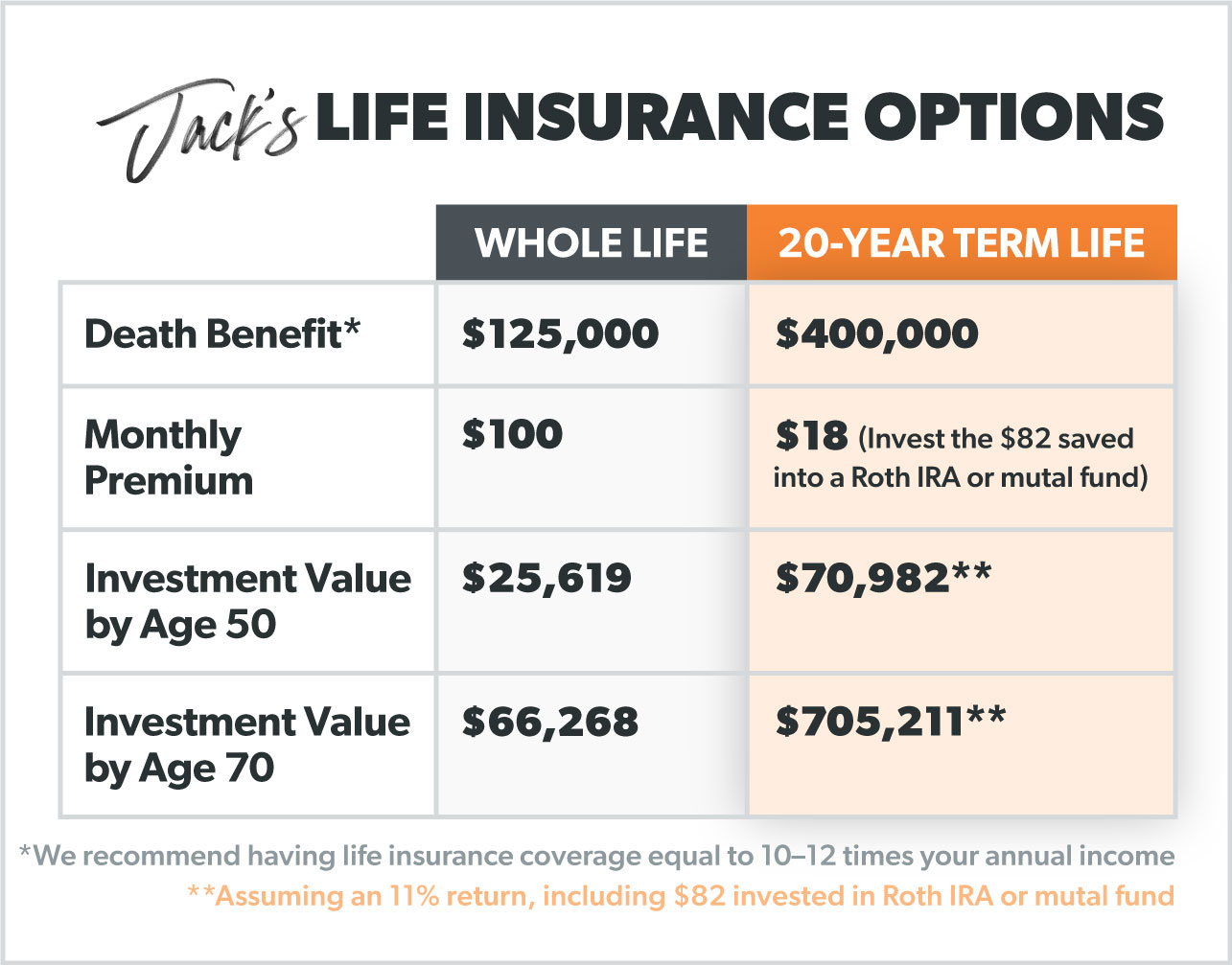
Consider a comparison over a 30-year horizon:
- Scenario A: A 35-year-old buys a $1,000,000 Whole Life policy requiring a monthly premium of $1,000.
- Scenario B: The same individual buys a 30-year, $1,000,000 Term Life policy for $60 per month and invests the remaining $940 monthly in a low-cost total stock market index fund yielding an average annual return of 8%.
By the end of 30 years, Scenario A might yield a cash surrender value of $450,000 to $550,000 within the policy. Scenario B, conversely, generates over $1.35 million in a liquid investment account—even after paying for 30 full years of term life coverage.
5. High Surrender Charges and Abandonment Rates
Because permanent policies are illiquid and expensive, consumer drop-off rates are high. Insurance industry persistence data shows that a major percentage of permanent policies are surrendered or lapsed within the first ten years.
Policyholders who drop their coverage early suffer substantial financial loss due to surrender charges. Insurance companies assess steep penalties for surrendering a policy during its first 10 to 15 years to recover their upfront agent sales commissions. If a policyholder surrenders in years 1 through 5, they often walk away with little to none of their contributed principal.

Structural Comparison: Cash Value Insurance vs. "Buy Term and Invest the Difference"
Evaluating financial products requires analyzing cost structures, liquidity, risk parameters, and realistic yield prospects. The comparison table below highlights key functional differences between permanent cash value policies and the traditional strategy of combining term insurance with independent index investing.
| Dimension | Whole / Universal Life Insurance | Term Life Insurance + Index Funds |
|---|---|---|
| Primary Objective | Permanent death benefit combined with tax-deferred cash ledger. | Cost-effective death benefit combined with direct wealth accumulation. |
| Upfront Fee Friction | High: 60%–100%+ of Year 1 premiums go to commissions and administration. | Extremely Low: Term premiums carry minimal commission; index funds feature expense ratios as low as 0.03%. |
| Cash Value Liquidity | Restricted: Accessible via policy loans (which charge interest) or withdrawals (which reduce death benefit). | High: Direct access to brokerage or taxable accounts at market value without loan fees. |
| Growth Potential | Constrained: Capped by insurance dividend rates, interest floors, or contract cap rates (e.g., 6–9%). | Uncapped: Direct participation in total equity market growth over extended horizons. |
| Policyholder Surrender Risk | Severe: High rates of policy surrender in years 1–10 lead to partial or total loss of premiums paid. | Low: Term policy can be canceled at any time with no surrender fees; investments remain intact. |
| Death Benefit Mechanics | Permanent, provided premiums are fully funded to cover rising internal COI costs. | Temporary (10–30 year fixed term), covering income-earning years when coverage is critical. |
| Tax Treatment | Tax-deferred cash growth; tax-free death benefit; tax-free loans if policy remains active. | Capital gains tax rates on taxable investments; tax-free death benefit from term policy; step-up in basis at death. |
Rare Scenarios Where Cash Value Insurance May Be Appropriate
Although cash value life insurance is suboptimal for the vast majority of retail investors, specialized legal and financial structures rely on permanent contracts. These instances generally apply to high-net-worth individuals (HNWIs) or business entities with specific legal needs:
1. Estate Tax Liquidity for Ultra-High-Net-Worth Households
Federal and state estate taxes apply to estates exceeding statutory exemption thresholds. High-net-worth individuals with illiquid assets—such as large real estate portfolios, agricultural land, or private companies—often utilize an Irrevocable Life Insurance Trust (ILIT) holding permanent life insurance. The tax-free death benefit provides immediate cash to pay estate taxes without forcing a fire-sale of physical assets.
2. Business Succession and Key Person Coverage
Partnerships and closely held corporations frequently utilize permanent policies to fund Buy-Sell Agreements. If a co-owner passes away, the tax-free death benefit provides the surviving business partners with the immediate capital needed to purchase the deceased partner's shares from their heirs.
3. Maxed-Out Tax Shelters for High-Income Earners
For high-earning individuals who have already fully funded every available tax-advantaged vehicle—such as maxing out 401(k) accounts, Backdoor Roth IRAs, Health Savings Accounts (HSAs), and Defined Benefit Plans—cash value policies (specifically VUL or private placement life insurance) can serve as an additional tax-deferred investment bucket for excess capital.
4. Specialized Asset Protection Statutes
In certain U.S. states (such as Florida and Texas), statutory legal protections shield the cash surrender value of life insurance policies from judgment creditors and bankruptcy proceedings. Individuals in high-litigation professions (such as practicing surgeons or real estate developers) sometimes utilize permanent policies as a statutory asset-protection vault.
What to Do If You Already Own a Cash Value Policy
If you currently hold a whole life, universal life, or indexed universal life contract, avoid making abrupt decisions without conducting a structured audit. Premature cancellation can trigger unintended tax liabilities or unnecessary surrender charges.
- STEP 1: Request In-Force Policy Illustration
- Check guaranteed vs. non-guaranteed projections
- STEP 2: Calculate Net Surrender Value & Basis
- Determine if Cash Value > Total Premiums Paid
- Cash Value LESS than Cost Basis:
- Cancel policy after securing new term coverage; non-taxable loss.
- Cash Value GREATER than Basis:
- Evaluate 1035 Exchange into Annuity or systematically surrender.
Step 1: Request an In-Force Illustration
Contact your insurance carrier and request a current In-Force Illustration. Unlike the initial sales proposal, this document models the future performance of your specific policy based on its current cash value, actual mortality cost deductions, and current carrier dividend or interest rates.
Key metrics to evaluate on the illustration include:
- The Guaranteed Column: Does the policy remain solvent through age 90–100 based only on contractually guaranteed minimums?
- The Cost of Insurance (COI) Trajectory: Are annual mortality fees projected to outpace your annual premium contributions?
Step 2: Determine Your Tax Basis
Your policy's tax basis equals the cumulative sum of premiums paid minus any tax-free withdrawals previously taken.
- If Net Cash Surrender Value is LESS than Cost Basis: Surrendering the policy generates no taxable income. The loss is considered a personal expense and cannot be deducted on income taxes, but you retrieve whatever surrender value remains.
- If Net Cash Surrender Value is GREATER than Cost Basis: The gain (cash value minus total premiums paid) is taxable as ordinary income, not lower long-term capital gains rates.
Step 3: Utilize a Section 1035 Exchange (If Preserving Value)
Under Section 1035 of the Internal Revenue Code, policyholders can transfer the cash value of an unwanted life insurance contract directly into another tax-deferred vehicle—such as a low-cost annuity or a different insurance contract—without triggering an immediate income tax event on accumulated gains.
Step 4: Secure Replacement Term Insurance Before Terminating
Never cancel or surrender an existing life insurance contract until a replacement term policy is fully underwritten, approved, and in force. If your health status has changed since buying the original policy, obtaining affordable term coverage may prove difficult. Verify coverage continuity before surrendering your existing permanent contract.
Frequently Asked Questions
Can I borrow money from my cash value policy tax-free?
Yes, policy loans are generally tax-free, provided the insurance contract remains active and does not lapse. However, the insurance company charges interest on the borrowed amount (often 4% to 8% annually). If unpaid loan interest accumulates and causes the policy to lapse, the outstanding loan balance immediately becomes taxable as ordinary income to the extent it exceeds your total premium basis.
What happens to the cash value when I die?
In standard whole life policies, when the insured dies, the insurance company pays the face amount (death benefit) to the beneficiaries, and the accumulated cash value reverts to the insurance company. Unless you purchased a specific policy rider (such as an Return of Premium or Increasing Death Benefit rider, which costs extra), your family does not receive both the death benefit and the cash value.
Why do financial planners push cash value policies so aggressively?
Permanent life insurance policies carry some of the highest sales commissions in the financial services industry. Selling brokers often earn 60% to 100%+ of the first year's annual premium as direct compensation, alongside ongoing annual trail commissions. Independent, fee-only fiduciary advisors—who do not earn sales commissions—rarely recommend cash value policies to everyday clients.
Is an Indexed Universal Life (IUL) policy safer than market investing?
While IUL contracts offer a "0% floor" that protects cash value from nominal equity market crashes, they also impose hard caps (e.g., maximum 7% to 9% annual return) and participation rates on market gains. Furthermore, because internal insurance fees and cost-of-insurance deductions continue to be withdrawn during market downturns, an IUL cash value ledger can still post a net loss even in a year where the market is flat or zero.
How long does it take for a cash value policy to break even?
For traditional whole life and universal life contracts, it typically takes 7 to 12 years of continuous premium payments for the surrender cash value to equal the total sum of premiums paid out-of-pocket. During this period, the internal rate of return on your money is zero or negative due to upfront commission structures and policy fees.
Strategic Action Plan for Financial Protection
To build a secure, efficient financial foundation without overpaying for life insurance, follow this prioritized framework:
- Separate Insurance from Investing: Treat life insurance exclusively as a risk-mitigation tool to protect dependents against income loss—not as a primary wealth-accumulation vehicle.
- Calculate True Insurance Needs: Multiply your annual income by a factor of 10 to 12, adding major liabilities (such as mortgage debt and college funding). Secure a 15-, 20-, or 30-year level term life insurance policy to cover this period at low cost.
- Optimize Tax-Advantaged Investment Accounts: Direct savings into low-cost, high-efficiency investment options:
- Fully fund employer 401(k) matches (instant 100% return on match).
- Max out Health Savings Accounts (HSAs) for triple tax advantages.
- Max out Roth IRAs or traditional IRAs.
- Direct remaining investment capital into broad-market index funds (e.g., S&P 500 or Total Stock Market Index) inside standard taxable brokerage accounts.
- Review Existing Coverage Annually: As net worth increases over time, your need for life insurance naturally decreases. Once self-insurance is achieved (when investment assets cover all personal liabilities and retirement needs), term policies can be allowed to expire naturally without leaving behind costly permanent contract liabilities.
Image Gallery
Select an image to open it in a new tab.





Vivian Cho
Executive IT and Emerging Technologies Reporter
